

Where's the Best Place to Stay in Saint Augustine, Florida?

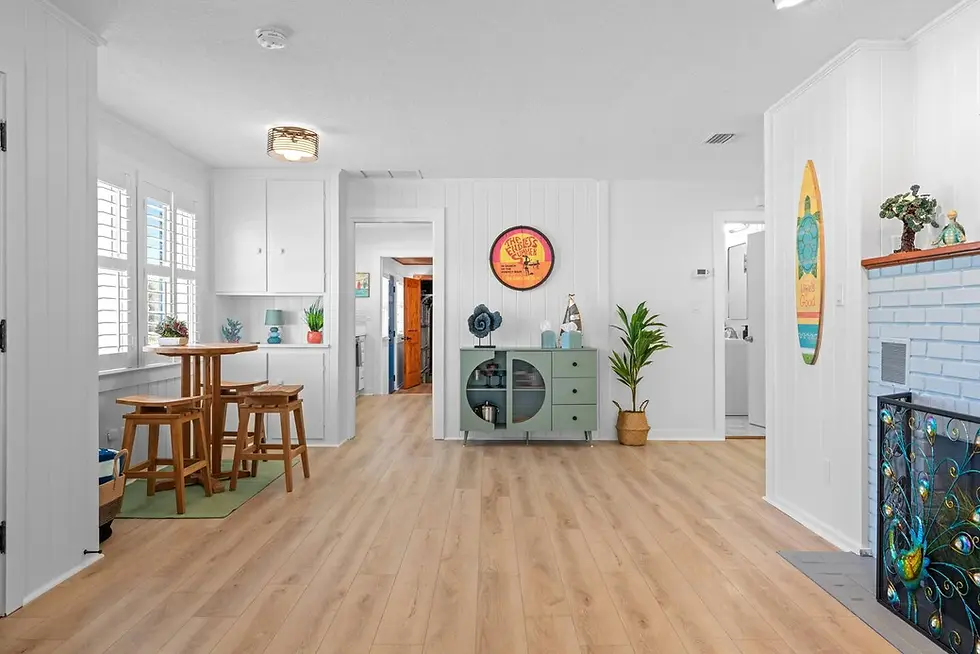
The best place to stay in St. Augustine, Florida depends on what you want from your trip: the Historic District wins for walkability and first-time visitors, while Vilano Beach is the better call for travelers who want oceanfront access, more space, and a quieter pace. In The Sun VR manages vacation rentals across both areas, giving guests and owners a local read on which neighborhood actually fits a given trip.
Key Takeaways
St. Augustine's Historic District is the top pick for walkable access to Castillo de San Marcos National Monument and St. George Street, but parking is tight and prices run higher in peak season.
Vilano Beach, about 10 minutes from downtown by car, suits travelers who want direct beach access and larger vacation rental homes with private pools or hot tubs.
St. Augustine's short-term rental market posted a 56% average occupancy rate in 2026, up 4% year over year, with an average daily rate near $288.70, according to AirDNA.
St. Johns County drew 2,791,200 visitors in 2026 and generated over $1.5 billion in direct visitor spending, per the county's 2026 Annual Tourism Report.
Crescent Beach and Butler Beach offer quieter, less-crowded alternatives to St. Augustine Beach, roughly 15 to 20 minutes south of downtown by car.
Families and larger groups typically do better in vacation rental homes than hotel rooms, since properties like Victorian Villa sleep up to 12 guests across six bedrooms.
Every guide to St. Augustine lodging leads with the same advice: stay downtown for your first visit. That's not wrong, but it's incomplete. St. Augustine in 2026 is a spread-out destination with distinct pockets, from the cobblestone streets of the Historic District to the surfer-friendly sand at Vilano Beach and the quieter shoreline south at Crescent Beach and Butler Beach.
This guide breaks down where to stay by what actually matters: walkability, beach access, parking headaches, crowd levels, and the kind of property that fits your group. We manage vacation rentals throughout St. Augustine, FL at In The Sun VR, and the questions we hear most from prospective guests are rarely about hotel amenities. They're about logistics: can I walk to dinner, will I need a car, is this beach crowded in July.
You'll get a neighborhood-by-neighborhood breakdown, a look at what the data says about St. Augustine's 2026 travel season, and a practical framework for matching your travel style (couple, family, beach trip, event weekend) to the right base of operations.
1. Historic District: The Best Overall Base for First-Time Visitors
The Historic District is St. Augustine's original downtown core, built around St. George Street and the Castillo de San Marcos, and it's the best overall base for anyone visiting the city for the first time. Historic District lodging puts you within walking distance of the fort, the plaza, and most restaurants.
Staying here means you can genuinely skip the rental car for most of your trip. Hotel guides consistently point to properties like the Renaissance Historic Downtown Hotel, which sits inside the historic core and offers a modern-luxury option a short walk from St. George Street. Bed-and-breakfast options are dense here too: 44 Spanish Street Inn occupies a 1920s-era building in the heart of downtown, and Carriage Way B&B, an adults-only property, sits roughly a two-minute walk from the historic core with larger rooms that include two-person jetted tubs.
Travel guides from HotelsOne specifically recommend basing yourself at the DoubleTree by Hilton St. Augustine Historic District or the budget-friendly Spark by Hilton on a first visit, specifically so the fort and St. George Street stay within walking range.
The honest caveat: parking is genuinely difficult downtown, especially on weekends and during the winter Nights of Lights festival, which historically runs from mid-November through late January and drives some of the year's heaviest visitor traffic. If you're staying in the Historic District, plan to walk or use the trolley rather than move your car daily. If you want a downtown vacation rental instead of a hotel room, the restored Restored Historic Church property from In The Sun VR sits within walking distance of Old City Gates and sleeps up to 8 guests across flexible sleeping areas, with two free on-site parking spots, a real advantage over most downtown hotels.
What Are the Best Places to Stay at St. Augustine Beach?
St. Augustine Beach refers to the oceanfront stretch directly east of the mainland, roughly a 15-minute drive from the Historic District, and it's the right call for travelers who want ocean access as the centerpiece of their trip rather than history and dining. Unlike the Historic District, St. Augustine Beach is built around resort-style stays and direct sand access rather than walkable streets.
The Embassy Suites by Hilton St Augustine Beach Oceanfront Resort is the clearest example: a straight beachfront property built specifically for sunrise views over the Atlantic and easy pool-to-sand transitions. This area draws a different crowd than downtown, more families on beach vacations, fewer history-focused day-trippers.
The trade-off is distance from downtown attractions. You'll want a car if you're staying at St. Augustine Beach and plan to visit the Castillo de San Marcos, St. George Street, or the St. Augustine Lighthouse & Maritime Museum, all of which sit a drive away rather than a walk. Parking at public beach access points can also fill up on weekends and holidays, so arrive early or plan an evening beach walk instead.
If you want beach access without the resort-hotel price tag, vacation rentals in this corridor and just north of it toward Crescent Beach tend to offer more square footage and full kitchens for the same or lower nightly rate than an oceanfront hotel suite.
2. Vilano Beach: Best for Space, Quiet, and Beach-First Trips
Vilano Beach sits just north of the Historic District, across the Usina Beach Bridge, roughly a 10-minute drive from downtown, and it's the best choice for travelers who want direct beach access combined with more room than a typical hotel room offers. Vilano Beach functions as a residential beach community, quieter and less commercialized than St. Augustine Beach to the south.
Hotels.com names Vilano Beach specifically among St. Augustine's notable lodging neighborhoods, and it's easy to see why once you're there: low-rise homes, a short walk to sand, and a mellower pace than downtown's tourist density. This is where In The Sun VR manages several of its largest vacation rentals, including In the Sun, a 3-bedroom, 3-bathroom home for up to 10 guests with a private hot tub and an indoor golf simulator, steps from the beach and local restaurants.
Families traveling together tend to prefer Vilano Vista, which sits on a spacious corner lot with a 7-seater hot tub, two fire pits, and yard games like pickleball and volleyball built into a fully fenced yard. The 4-bedroom Vilano Beach property adds a private pool, outdoor summer kitchen, and backyard putt-putt, sleeping up to 12 guests, making it a strong fit for golf trips or multi-generational family vacations.
The honest trade-off: Vilano Beach requires a car for downtown dining and attractions. It's not walkable to St. George Street, and you'll cross the bridge every time you head south. For a beach-first trip where downtown is a day trip rather than the main event, that trade-off works in your favor.
3. Crescent Beach and Butler Beach: Best for Avoiding Crowds
Crescent Beach and Butler Beach are the quieter beach communities south of St. Augustine, roughly 15 to 20 minutes from downtown, and they're the best pick for travelers who want oceanfront access without the crowds that build up at St. Augustine Beach in peak season. Both areas sit closer to Anastasia State Park and Fort Matanzas than to the historic core.
This corridor is less developed commercially than St. Augustine Beach, with fewer hotels and more single-family homes available as vacation rentals. In The Sun VR's Point Break property sits just 0.1 miles from Crescent Beach access via a pedestrian walk path, with Butler Beach roughly 2 miles away and Fort Matanzas National Monument about 4.2 miles south. That kind of proximity is difficult to find in the Historic District or even Vilano Beach.
Guests who choose this area tend to prioritize peace over proximity to nightlife. You're further from restaurants and shops, closer to nature. Point Break comes stocked with kayaks and stand-up paddleboards for the Green Road Boat Ramp, about a mile away, which suits travelers who want water access beyond just swimming.
Grocery access is a practical consideration here too. The nearest Winn-Dixie sits 3.7 miles from Point Break, with Publix about 4 miles out, so plan a shopping stop on your way in rather than a daily run.

Is Downtown St. Augustine Walkable?
Yes, downtown St. Augustine's Historic District is walkable, and it's one of the most pedestrian-friendly historic downtowns in Florida. Most major attractions, restaurants, and shops sit within a 10 to 15 minute walk of each other inside the old city core.
Specifically, St. George Street, the Castillo de San Marcos, the Plaza de la Constitución, and the Lightner Museum all sit within easy walking range of each other. HotelsOne's travel guide recommends staying on or beside the bayfront specifically so the fort, St. George Street, and evening strolls remain accessible on foot, without ever needing a car during your stay.
Additionally, a free trolley system and the compact street grid make it realistic to park once (or not drive at all) if you're staying in a downtown hotel or a property like the Restored Historic Church, which sits within walking distance of the Old City Gates. As a result, downtown lodging remains the top recommendation for anyone whose trip centers on history and dining rather than beach time.
In contrast, once you leave the Historic District for Vilano Beach, St. Augustine Beach, or Crescent Beach, walkability drops significantly and a car becomes necessary for most trips into town.
What Is the Best Month to Visit St. Augustine, Florida?
The best months to visit St. Augustine are typically March, June, July, and December, based on AirROI market data showing these as the strongest demand periods, with average occupancy around 57.3% and an average daily rate near $343 during peak months. Weather-wise, spring and early winter also offer more comfortable temperatures than the height of summer.
December draws visitors specifically for the Nights of Lights festival, which historically runs from mid-November through late January and lights up the Historic District's streets and plazas. This is one of St. Augustine's biggest annual demand drivers, and hotel and vacation rental rates climb accordingly, so book well ahead if you're targeting this window.
By contrast, September and October mark the lowest-demand months, with AirROI data showing occupancy dropping to around 36% and average daily rates near $303 during this shoulder season. That's good news for budget-focused travelers willing to accept some hurricane-season risk, since rates and crowds both thin out.
Florida overall welcomed an estimated 39.88 million visitors in Q1 2026, according to VISIT FLORIDA, with domestic travelers making up 91.6% of that total. St. Augustine specifically draws a heavily regional crowd: 64.8% of St. Johns County visitors came from the Southeast in 2026, with Florida residents alone accounting for 39.7%, according to the county's 2026 Annual Tourism Report.
What Is the Highest-Rated Hotel in St. Augustine?
Highly rated hotels in St. Augustine tend to cluster in two categories: luxury bayfront properties in the Historic District, and boutique bed-and-breakfasts inside the old city walls. Casa Monica Resort & Spa is frequently cited by destination guides as the top luxury option downtown, prized for its Moorish-revival architecture and central location.
For boutique lodging, Bayfront Marin House sits directly on Matanzas Bay and combines suites with self-catering beach cottages, a rare mix for downtown St. Augustine. Agustin Inn, located between St. George Street and Matanzas Bay, gets consistent praise for large breakfasts, whirlpool tubs, and private balconies, while The Old Powder House Inn serves two-course gourmet breakfasts inside a Historic District property furnished with antiques and a wraparound porch.
On the beachfront side, Embassy Suites by Hilton St Augustine Beach Oceanfront Resort ranks consistently high for travelers prioritizing ocean views over historic charm. For families booking a week-long stay, Homewood Suites and the DoubleTree by Hilton St. Augustine Historic District come up repeatedly for their suite layouts and proximity to downtown.
Rating aside, hotels max out around two or three bedrooms in suite configurations. Groups larger than six generally get more space and better value from a managed vacation rental, and this is where properties like Victorian Villa, a restored three-story Victorian six-minute walk from St. George Street with six bedrooms and room for up to 12 guests, start to outperform even a top-rated hotel for group trips.
Where Should Families and Groups Stay in St. Augustine?
Families and larger groups do better in vacation rental homes than in hotel rooms, because rental properties provide separate bedrooms, full kitchens, and private outdoor space that hotel suites can't match at comparable price points. This becomes especially important for stays longer than three or four nights.
Specifically, a group of eight to twelve people splitting a six-bedroom home spends less per person per night than booking multiple hotel rooms, while gaining a shared kitchen, yard, and living space. Private Resort Retreat, a 5-bedroom estate that sleeps 12 across 7 beds, includes a heated pool, hot tub, and tiki hut, and is even approved for small events and weddings by inquiry, something no downtown hotel offers.
For families with younger kids, look for properties with fenced yards and built-in entertainment. Vilano Beach's 4-bedroom layout includes a kids' bunk room plus a bonus room, alongside a backyard putt-putt course and outdoor summer kitchen. Salty Sunrise sleeps up to 12 with a heated pool set to 82 degrees, a dedicated game room, and bikes and beach wagons for getting the group to and from the sand.
As a result, our advice at In The Sun VR for any group over six is simple: run the math on total trip cost, including meals. A rental with a full kitchen almost always wins over a hotel once you factor in three restaurant meals a day for a large group.

Historic District vs. Beach Areas: A Side-by-Side Comparison
Choosing between the Historic District and St. Augustine's beach communities comes down to four factors: walkability, car dependence, crowd levels, and property type. The table below lays out how each major lodging area compares as of 2026.
Area | Distance to Downtown | Walkable? | Best For | Parking Difficulty |
Historic District | 0 minutes (you're there) | Yes, highly walkable | First-time visitors, history and food-focused trips | High, especially weekends and Nights of Lights |
St. Augustine Beach | About 15 minutes by car | Limited within the beach strip only | Resort-style oceanfront stays, family beach trips | Moderate, fills up on weekends |
Vilano Beach | About 10 minutes by car | Limited within the neighborhood | Larger groups, quieter beach access, vacation rentals | Low to moderate |
Crescent Beach / Butler Beach | 15 to 20 minutes by car | Not walkable to downtown | Avoiding crowds, nature and water sports access | Low |
U.S. 1 corridor | 10 to 15 minutes by car | Not walkable | Budget travelers with a car, chain hotels | Low, on-site hotel parking |
Notably, none of these areas is objectively "better," they simply serve different trip types. A couple visiting for a weekend of history and dining should default to the Historic District. A family booking a week in July should look at Vilano Beach or St. Augustine Beach instead.
How Does St. Augustine's Rental Market Perform in 2026?
St. Augustine's short-term rental market recorded a 56% average occupancy rate in 2026, up 4% year over year, with an average daily rate near $288.70 and RevPAR around $157.50, according to AirDNA's 2026 market overview. Separately, Airbtics reported a 64% median occupancy rate and roughly $227 nightly rate across the twelve months ending January 2026.
Specifically, AirDNA counted approximately 6,865 active short-term rental listings in St. Augustine in 2026, reflecting continued growth in available inventory. AirROI data placed average annual revenue per listing at roughly $41,270, with top-quartile properties clearing at least 65% occupancy and $5,708 or more in monthly revenue.
This inventory growth matters for where you choose to stay. As more vacation rentals come online in Vilano Beach and along the beach corridors, guests get more choice in property size and amenities, while downtown hotel supply stays comparatively fixed within the historic core's limited footprint.
For context on the broader visitor economy driving this demand, St. Johns County generated $1,593,477,000 in direct visitor spending in 2026 and recorded 2,370,510 room nights, according to the county's 2026 Annual Tourism Report, supporting an estimated 32,400 local jobs. If you're researching this market from the ownership side rather than as a traveler, our guide to vacation rentals in St. Augustine, Florida covers how that demand translates into owner revenue.
How Should You Choose Where to Stay Based on Your Trip Type?
Matching your lodging choice to your trip type starts with answering one question: is your trip centered on history and food, or on the beach? From there, group size and budget narrow the choice further.
Couples on a first visit: Book the Historic District. Walk to dinner, skip the rental car, and stay within a few blocks of the fort and St. George Street.
Families with young kids: Choose a vacation rental in Vilano Beach or St. Augustine Beach with a fenced yard and pool, like Vilano Vista or the 4-bedroom Vilano Beach property.
Large groups or multi-family trips: Look at 5 to 6 bedroom homes such as Victorian Villa or Private Resort Retreat, which handle 12 guests comfortably with shared living space.
Travelers seeking quiet: Crescent Beach or Butler Beach, where properties like Point Break sit steps from a pedestrian beach path away from downtown foot traffic.
Event or festival visitors (Nights of Lights, etc.): Book downtown early, ideally three to six months out, since this period drives some of the year's highest occupancy.
Budget-conscious travelers with a car: Consider the U.S. 1 corridor's chain hotels, which trade walkability for lower nightly rates and easier parking.
One mistake we see constantly at In The Sun VR: guests book downtown for a beach-centric trip, then spend half their vacation driving back and forth to the sand. If the beach is the point, stay near it.
What Should You Know About Parking, Pets, and Beach Access?
Parking, pet policies, and beach access rules vary significantly by neighborhood in St. Augustine, and overlooking them is one of the most common planning mistakes. Downtown parking is metered and limited, beach parking often requires a paid pass or lot fee, and pet policies differ property by property.
For beach access specifically, public parking at St. Augustine Beach and Crescent Beach can fill by mid-morning on summer weekends. Anastasia State Park offers a more reliable parking option near Crescent Beach, though it charges a separate entrance fee. If you're staying at a pet-friendly vacation rental like In the Sun or Point Break (which allows dogs with a fee), confirm the specific pet policy before booking, since not every property in a given area accepts animals.
Resort fees are another factor worth checking. Beachfront hotels frequently add a daily resort fee on top of the room rate, while most vacation rentals fold cleaning and service fees into a single upfront quote instead. If you're comparing a hotel rate to a rental listing, add the resort fee before judging which is actually cheaper.
Finally, if your travel dates fall during Nights of Lights or another high-demand stretch, expect downtown streets to close periodically for pedestrian traffic. That reinforces the case for walkable lodging during winter visits, and for a car-based stay if you're avoiding festival crowds entirely.
Frequently Asked Questions
Where can I find beachside vacation rentals in St. Augustine?
Beachside vacation rentals cluster in Vilano Beach, St. Augustine Beach, and Crescent Beach. In The Sun VR manages several beachside properties in Vilano Beach, including In the Sun and Vilano Vista, both within walking distance of sand access.
Are there Airbnb-style options in downtown St. Augustine's Historic District?
Yes, vacation rentals exist within and near the Historic District, though inventory is more limited than in the beach corridors due to the area's smaller footprint. The Restored Historic Church sits within walking distance of downtown and the Old City Gates and sleeps up to 8 guests.
What's the latest travel information for Crescent Beach, St. Augustine?
Crescent Beach sits roughly 15 to 20 minutes south of downtown St. Augustine and offers a quieter alternative to St. Augustine Beach, with pedestrian beach access points and proximity to Fort Matanzas National Monument. It draws fewer crowds than the main St. Augustine Beach strip, especially outside of peak summer weekends.
Are there vacation rentals available near the beach in St. Augustine, Florida?
Yes, vacation rentals near the beach are widely available across Vilano Beach, St. Augustine Beach, and Crescent Beach, ranging from 2-bedroom retreats to homes sleeping 12 or more. AirDNA counted approximately 6,865 active short-term rental listings across St. Augustine in 2026.
How much does vacation rental management cost in Florida?
Vacation rental management fees in Florida vary by service level and company, typically structured as a percentage of booking revenue rather than a flat fee. Full-service management usually costs more than a co-hosting arrangement, since it covers guest communication, cleaning coordination, and dynamic pricing rather than a single task. For a detailed breakdown specific to this market, see our guide to short-term rental management in St. Augustine, Florida.
Is it better to stay downtown or at the beach in St. Augustine?
Downtown works better for first-time visitors and trips centered on history, dining, and walkability. The beach areas, particularly Vilano Beach and St. Augustine Beach, work better for families or groups who want ocean access and more living space, though they require a car for downtown trips.
What is the best neighborhood for a bachelor or bachelorette trip in St. Augustine?
Large vacation rental homes tend to suit bachelor and bachelorette groups better than hotel blocks, since they include shared living space, private pools, and outdoor entertaining areas. Properties like The Salty Air Retreat, with a heated pool and tiki bar, or Victorian Villa downtown, with a pool and multiple balconies, both fit group trips well depending on whether you want beach or downtown proximity.
Do I need a car to visit St. Augustine?
You don't need a car if you're staying entirely within the Historic District, since most attractions and restaurants sit within walking distance. A car becomes necessary once you're staying in Vilano Beach, St. Augustine Beach, Crescent Beach, or the U.S. 1 corridor, or if you plan day trips between beach and downtown.
Conclusion: Match the Neighborhood to Your Trip, Not the Other Way Around
So, where is the best place to stay in Saint Augustine, Florida? For most first-time visitors, the Historic District remains the strongest overall base thanks to its walkability and proximity to the fort and St. George Street. But if your trip revolves around the beach, family time, or a larger group, Vilano Beach and the quieter shores around Crescent Beach and Butler Beach consistently deliver more space and a better value per person.
St. Augustine's rental market has grown alongside its tourism numbers, with occupancy climbing to 56% in 2026 and visitor spending topping $1.5 billion across St. Johns County in 2026. That growth means more lodging choice than ever, but also more research required to book the right fit. Looking into 2026 and beyond, expect that beach-area vacation rentals continue gaining ground on downtown hotels as travelers prioritize space, kitchens, and private outdoor amenities over a hotel lobby.

Whether you're weighing a downtown hotel against a beachfront rental or trying to figure out which St. Augustine neighborhood actually fits your group, In The Sun VR manages properties across the Historic District, Vilano Beach, and Crescent Beach corridors, and can point you toward the right fit for your specific trip.
Written by Seth Balogh, Owner at In The Sun VR
Content powered by inkSTR.co


Comments