

What Is the Oldest Town in Florida? St. Augustine Explained


St. Augustine is the oldest town in Florida. Founded in September 1565 by Spanish admiral Don Pedro Menendez de Aviles, it is widely recognized as the oldest continuously inhabited European-established settlement in the continental United States. At In The Sun VR, we manage vacation rentals in this exact city, so we see visitors discover its 461-year history firsthand, year-round.
St. Augustine, Florida was founded in 1565, more than 40 years before Jamestown, Virginia was established in 1607.
Historians widely credit St. Augustine as the oldest continuously inhabited European-established settlement in the continental U.S., distinguishing it from Pensacola, which was settled earlier but abandoned after a hurricane.
Pensacola was first settled in 1559 by Don Tristan de Luna, four decades before St. Augustine, but the colony collapsed and was not continuously occupied.
Micanopy, settled in 1821, is generally recognized as Florida's oldest inland town, distinct from St. Augustine's coastal origin.
As of 2026, St. Johns County's rental vacancy rate sits around 4.8 percent, according to Bridge of Lions Realty, reflecting strong year-round demand for St. Augustine lodging.
Key historic landmarks, including the Castillo de San Marcos National Monument and the Colonial Quarter, anchor the city's identity as a living, working piece of American history rather than a museum piece.
If you're planning a trip to see the oldest city in the country, or you own a rental property here and want to understand what makes this market unique, the history behind St. Augustine explains a lot about why demand for stays here holds up across every season. In 2026, the city marks well over four and a half centuries of continuous settlement, and that legacy shapes everything from its architecture to its tourism calendar.
This guide covers the founding story, the honest comparison with Pensacola, where St. Augustine ranks against Florida's other historic towns, and how to actually plan a visit around the city's oldest sites. We'll also touch on the Indigenous history that predates 1565, a piece of the story that a lot of tourism content skips entirely.
What Is the Oldest Town in Florida?
St. Augustine is the oldest town in Florida, founded in September 1565 by Spanish admiral Don Pedro Menendez de Aviles on Florida's northeast coast. It holds the distinction of being the oldest continuously inhabited European-established settlement in the continental United States, a title separate from simply being "first settled." St. Augustine's founding predates Jamestown, Virginia by 42 years and the Plymouth Colony by 55 years.
The word "continuously" matters here. Several Florida sites saw European settlement before 1565, but none maintained an unbroken, permanent population the way St. Augustine has. Menendez established the settlement as a military and religious outpost to secure Spanish Florida and defend against French incursions nearby. The city has functioned as an inhabited community every year since, through Spanish, British, and American control.
Today, St. Augustine sits in northeast Florida along the Matanzas River and the Atlantic coast. Its historic district, downtown core, and surrounding beach communities like Vilano Beach and Crescent Beach have grown into one of Florida's most consistent year-round visitor destinations, a fact that shapes the local short-term rental market in ways that owners we work with at In The Sun VR see reflected in booking patterns every month.

Is Pensacola Older Than St. Augustine?
Pensacola was settled four decades before St. Augustine, but St. Augustine holds the "oldest continuously inhabited" title because Pensacola's original colony did not survive. Don Tristan de Luna established a Spanish settlement at Pensacola in 1559, six years before Menendez founded St. Augustine. A hurricane destroyed much of the colony's supplies within two years, and the settlement was abandoned by 1561.
Pensacola was not permanently resettled until more than a century later, in 1698. That gap in continuous habitation is the entire basis for the distinction historians draw between the two cities. Pensacola is frequently cited as the first multi-year European settlement attempt in the continental U.S., a genuinely important historical footnote, but St. Augustine earns the "oldest continuously inhabited" designation because its population never fully disappeared after founding.
This is a nuance a lot of shorter articles skip entirely, and it's worth stating plainly: both cities matter historically, and Pensacola's claim is not a myth. It's simply a different kind of record. St. Augustine's is about persistence. Pensacola's is about precedence. As of 2026, Pensacola is generally described as the second oldest city in Florida, incorporating later than St. Augustine and building its own distinct identity around its naval and maritime heritage.
What Are the Top Oldest Cities in Florida?
St. Augustine ranks first among Florida's oldest cities, founded in 1565, followed by Pensacola with its 1559 initial settlement and 1698 permanent resettlement. Beyond these two coastal cities, several inland and Gulf Coast communities round out Florida's list of historically significant early towns, each with a distinct settlement story worth understanding.
City | Region | Notable Founding Detail |
St. Augustine | Northeast Florida (Atlantic coast) | Founded 1565; oldest continuously inhabited European settlement in the continental U.S. |
Pensacola | Florida Panhandle (Gulf coast) | First settled 1559, abandoned after hurricane damage, permanently resettled 1698 |
Micanopy | North Central Florida | Settled 1821; widely recognized as Florida's oldest inland town |
Cedar Key | Gulf Coast (Levy County) | Among the earliest established towns on Florida's Gulf Coast |
Ocala | North Central Florida | Name derived from the Timucua village Ocali, reflecting deep pre-colonial roots |
Notably, this list highlights something important: Florida's "oldest" towns split into two categories, coastal Spanish colonial settlements like St. Augustine and Pensacola, and inland or river towns like Micanopy that developed later under American territorial expansion. If you're researching Florida's oldest towns for a road trip, St. Augustine and Pensacola make the most historically rich pairing, roughly a five to six hour drive apart across the northern part of the state.
What Town in Florida Has the Oldest Street?
St. George Street in St. Augustine's historic district is frequently cited as one of the oldest streets in the United States, tracing its layout back to the original Spanish colonial town plan. The street runs through the heart of the historic district, lined with preserved colonial-era buildings, many restored to reflect Spanish and early American architectural styles from the 1700s and 1800s.
Today, St. George Street functions as a pedestrian corridor packed with shops, restaurants, and museums, but its bones date back centuries. Walking it gives you a physical sense of the original town grid that Spanish colonists laid out generations before American independence. Nearby, the St. Augustine Lighthouse & Maritime Museum and the Fountain of Youth Archaeological Park preserve additional layers of the city's early settlement history, including archaeological evidence of the original 1565 landing site.
For property owners we work with at In The Sun VR, proximity to this historic corridor is a genuine booking driver. Rentals within a short walk of St. George Street and the surrounding historic district consistently see stronger interest from history-focused travelers than properties further out, a pattern that plays into how we think about revenue strategy for downtown-adjacent listings.
What Existed in St. Augustine Before 1565?
Indigenous communities inhabited the St. Augustine area for thousands of years before Spanish colonization, most notably the Timucua people, whose villages and trade networks spanned much of northeast Florida. This is a part of the story that tourism marketing often glosses over in favor of the 1565 founding date, but it's essential to understanding the region's full history.
When Menendez arrived in 1565, the area was not empty land waiting to be claimed. It was home to established Timucua settlements with their own agricultural practices, seasonal migration patterns, and complex social structures. Archaeological work at sites around St. Augustine, including excavations tied to the Fountain of Youth Archaeological Park, has uncovered evidence of pre-colonial Indigenous presence that predates European contact by centuries.
The 1565 founding date marks the start of continuous European settlement, not the beginning of human habitation in the region. Responsible coverage of "the oldest town in Florida" should acknowledge both timelines: the deep Indigenous history that existed first, and the specific, verifiable claim of continuous European settlement that gives St. Augustine its modern title. Museums and archaeological parks throughout the city increasingly incorporate this fuller narrative into their exhibits, and it's worth building into any day trip itinerary.
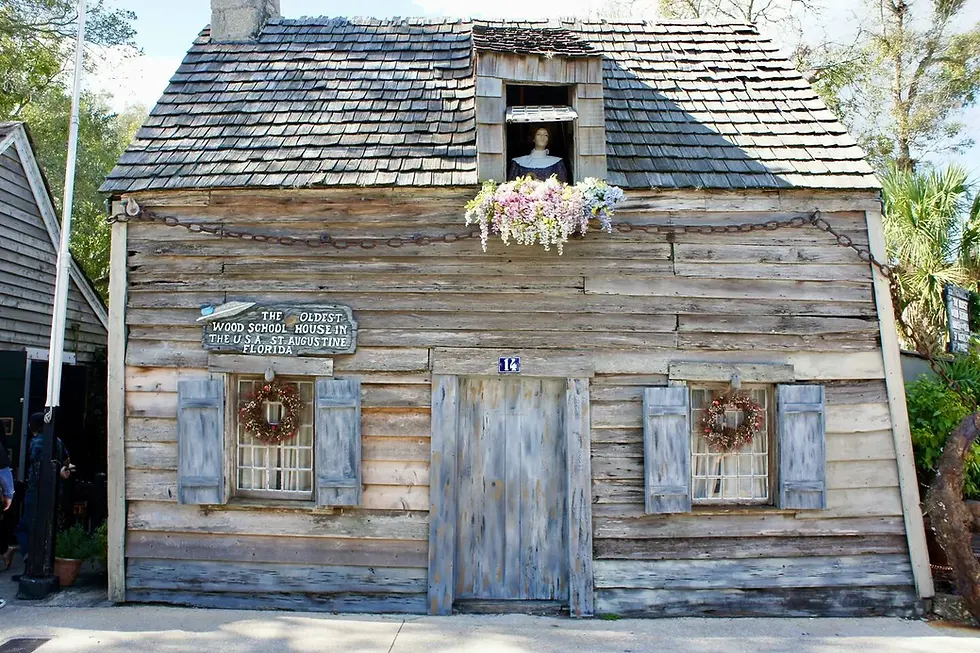
How Do You Spend a Day Exploring St. Augustine's History?
A well-planned day trip through St. Augustine's historic core takes roughly four to six hours on foot, covering the Castillo de San Marcos, St. George Street, and one or two museums, with time built in for lunch downtown. Because the historic district is compact and walkable, you don't need a car once you've parked, which matters a lot given how limited and congested parking gets during peak season.
Start early, ideally by 9 or 10 a.m., especially between March and July when cruise excursions and school trips add significant foot traffic. First, tour the Castillo de San Marcos National Monument, the 17th-century Spanish fort that anchors the bayfront and gives you the clearest physical sense of the city's military history. Next, walk St. George Street for shops, colonial architecture, and a coffee or lunch break.
Additionally, budget time for the Fountain of Youth Archaeological Park if you want the pre-1565 Indigenous context, and the Colonial Quarter for a hands-on look at daily life in 16th and 17th century Spanish Florida. For parking, the Historic Downtown Parking Facility on Cordova Street is your most reliable bet during busy weekends; street parking downtown fills up fast, particularly around holidays and festival weekends.
As a result, most families we talk to at In The Sun VR who stay in our managed properties around Vilano Beach or downtown plan their historic district day for a weekday if their schedule allows it. Weekday mornings mean shorter lines at the fort and easier parking, without sacrificing any of the experience.
What to Pack for a St. Augustine History Day Trip
Comfortable walking shoes: cobblestone and coquina walkways throughout the historic district are uneven in places.
Sun protection: Florida's coastal sun is intense even in shoulder seasons like October and February.
A refillable water bottle: several stops along St. George Street and near the fort offer refill stations.
Cash or a card with no foreign transaction concerns for smaller shops that may have card minimums.
A light jacket if visiting between December and February, when coastal breezes off the Matanzas River can make the bayfront feel cooler than inland temperatures suggest.
Does St. Augustine's History Affect Its Tourism and Rental Market Today?
St. Augustine's status as the nation's oldest continuously inhabited city directly drives consistent, year-round visitor demand, which distinguishes it from many Florida beach markets that swing hard between peak and off season. According to AirROI, the average occupancy rate for short-term rentals in St. Augustine ran at 42.7 percent based on data from June 2026 through May 2026, while AirDNA reports a trailing twelve-month average closer to 55 percent, a gap that reflects how differently various data providers measure occupancy across property types. Some sources, including StaySTRA, cite figures as high as 64 percent, underscoring how much occupancy varies by neighborhood, property size, and season in this market.
Here's what that means practically: history-driven tourism gives St. Augustine a demand floor that pure beach destinations don't have. Visitors come for the Castillo de San Marcos and the historic district in January just as readily as they come for the beach in July, even if the exact travel intent shifts with the season. In working with property owners across St. Augustine, the team at In The Sun VR consistently sees this pattern reflected in booking calendars, historic district proximity and beach access both pull bookings, but for different reasons and different guest profiles.
For property owners specifically, this dual-draw market means pricing strategy has to account for two overlapping demand curves rather than one simple summer peak. A property near downtown might see a February bump around events tied to the city's colonial history, while a Vilano Beach rental peaks with summer beach travel. Understanding which curve your property sits closer to is foundational to setting rates that actually capture demand instead of guessing at a flat seasonal adjustment.
Practical Guidance: Planning Around St. Augustine's Historic Calendar
If you're a traveler, book historic district lodging at least four to six weeks ahead for major holiday periods, since St. Augustine's Nights of Lights display and other seasonal draws pull heavy demand into the historic downtown corridor each winter. Shoulder months, specifically September through November and February through April, typically offer the best combination of lighter crowds and comfortable weather for walking the historic sites.
If you're a property owner trying to capture this demand, a few common mistakes show up again and again:
Treating the market as single-season. St. Augustine's historic tourism draw means winter and shoulder months carry more weight here than in typical Florida beach markets. Pricing flat by summer-only logic leaves real revenue on the table.
Ignoring proximity as a pricing lever. A property six minutes from St. George Street should not be priced identically to one twenty minutes away. Distance to the historic core is a measurable driver of guest willingness to pay.
Underestimating compliance requirements. St. Johns County and the City of St. Augustine both maintain permitting and registration requirements for short-term rentals, and these have shifted in recent years. Staying current matters more in a high-profile tourism market where enforcement attention is higher.
Skipping local content and SEO work. Listings that mention specific historic landmarks, walking distances, and neighborhood character rank better in Airbnb and VRBO search than generic descriptions, and they also perform better with AI-powered trip planning tools.
This is exactly the kind of market nuance In The Sun VR builds into revenue and listing strategy for the properties it manages across St. Augintine's historic district, downtown, and beach communities like Vilano Beach and Crescent Beach. Our guide to the best time to visit St. Augustine for maximum rental income breaks down these seasonal patterns in more depth, and our short-term rental tax deduction guide covers the compliance side owners frequently overlook.

Data & Evidence: How St. Augustine's Age Compares to Other U.S. Historic Cities
St. Augustine's 1565 founding predates every other permanently settled European colonial city in the continental United States by decades. Jamestown, Virginia was established in 1607, 42 years later. The Plymouth Colony in Massachusetts followed in 1620, 55 years after Menendez's landing. Santa Fe, New Mexico, another frequently cited "oldest city" contender, was founded around 1610.
City | Founded | Years Before/After St. Augustine |
St. Augustine, FL | 1565 | Baseline |
Pensacola, FL (initial, abandoned) | 1559 | 6 years earlier, not continuous |
Santa Fe, NM | c. 1610 | 45 years later |
Jamestown, VA | 1607 | 42 years later |
Plymouth Colony, MA | 1620 | 55 years later |
This table is why Smithsonian Magazine and Visit Florida consistently frame St. Augustine as the nation's oldest city, not just Florida's. The distinction between "first settled" and "oldest continuously inhabited" resolves nearly every debate about competing claims. Santa Fe and Jamestown both matter enormously to American colonial history, but neither predates St. Augustine's founding, and Pensacola's earlier attempt did not survive as a continuous settlement.
Frequently Asked Questions
What is the oldest town in Florida?
St. Augustine is the oldest town in Florida, founded in September 1565 by Spanish admiral Don Pedro Menendez de Aviles. It's also recognized as the oldest continuously inhabited European-established settlement in the continental United States.
What are the top 10 oldest cities in Florida?
St. Augustine ranks first, founded in 1565, followed by Pensacola, whose original 1559 settlement was abandoned before permanent resettlement in 1698. Other historically notable Florida towns include Micanopy, settled in 1821 as the state's oldest inland town, along with Cedar Key and Ocala, both tied to early Indigenous and territorial-era settlement patterns.
What town in Florida has the most old people?
Florida has several communities known for large retiree populations, particularly in areas like The Villages in Central Florida, which is widely recognized as one of the largest age-restricted retirement communities in the country. This is a separate demographic distinction from "oldest town" in the historical sense, which refers to founding date rather than resident age.
What are the 10 oldest cities in the United States?
St. Augustine, Florida, founded in 1565, is generally cited as the oldest continuously inhabited European-established city in the continental U.S. Other early U.S. settlements include Santa Fe, New Mexico (around 1610), Jamestown, Virginia (1607), and Plymouth, Massachusetts (1620), each significant but founded decades after St. Augustine.
What is the oldest street in Florida?
St. George Street in St. Augustine's historic district is widely cited as one of the oldest streets in the United States, following the original Spanish colonial town layout from the 1500s. It now functions as a pedestrian-only corridor through the historic district, lined with restored colonial buildings, shops, and restaurants.
Is Pensacola older than St. Augustine?
Pensacola was initially settled in 1559, six years before St. Augustine's 1565 founding, but a hurricane destroyed the colony and it was abandoned by 1561. Because the settlement wasn't permanently reestablished until 1698, historians credit St. Augustine, not Pensacola, as the oldest continuously inhabited European settlement in the continental U.S.
Why is St. Augustine called America's oldest city instead of just Florida's oldest?
St. Augustine earns the national title, not just a state one, because no other continental U.S. city has maintained continuous European settlement since an earlier date. Its 1565 founding predates Jamestown by 42 years and Santa Fe by roughly 45 years, making it the oldest by continuous habitation across the entire country, not only within Florida.
What should I know before visiting St. Augustine's historic sites for the first time?
Plan for a half-day to full-day visit covering the Castillo de San Marcos, St. George Street, and at least one museum or archaeological site, and arrive early to beat both crowds and parking congestion. Weekday mornings, especially outside major holidays, offer the easiest access to downtown parking and shorter lines at the fort.
Conclusion: St. Augustine Remains Florida's (and America's) Oldest Town
St. Augustine's answer to "what is the oldest town in Florida" has stayed the same for 461 years and counting: founded in 1565, continuously inhabited ever since, and still functioning as a real, working city rather than a preserved relic. That combination of deep history and active daily life is precisely what keeps drawing visitors back every season, and it's what makes this market fundamentally different from other Florida beach towns built purely around summer tourism.
As we move further into 2026, that dual identity, historic landmark and living coastal city, continues to shape everything from museum attendance to short-term rental demand. Whether you're visiting for a weekend of history or you own a property trying to capture year-round bookings in this market, understanding St. Augustine's actual founding story, not just the marketing tagline, gives you a real edge.
If you own a rental property in this market and want a team that understands how St. Augustine's historic tourism patterns translate into pricing and booking strategy, Get started with In The Sun VR for a conversation about revenue management, guest communication, and full-service management built specifically around this city's unique calendar.

St. Augustine's history draws travelers year-round, and In The Sun VR helps property owners across this market turn that steady demand into consistent, well-managed revenue. Explore more on our guides covering St. Augustine's rental landscape, or browse our downtown St. Augustine content for neighborhood-specific insights.
Written by Seth Balogh, Owner at In The Sun VR
Content powered by inkSTR.co



Comments