

Why Your St. Augustine Vacation Rental Sits Empty Despite Good Pricing


If your vacation rental is sitting empty even with competitive pricing in St. Augustine, the problem almost certainly isn't your nightly rate. Pricing is one lever among many. The properties consistently earning 80% or higher occupancy in this market aren't cheaper than yours. They're more visible, better presented, and more strategically managed. Understanding the gap is the first step to closing it.
St. Augustine has roughly 1,130 active STR listings as of early 2026, meaning competitive pricing alone no longer guarantees bookings when hundreds of similar properties exist at similar rates (Airbtics, 2026).
Best-in-class listings achieve 81-82% occupancy while median listings hover near 44-47%, according to AirROI 2026 data, revealing a performance gap driven by optimization, not pricing.
Occupancy swings sharply by season: average occupancy reaches 74-85% in March but drops below 40% in September, so static pricing causes vacancy even when market demand is present.
Guests compare total checkout cost, not nightly rate, across platforms, and high cleaning or admin fees can make a competitively priced listing appear expensive at the final booking screen.
Zoning restrictions limit where nightly rentals are legal in St. Augustine, and regulatory non-compliance can remove your listing from search results entirely.
At In The Sun VR, we manage a portfolio of St. Augustine short-term rentals and consistently see that the gap between vacant and fully booked properties comes down to listing optimization, dynamic pricing, and guest experience strategy rather than base nightly rate alone.
Why Is My Vacation Rental Sitting Empty Even With Competitive Pricing in St. Augustine?
A vacation rental sitting empty in St. Augustine despite competitive pricing is typically the result of five compounding problems: poor listing visibility, static pricing that misreads seasonal demand, high total checkout costs, listing presentation that fails to convert browsers into bookers, and over-reliance on a single booking platform. Price is the last thing to adjust. The other four factors are what most owners overlook.
St. Augustine's short-term rental market has grown substantially. With approximately 1,130 active STR listings competing for the same pool of travelers, simply setting a competitive nightly rate puts you in the middle of a crowded field. Being in the middle isn't where bookings happen. According to AirROI's 2026 STR Market Report, the difference in occupancy between a median St. Augustine listing at roughly 44-47% and a top-performing listing at 81-82% has nothing to do with location alone. It comes down to how the property is presented, priced dynamically, and actively marketed across multiple channels.
The good news: every one of these factors is fixable. The following sections break down exactly where your vacancy is coming from and what to do about each cause specifically in the St. Augustine market.

How Does St. Augustine's STR Market Affect Individual Property Performance?
St. Augustine's short-term rental market refers to the pool of roughly 1,130 active Airbnb and Vrbo-style listings competing for guests visiting Florida's First Coast. According to AirDNA's 2026 Market Overview, the average occupancy rate across all active St. Augustine STR listings sits at approximately 56%, with median annual revenue per listing around $55,000 over the trailing 12 months ending early 2026 (Airbtics, 2026). That average, however, masks an enormous performance spread.
First, understand that the St. Augustine STR market is deeply seasonal. Average occupancy peaks at 74-85% in March during spring break, holds strong in June and July for beach season, then collapses to below 40% in September. Average monthly revenue follows accordingly: roughly $6,000-$6,700 in peak months versus $3,300-$3,400 in slow months, according to 2026 market analytics. A property hitting 64% annual occupancy (the Airbtics 2026 median) is achieving that through strong peaks and weak troughs, not steady demand year-round.
Second, supply is increasing. Visitor numbers to St. Johns County are up approximately 2% year-over-year in 2026, but the listing count has grown faster, intensifying competition for every available booking. When supply grows faster than demand, the properties at the bottom of the quality and visibility curve get pushed off the first page of search results, regardless of their nightly rate. Specifically, properties with fewer reviews, lower-quality photos, and static pricing see their search ranking drop as Airbnb and Vrbo favor listings with higher conversion rates and more frequent pricing updates.
The pattern across our managed portfolio at In The Sun VR confirms this: properties we took over from self-managing owners typically had competitive rates but suffered from thin review histories, outdated photos, and pricing calendars that never adjusted below the owner's mental floor. Fixing visibility and pricing responsiveness moved those properties from the middle of the pack into the top tier within two to three booking cycles.
What Is the 80/20 Rule for Airbnb and How Does It Apply to St. Augustine?
The 80/20 rule for Airbnb means that roughly 20% of listings capture approximately 80% of total bookings in any given market. In St. Augustine, that 20% consists of properties that rank on the first page of Airbnb and Vrbo search results for their category, whether that's a Vilano Beach family house, a Historic District walkable rental, or a Crescent Beach activity property. First-page placement is not a matter of luck. It is driven by a combination of review velocity, listing completeness, pricing competitiveness (relative to similar properties, not just the market average), response rate, and photo quality.
For St. Augustine specifically, the 80/20 dynamic plays out at the neighborhood level. Listings near Castillo de San Marcos National Monument and St. George Street compete against a dense cluster of Historic District rentals. Vilano Beach properties compete against each other directly. A property can be the 5th or 6th closest rental to the beach and still land in the top 20% of search results if its listing quality and review score are materially better than the four properties ahead of it geographically.
Additionally, Airbnb's algorithm weights conversion rate heavily. A listing that 1,000 people view but only 3 book signals low desirability to the algorithm, pushing it further down in subsequent searches. Improving your click-through rate through better cover photos and your booking conversion rate through clearer descriptions and instant booking eligibility is often worth more than shaving $15 off your nightly rate.
Are Vacation Rental Bookings Down Across the Board in 2026?
Vacation rental bookings are not uniformly down in 2026, but booking behavior has shifted significantly. Guests now book closer to their travel dates, driven by economic uncertainty and the proliferation of flexible cancellation options. Last-minute reservations, sometimes just days or weeks before check-in rather than months ahead, have become the norm for a meaningful share of St. Augustine's traveler base.
This shift catches owners who set minimum-stay requirements for low-demand periods. A five-night minimum in September, when occupancy averages below 40% across the St. Augustine market, eliminates a large portion of potential bookers who want a three-night weekend stay. Dropping your minimum-night requirement to two or three nights in shoulder months like September, October, and January often fills the gap without requiring a rate reduction. The total revenue per booking may be lower, but the occupancy improvement more than compensates.
Nationally, the short-term rental market has seen pockets of softness, particularly in oversaturated leisure markets with too many similar listings. St. Augustine is not exempt. But according to AirDNA's 2026 data, the overall market here still shows higher-than-national-average occupancy for Airbnb-style rentals, reinforcing that vacancy in St. Augustine is a property-level problem, not a market-level collapse. The guests are here. The bookings are going to better-optimized listings.
For owners who want a deeper read on how to time their listing optimization and seasonal rate strategy, our seasonal income timing guide for St. Augustine breaks down exactly when to price aggressively and when to prioritize occupancy over rate.
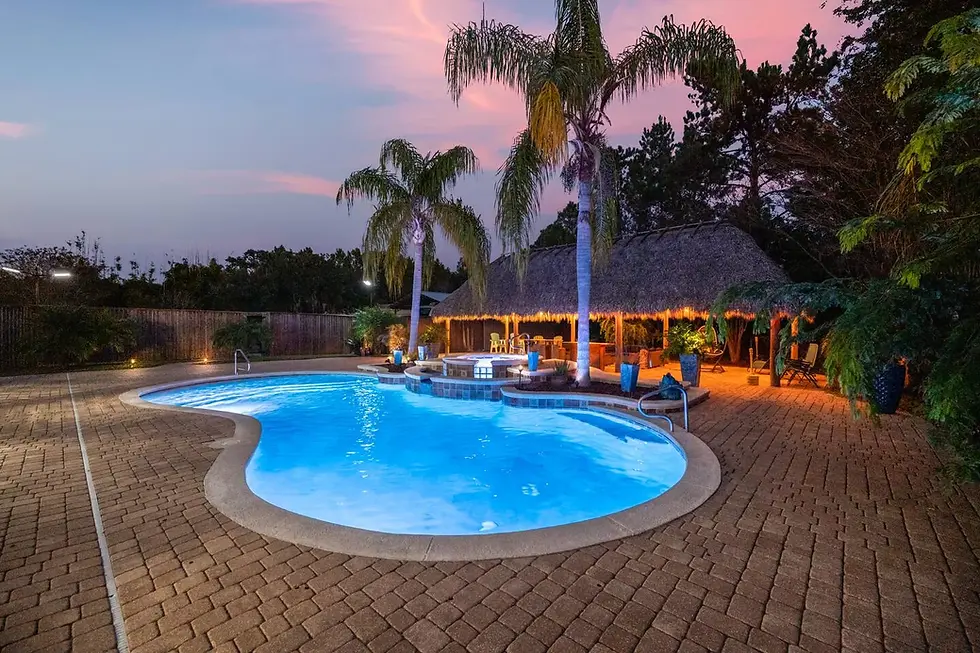
Why Does Total Checkout Cost Matter More Than Nightly Rate?
Total checkout cost is what a guest pays after adding cleaning fees, service fees, taxes, and any other platform charges to the advertised nightly rate. In St. Augustine, guests comparing vacation rentals evaluate total trip cost across Airbnb, Vrbo, and direct booking sites before they commit. A property advertised at $180 per night with a $250 cleaning fee and $130 in platform service charges looks far less competitive than a property at $210 per night with a $95 cleaning fee and comparable service fees.
Cleaning fees are the most common hidden margin killer for St. Augustine vacation rental owners. Many owners set cleaning fees based on their actual cleaning cost plus a margin, without considering how that number changes the perceived value of the listing. Specifically, a three-bedroom property with a $300 cleaning fee on a two-night booking means guests are effectively paying $150 per night just for cleaning. That math drives guests toward longer-stay competitors or hotels that bundle cleaning into the room rate.
The fix is not to absorb the cleaning cost. The fix is to price the cleaning fee competitively for your property size and market, then recover the difference by optimizing your base nightly rate for longer stays. Many St. Augustine owners are now adjusting minimum-stay requirements dynamically: shorter minimums with lower cleaning fees in low season, longer minimums with full cleaning fees in peak season when demand supports the total cost. This strategy, paired with dynamic pricing tools, consistently outperforms flat cleaning fee structures.
Additionally, St. Augustine adopted a tiered STR fee schedule under Resolution 2025-41, with a base fee of $303.03 plus $79.30 per rental bedroom. These regulatory costs are real and must be accounted for in your pricing model, but they should not be passed to guests as line-item fees. Absorb them into your base rate structure or management fee structure so guests see a clean, competitive total checkout cost.
How Do Zoning and Regulations Create Hidden Vacancy in St. Augustine?
St. Augustine's short-term rental regulations refer to a set of city and county rules that determine where, how, and under what conditions a property can legally operate as a vacation rental. These rules directly affect your listing's visibility and legality. Operating outside these rules, even unintentionally, can result in your listing being removed from Airbnb or Vrbo, fines from the city, or both.
First, St. Augustine requires all short-term rental operators to obtain a business tax receipt and comply with the city's STR ordinance, which includes building safety, zoning, and insurance requirements. Properties in RS-1 and RS-2 residential zoning districts can offer weekly rentals but are prohibited from nightly rentals without proper registration. HP-1 zoned properties allow monthly rentals only, completely eliminating nightly STR options in those areas. Other zoning districts allow nightly rentals with registration, but that registration step is mandatory before any marketing begins.
For a more detailed breakdown of St. Augustine's zoning rules by district, the St. Augustine zoning regulations guide from MasterHost covers the district-level specifics that catch many owners off guard.
Specifically, if your property is registered in the wrong zoning category or operating without a current business tax receipt, Airbnb's compliance team can suppress or remove your listing in response to city enforcement actions. This creates invisible vacancy: your rates look competitive, but guests cannot find or book the property because it isn't appearing in search results. The City of St. Augustine has been actively enforcing its STR ordinance, and the fee schedule under Resolution 2025-41 applies to all operators, compliant or not.
In The Sun VR's regulatory and compliance service tracks these ordinance requirements for every managed property across our St. Augustine portfolio, including zoning classification verification, business tax receipt renewal, and STR fee remittance. It is one of the services that prevents silent suppression from killing an otherwise well-optimized listing.
What Listing Optimization Mistakes Drive Away Bookings?
Listing optimization refers to the process of improving every element of a vacation rental's Airbnb or Vrbo profile to increase search ranking, click-through rate, and booking conversion. The most common optimization mistakes in St. Augustine's competitive 1,130-listing market include thin descriptions with generic language, photo counts below 25 images, missing amenity tags, and titles that fail to incorporate the property's strongest differentiators.
Title structure matters more than most owners realize. An Airbnb title that reads "Cozy 3BR Beach House" competes against dozens of identical descriptions. A title that specifies the property's signature amenity ("Golf Simulator + Hot Tub | Steps from Vilano Beach") captures a distinct search intent and earns higher click-through rates from the guests most likely to book. According to the St. Augustine Vacation Rental Management blog, incorporating specific, searchable keywords in your listing title and description directly influences your visibility in both platform search and Google's vacation rental results.
Description depth also signals quality to the Airbnb algorithm. A 300-word description that lists rooms without context tells guests nothing distinctive about the experience. A 700-800 word description that walks guests through the arrival experience, the outdoor spaces, the neighborhood walkability, and the specific nearby attractions gives the algorithm more content to match against search queries and gives guests more confidence to book without asking clarifying questions.
How Does Photography Quality Affect Search Ranking?
Photography quality directly affects both click-through rate and Airbnb search ranking because the platform's algorithm factors in how often users click a listing's cover photo and then complete a booking. Low-quality or poorly sequenced photos reduce click-through rate, which signals low desirability to the algorithm, pushing the listing further down in results over time.
The first five photos carry disproportionate weight. In St. Augustine's beach and coastal market, outdoor entertaining spaces (hot tubs, pool decks, fire pits, screened lanais) consistently earn higher click-through rates than bedroom or kitchen shots as cover photos. An aerial shot that shows the property's proximity to the beach or canal is worth including in the first ten images whenever the property's location is a genuine selling point. Professional staging and natural light photography outperform phone snapshots at every price tier, regardless of how attractive the property is in person.
Our interior design and staging approach at In The Sun VR treats photography prep as a revenue event, not an administrative task. We sequence photos by the amenities that matter most to each property's target guest profile. A family-focused property in Vilano Beach leads with the outdoor yard and entertainment space. A downtown Historic District property leads with the architectural character and walkability context. The photo order should match the guest's booking decision hierarchy, not the owner's pride in the primary bedroom.
Which St. Augustine Neighborhoods and Niches Attract the Most Reliable Bookings?
St. Augustine's short-term rental demand is not uniform across neighborhoods, and understanding where reliable bookings come from is one of the most underused competitive advantages available to property owners. Specifically, four distinct sub-markets operate with different guest profiles, seasonality patterns, and amenity expectations: Vilano Beach, St. Augustine Beach, Crescent Beach, and the Historic District.
Vilano Beach attracts a low-key, surf-culture family crowd that values beach proximity and outdoor entertaining amenities. Properties here with dual fire pits, hot tubs, and fully fenced yards for kids and pets (like the portfolio properties managed by In The Sun VR in this neighborhood) consistently earn premium summer rates and solid shoulder-season occupancy because the guest profile extends beyond peak beach season into spring and fall weekend getaways.
The Historic District serves a different guest entirely: couples celebrating anniversaries and birthdays, history-focused travelers, and groups who want to walk to St. George Street, dine at downtown restaurants, and explore Fountain of Youth Archaeological Park and Colonial Quarter without renting a car. Properties here benefit from strong off-season demand because culture and history tourism doesn't shut down in January the way beach tourism does.
Crescent Beach and St. Augustine Beach properties serve the core summer beach vacation market but face the sharpest September cliff in occupancy. Owners in these areas who rely solely on summer bookings will see their vacation rental sitting empty for three to four months annually regardless of pricing. The owners who fill that gap consistently add amenities that attract niche travelers: remote workers who need dedicated workspace and fast WiFi, families planning spring break trips in late February rather than peak March, and event-goers attending St. Augustine Amphitheater shows and the Nights of Lights season from November through January.
Targeting niche traveler profiles is one of the most actionable content gaps competitors in this market consistently miss. For a deeper look at which areas and property types perform best by season, our guide to short-term rental management in St. Augustine covers neighborhood-level performance differences with practical guidance for owners in each area.

What Amenities and Guest Experience Details Move the Needle?
Amenity investment refers to the deliberate selection and staging of property features that guests mention most frequently in five-star reviews and that appear in top-performing listings' photo sets. In St. Augustine's 2026 STR market, guests increasingly expect fast Wi-Fi, updated appliances, streaming services, beach gear, and at least one "signature amenity" that justifies the booking over a comparable hotel or competing rental. Generic furnishings and basic amenities are baseline, not differentiators.
Based on what we see across our portfolio, the amenities that earn the highest frequency of first-line review mentions in St. Augustine properties are: private outdoor hot tubs, fire pits, outdoor dining spaces with functional grills, and property-provided beach gear including chairs, umbrellas, and wagons. These amenities convert particularly well because they appear prominently in listing photos and require minimal guest effort to enjoy. A guest who sees a fire pit surrounded by comfortable seating in the listing photos mentally places themselves at that property in a way that a photo of a well-organized linen closet never achieves.
Beyond amenities, the guest communication experience directly affects review scores and repeat booking rates. A delayed response to a pre-booking inquiry can cost a booking on Airbnb, where guests often message three or four properties simultaneously and book whichever one responds first with a helpful, detailed answer. Post-booking communication that includes a local area guide, clear arrival instructions, and a proactive check-in message reduces the mid-stay support burden and consistently moves five-star review rates higher.
Cleanliness is non-negotiable and not worth treating as a cost to minimize. According to Airbnb's own published hosting guidance, cleanliness is the most-mentioned factor in negative reviews across all price tiers. A single poor cleanliness review can suppress a listing's ranking for weeks. The operational value of consistent, hotel-quality turnover standards is measurable in search rank and review score, not just guest satisfaction.
How Can Direct Marketing and SEO Reduce Your Dependence on Airbnb?
Direct marketing for vacation rentals means building a booking pipeline outside of Airbnb and Vrbo through channels including a property's own website, social media presence, email lists, and search engine optimized content. In St. Augustine's 2026 market, property owners who rely exclusively on Airbnb for all bookings are vulnerable to algorithm changes, platform fee increases (currently 3% for hosts plus 14-16% from guests on standard bookings), and search ranking fluctuations outside their control.
A direct booking strategy starts with a professional property website optimized for St. Augustine vacation rental search queries. Guests who discover a property through organic Google search and book directly pay no platform service fee, which means the owner captures the full booking value. More importantly, direct bookers tend to be higher-intent travelers who have done more research before booking, resulting in fewer last-minute cancellations and better review outcomes.
Social media content that showcases the property's guest experience, neighborhood, and seasonal advantages reaches the right audience at the awareness stage. A consistently managed Instagram presence showing actual guest experiences at the fire pit, on the kayaks, or at the hot tub after a beach day creates social proof that complements formal review systems. Platforms like Airbnb and Vrbo reward listings with strong external traffic signals, so a direct marketing strategy that drives outside traffic to your listing actually improves your platform ranking as well.
In The Sun VR's SEO and content marketing service builds exactly this kind of multi-channel visibility for managed properties, reducing platform dependency while simultaneously improving the listing's algorithmic performance on Airbnb and Vrbo. It's one of the services that most boutique property management companies in St. Augustine don't offer at all, and the differentiation shows in long-term revenue stability across our managed portfolio.
For owners who want to explore this topic further, our 2026 guide to vacation rental management companies in St. Augustine covers how different management approaches handle marketing and channel diversification.
Frequently Asked Questions
Why is my vacation rental sitting empty even with competitive pricing in St. Augustine?
Competitive pricing is necessary but not sufficient in St. Augustine's market of roughly 1,130 active STR listings as of 2026. Vacancy despite competitive rates typically indicates one or more of the following: poor listing visibility due to low review count or thin descriptions, static pricing that doesn't respond to seasonal demand shifts, high total checkout costs from cleaning fees that offset your nightly rate advantage, or a listing presentation that fails to convert browsers into bookers. Fixing listing quality, photo sequencing, and dynamic pricing almost always outperforms further rate reductions.
What occupancy rate should my St. Augustine vacation rental be hitting in 2026?
According to AirDNA's 2026 Market Overview, the average occupancy rate across all active St. Augustine STR listings sits at approximately 56%. Median properties per Airbtics 2026 data achieve around 64% occupancy over a trailing 12-month period, while top-performing listings reach 81-82% occupancy according to AirROI's 2026 STR Market Report. If your property is performing below 50% annually and pricing is competitive, the gap is almost certainly a listing optimization and marketing problem rather than a pricing problem.
How does seasonality affect vacation rental bookings in St. Augustine?
Seasonality is one of the most significant factors affecting St. Augustine vacation rental occupancy. Peak demand arrives in March, when occupancy averages 74-85%, and remains strong through June and July for the summer beach season. Occupancy drops sharply in September, often falling below 40% across the market. Average monthly revenue swings from roughly $6,000-$6,700 in peak months to $3,300-$3,400 in slow months. Owners who apply the same pricing and minimum-stay rules year-round will experience preventable vacancy in low-demand periods.
Do St. Augustine vacation rentals need a permit or license?
Yes. The City of St. Augustine requires all short-term rental operators to obtain a business tax receipt and comply with the city's STR ordinance, including building safety, zoning, and insurance requirements. Under Resolution 2025-41, the city charges a base fee of $303.03 plus $79.30 per rental bedroom. Properties in RS-1 and RS-2 zoning districts are prohibited from nightly rentals without registration, and HP-1 zoned properties allow monthly rentals only. Operating without proper registration can result in your listing being suppressed or removed from booking platforms. The St. Augustine zoning regulations guide provides district-level details for each zone type.
What is the 80/20 rule for Airbnb and why does it matter for St. Augustine hosts?
The 80/20 rule for Airbnb means approximately 20% of listings in a market capture the majority of total bookings. In St. Augustine, this top-performing tier consists of properties that appear on the first page of Airbnb and Vrbo search results for their specific category and neighborhood. First-page placement is driven by review velocity, listing completeness, photo quality, dynamic pricing competitiveness relative to similar properties, and fast response rates. Owners whose listings fall outside this top tier see dramatically lower occupancy regardless of how their rates compare to the market average.
How do cleaning fees affect bookings for St. Augustine vacation rentals?
Cleaning fees are one of the most common booking barriers for St. Augustine vacation rentals, particularly for two and three-night stays. Guests evaluate total checkout cost, not nightly rate alone, when comparing options across Airbnb, Vrbo, and direct booking sites. A high cleaning fee on a short stay can make a competitively priced property appear significantly more expensive than a competitor with a higher nightly rate but lower cleaning fee. Many St. Augustine owners now set cleaning fees dynamically, applying lower fees in shoulder seasons and adjusting minimum-stay requirements to improve total-cost competitiveness without reducing base revenue per booking.
Which St. Augustine neighborhoods perform best for short-term rental investment?
Performance varies significantly by neighborhood and guest profile. Vilano Beach attracts families seeking outdoor entertaining space and beach proximity, with strong summer and shoulder-season demand. The Historic District draws couples, cultural travelers, and groups who value walkability to St. George Street and downtown dining, delivering more consistent off-season occupancy than coastal properties. Crescent Beach and St. Augustine Beach serve the core summer beach vacation market but experience the sharpest September occupancy drops. Owners in coastal neighborhoods benefit most from niche targeting strategies like remote-work amenities, pet-friendly positioning, and proximity marketing to St. Augustine Amphitheater and Anastasia State Park events.
Is it worth hiring a vacation rental management company in St. Augustine?
Whether hiring a property management company is worth it depends on your current performance gap. If your listing is consistently underperforming the 56% average occupancy in St. Augustine's 2026 market and you've already adjusted pricing and photos without improvement, professional management typically generates a net revenue increase that exceeds the management fee. Full-service property management in St. Augustine typically costs 20-30% of gross revenue, but top-managed properties in this market routinely achieve 15-30% higher annual revenue than self-managed comparables through dynamic pricing, listing optimization, and multi-channel marketing. Our guide to evaluating property management for St. Augustine owners walks through the decision framework in detail.
What Should You Do If Your St. Augustine Vacation Rental Is Still Sitting Empty?
The difference between a St. Augustine vacation rental that earns its full potential and one that underperforms rarely comes down to nightly rate. In 2026, with over 1,100 active listings competing for the same guest pool, visibility, presentation, pricing responsiveness, and total checkout cost competitiveness are the variables that actually move occupancy from the 44-47% median range to the 80%+ top tier. Start with your listing's photo sequence and title. Move to your pricing calendar and minimum-stay rules by season. Then audit your total checkout cost against comparable properties. Each of these levers costs nothing to adjust and delivers measurable results within a booking cycle.
If you've worked through those changes and your vacation rental is still sitting empty in St. Augustine, the problem is likely systemic: a combination of factors that require coordinated expertise in listing optimization, dynamic pricing, and guest experience management rather than individual adjustments made one at a time. That's the kind of problem professional management solves.

If your St. Augustine vacation rental is sitting empty despite competitive pricing and you're ready for a data-driven approach that covers listing optimization, dynamic pricing, and direct marketing under one roof, In The Sun VR is accepting new managed properties in St. Augustine, Vilano Beach, Crescent Beach, and the Historic District. Our team brings hands-on local expertise and a managed portfolio of proven performers to every new property partnership. Start the conversation at inthesunvr.com.
Written by Seth Balogh, Owner at In The Sun VR
Content powered by inkSTR.co



Comments