

9 Reasons Luxury Villa Management in St. Augustine Demands More Than Great Amenities


Luxury villa management in St. Augustine is a distinct professional discipline, not simply a premium tier of standard vacation rental oversight. The city's 450-year history, its evolving short-term rental landscape, and its guest expectations create an operational environment where granite countertops and a heated pool are table stakes, not differentiators. What actually separates a top-performing luxury villa from a merely expensive one is the operational infrastructure behind every guest interaction, every maintenance call, and every pricing decision.
At In The Sun VR, we manage a portfolio of thirteen properties across Vilano Beach, the Historic District, Crescent Beach, and Anastasia Island. What we see consistently is that owners who invest heavily in amenities but underinvest in management systems leave significant revenue on the table. According to AirDNA, the top 10% of St. Augustine short-term rentals earn $9,694 or more per month at occupancy rates above 81%. The gap between that tier and the median is not square footage or hot tub size. It is systems, strategy, and local expertise.
This article covers the nine factors that define genuine luxury villa management in St. Augustine, addressing the gaps that most competitors ignore: regulatory compliance, historic preservation challenges, concierge-level guest experiences, and the real performance data that separates aspiration from results.
TL;DR: Luxury villa management in St. Augustine requires compliance expertise, dynamic pricing, multi-platform distribution, and concierge-level hospitality beyond physical amenities.
According to AirDNA, St. Augustine STRs average a $285.80 ADR and 56% occupancy market-wide; top-quartile properties achieve 66%+ occupancy and $372+ nightly rates.
St. Augustine's historic district properties face unique preservation and maintenance requirements that generic management companies are not equipped to handle.
Seasonal demand swings are significant: peak revenue averages $5,992 per month in July, June, and December versus $3,357 during the low season (AirROI 2026).
Regulatory compliance in St. Johns County is currently light, but supply grew 119% in the past year (AirROI 2026), signaling that rule changes may follow.
Multi-platform distribution across Airbnb, VRBO, Booking.com, and direct booking channels is essential for luxury ADR stability and occupancy depth.

1. What Does Genuine Luxury Villa Management in St. Augustine Actually Cover?
Luxury villa management in St. Augustine refers to a comprehensive property oversight model that combines revenue optimization, guest hospitality, regulatory compliance, and physical property care at a standard that justifies premium nightly rates above the market median. Full-service management at this tier goes well beyond cleaning and guest messaging.
Specifically, a genuine luxury management engagement covers dynamic pricing calibrated to local demand signals, professional photography and listing optimization across multiple booking platforms, 24/7 guest communication with hospitality-grade response standards, post-checkout property inspections, vendor coordination for maintenance and repairs, and owner financial reporting with transparent performance data. Most importantly, it covers the judgment calls that automation cannot make: deciding when to hold a rate during soft demand, how to respond to a nuanced guest complaint before it becomes a review, and when a minor maintenance issue signals a larger structural concern.
The St. Augustine market, ranked 16th nationally among best small towns to visit in the U.S. for 2026 by iHeart Media, attracts guests with specific expectations. Guests booking a six-bedroom historic villa steps from St. George Street or a canal-front estate with a heated pool are not comparing you to the nearest Marriott. They are comparing your property to the best vacation experience they have ever had. That benchmark demands a management partner who thinks the same way.
2. How Does St. Augustine's Regulatory Environment Affect Luxury STR Owners?
St. Augustine's short-term rental regulatory environment currently operates with a relatively light registration requirement profile, according to AirROI's 2026 dataset, which found no licensed listings among those analyzed during the April 2026 to March 2026 measurement period. That light framework offers operational flexibility today, but it carries a specific risk that luxury villa owners should plan around proactively.
Active listing supply in St. Augustine grew 119% in the past year, per AirROI 2026. When supply expands that rapidly in a market with high tourism visibility, local governments historically respond with ordinance updates. St. Johns County and the City of St. Augustine each hold jurisdictional authority over short-term rental rules, and the distinction between county and city regulations matters depending on where your property sits. The Castillo de San Marcos National Monument zone and surrounding historic district, for example, may carry aesthetic and operational restrictions beyond standard STR rules.
Florida's transient rental tax applies statewide at 6%, with St. Johns County local surtax obligations layered on top. The Florida Department of Revenue administers remittance requirements, and the Florida Division of Hotels and Restaurants maintains vacation rental licensing standards. Owners who self-manage and miss a regulatory update risk fines, delisting, or permit problems that shut down revenue entirely. At In The Sun VR, compliance monitoring is a standing component of every management engagement, not an add-on service owners have to remember to request. For a thorough overview of tax and licensing obligations, the short-term rental business license and tax compliance guide covers the key requirements St. Augustine owners need to understand.
3. Why Do Historic Properties in St. Augustine Require Specialized Management Expertise?
Historic properties in St. Augustine require management expertise that accounts for coquina stone construction, Victorian-era structural systems, and aesthetic preservation obligations that newer coastal homes simply do not face. St. Augustine, founded in 1565 by Spanish explorers, is recognized as the oldest continuously inhabited European-established settlement in the continental United States. That history translates directly into maintenance complexity for property owners.
Coquina stone walls, the building material visible throughout the city including at the Castillo de San Marcos National Monument, require moisture management practices that differ from concrete block or frame construction. Victorian-era windows and balconies carry structural considerations that a standard residential contractor may not recognize. The Lightner Museum, housed in the former Alcazar Hotel, demonstrates the preservation standard the city expects for its built heritage, and that standard extends to private properties in regulated zones.
In The Sun VR manages the Restored Historic Church, a converted 2-bedroom property with cathedral ceilings and Gothic arched windows walking distance from downtown. Keeping that property performing at premium rates requires vendor relationships with contractors who understand historic construction, not a general handyman list. Luxury villa owners with architecturally significant properties need a management partner who maintains exactly those relationships. For a detailed look at one of St. Augustine's most distinctive historic properties, Castillo de la Paz offers a compelling case study in historic villa management. For deeper context on what management choices mean for St. Augustine property owners, the guide on whether property management is worth it provides a useful framework for weighing your options.
4. What Revenue Performance Should Luxury Villa Owners Expect in St. Augustine?
Revenue performance for luxury villas in St. Augustine varies significantly by property tier, and understanding where your property should sit matters before you can evaluate whether your current management approach is delivering. According to AirROI's 2026 dataset, the top 10% of St. Augustine Airbnb listings earn $9,694 or more per month, achieve occupancy rates above 81%, and command nightly rates of $554 or higher. The market-wide average annual STR revenue is $35,500, with an average daily rate of $285.80 (AirDNA).
For properties that qualify as luxury rentals St. Augustine, FL, meaning three or more bedrooms, premium amenities, professional photography, and high-intent listing content, the performance ceiling is substantially higher than the market average. Strong-performing STR properties in the top quartile maintain 66% or higher occupancy and achieve nightly rates of $372 or more, per AirROI 2026. The RevPAR gap between the market median ($106) and the top decile ($267) is not primarily a function of property quality. It reflects pricing strategy, listing visibility, and guest experience management.
Seasonality demands active management, not just seasonal rate cards. Peak months (July, June, and December) average $5,992 in monthly STR revenue at $343 ADR (AirROI 2026). The low-season trough (September, January, and October) drops to $3,357 monthly at $305 ADR. The gap between those periods is where dynamic pricing earns its value: adjusting not just for months but for specific weeks, local events like Nights of Lights, and competitive gaps in the local calendar. Flat rate structures leave money on the table in peak season and undercut occupancy in shoulder periods.
5. How Should Luxury Villa Management Handle Guest Screening and Damage Protection?
Guest screening for luxury STR properties is the operational practice of verifying guest identity, reviewing booking history, and assessing risk before granting access to a high-value property. For luxury villas in St. Augustine, where a single damage event can represent thousands of dollars in restoration costs, especially in historic properties with irreplaceable architectural elements, informal screening is not adequate.
Professional-grade screening involves identity verification through platforms such as Truvi (formerly Superhog), which provides identity verification and background screening specifically designed for short-term rental contexts. Beyond platform tools, the process includes review history analysis, pre-stay messaging that establishes expectations, documented policy acknowledgment, and criteria alignment before confirming a booking. Skipping any of these steps on a $500-per-night listing introduces unnecessary risk.
Damage protection for high-value St. Augustine properties deserves specific attention that most management discussions treat superficially. Standard Airbnb AirCover provides some protection, but luxury villa owners with properties containing antique furnishings, original architectural details, or resort-level outdoor amenities like a heated pool with a tiki bar should maintain separate short-term rental liability coverage. Confirming that your insurance policy covers transient occupancy is not optional. Many residential homeowner policies exclude STR use entirely, and discovering that exclusion after a damage event is the worst possible time. Discuss your coverage terms with your insurer before your first guest checks in.
6. Why Is Multi-Platform Distribution Non-Negotiable for Luxury Villa Revenue?
Multi-platform distribution for luxury STR properties refers to the strategy of listing a property simultaneously across Airbnb, VRBO, Booking.com, and direct booking channels to maximize reach, reduce platform dependency, and maintain ADR stability. Relying on a single platform is a concentrated risk that even strong-performing luxury properties cannot afford in 2026.
According to AirDNA, 64% of St. Augustine STR listings already distribute across both Airbnb and VRBO simultaneously, while 24% are Airbnb-only and 12% are VRBO-only. Airbnb-only operators are one algorithm change away from a significant occupancy drop. The average Airbnb booking lead time in St. Augustine is 57 days in advance (AirROI 2026), meaning your listing needs sustained visibility across channels well before peak periods, not just during them.
For the luxury tier, channel mix matters beyond raw visibility. Marriott Homes & Villas, cited by Home Team Luxury Rentals as a distribution partner, represents the kind of premium booking channel that accesses guests who expect hotel-caliber service standards and book at rates commensurate with that expectation. Booking.com and Expedia reach international travelers who often book higher-priced properties for extended stays. Each platform attracts a distinct guest profile, and luxury villa owners who optimize only for Airbnb are addressing one segment of a larger demand picture. Building direct booking capability through an owned website adds a channel that carries zero platform commission and compounds in value as SEO authority grows over time. For owners weighing the tradeoffs between platforms and direct booking, the case for booking direct with vacation rental owners instead of through OTAs outlines the revenue and relationship advantages clearly.
7. What Concierge and Experiential Services Separate Luxury Villa Management from Standard STR Management?
Concierge and experiential services in luxury villa management refer to curated, property-level arrangements that extend guest value beyond the physical rental itself, connecting guests with St. Augustine's historic and cultural experiences in ways that most self-managed properties cannot deliver. This is the dimension of luxury STR management that competitors in the St. Augustine market consistently underserve.
First, consider what guests booking a six-bedroom villa in the historic district are actually seeking. They chose St. Augustine specifically: the Colonial Quarter, the living history of the city's 450-year-old footprint, evening walks past the Flagler College campus, the Nights of Lights season when St. George Street and the surrounding district illuminate with millions of white lights. For these guests, a welcome guide that suggests generic activities is a missed opportunity. A pre-arrival message with a secured reservation at a specific restaurant, a private tour booking at Castillo de San Marcos, or a curated itinerary for the December Nights of Lights season signals a property management operation that is thinking at the guest experience level, not just the operational level.
Additionally, the Fountain of Youth Archaeological Park, the St. Augustine Lighthouse and Maritime Museum, and Anastasia State Park are all bookable in advance and often sell out during peak season. A luxury villa management operation that pre-briefs guests on booking windows and makes specific recommendations creates a guest experience that earns five-star reviews on specificity alone. That review quality compounds into Airbnb algorithm ranking, which compounds into occupancy. Experiential curation is not a soft service. It is a revenue mechanism. For a practical framework on delivering the kind of hospitality that drives top ratings, the complete guide to 5-star guest experience and hosting in St. Augustine covers the operational standards that separate luxury properties from the rest.
8. How Does Listing Optimization Affect Luxury Villa Performance in the St. Augustine Market?
Listing optimization for luxury villas in St. Augustine is the systematic process of aligning a property's title, description, photography, amenity documentation, and pricing structure with the specific search behaviors of high-intent guests booking premium properties in this market. A poorly optimized listing suppresses algorithmic visibility regardless of property quality.
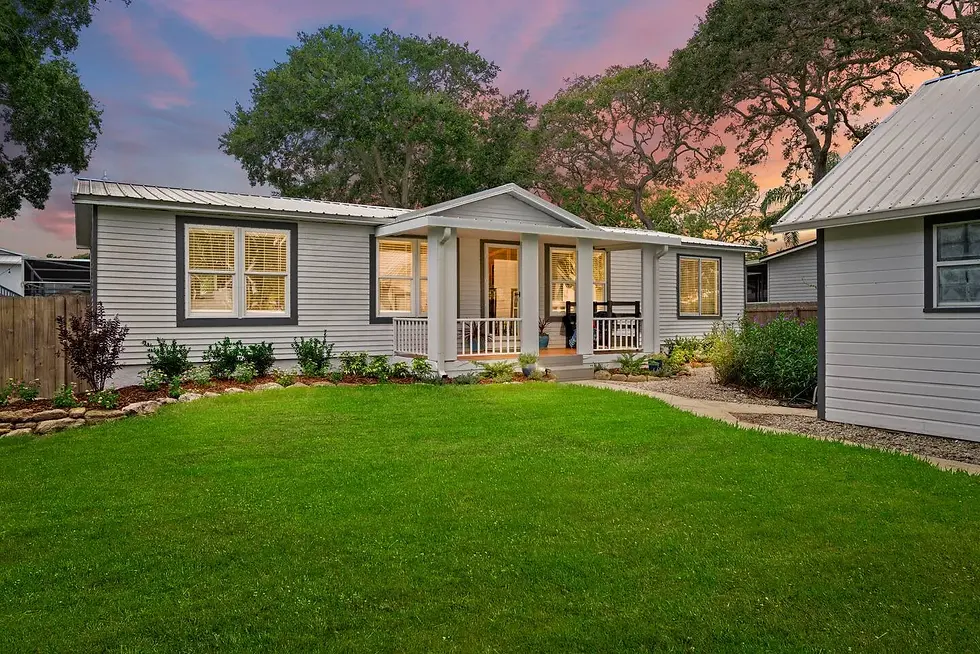
The title earns the click. The photography earns the decision. The description earns the booking. That sequence holds for every listing on Airbnb and VRBO, and luxury properties face a specific challenge: they must communicate premium value in a thumbnail before a guest ever reads a single word. Professional photography is not optional at this tier; it is the primary conversion driver. Properties photographed with wide-angle architectural shots, twilight exterior images, and lifestyle staging consistently outperform properties photographed with a smartphone regardless of actual amenity quality. The vacation rental photography staging secrets that triple booking inquiries offer a detailed look at what separates converting listings from ones that get scrolled past.
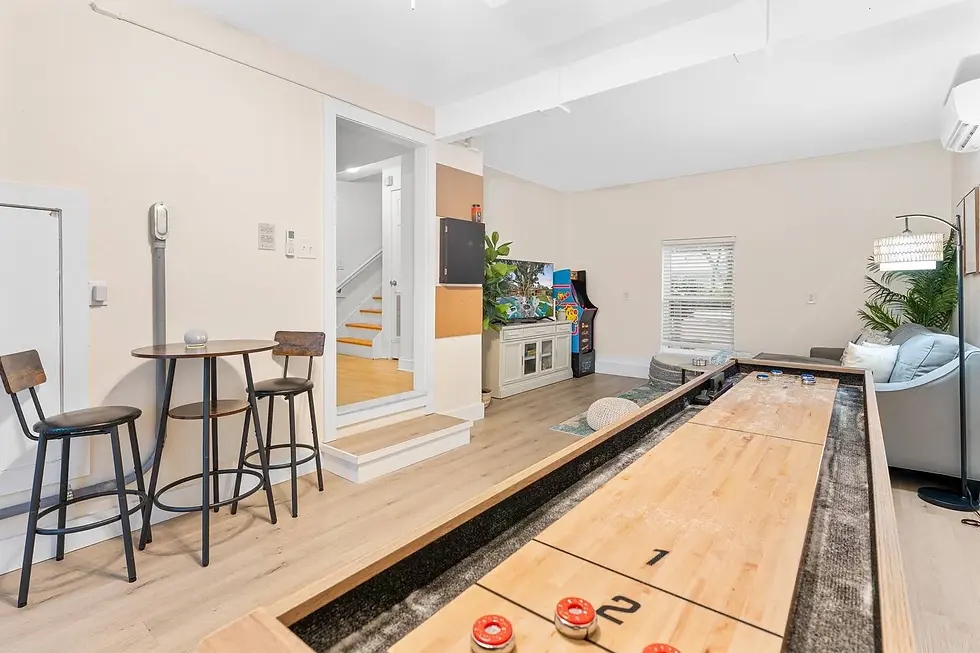
Amenity documentation is where many luxury owners leave ranking signals on the table. St. Augustine STR data shows that 99% of listings offer internet, 97% offer air conditioning, and 94% offer parking as standard (AirDNA). Listing those features adds nothing. Listing a golf simulator, a Sand Pickle court, a floating canal dock, or a private heated spa at 82 degrees adds everything. Specificity in amenity language drives both algorithm ranking for amenity-specific filters and conversion among guests who search for those exact features. In The Sun VR treats listing optimization as an ongoing process, not a one-time setup task, refreshing content seasonally and updating amenity language based on what guests actually search for in the St. Augustine market. For practical guidance on maximizing what your listing can earn, the analysis of the best timing for maximum St. Augustine rental income offers season-by-season revenue context that complements listing strategy.
9. What Does Owner Transparency and Reporting Look Like in True Luxury Villa Management?
Owner transparency in luxury villa management refers to the structured reporting systems, real-time data access, and proactive communication practices that allow property owners to understand exactly how their asset is performing without having to chase their management company for information. For absentee and out-of-state owners specifically, this transparency is not a courtesy. It is a fiduciary standard.
Specifically, a professional management partner should provide monthly financial statements that break down gross revenue, management fees, maintenance costs, and net owner income clearly. Occupancy and ADR benchmarks should be provided in the context of comparable market performance, not just as raw numbers. When a maintenance issue occurs, the owner should be notified with a cost estimate and resolution timeline before the work is completed, not after the invoice arrives. And when a property underperforms in a given month, a credible management partner explains why with market data rather than vague reassurances.
The difference between a management company that provides an owner portal with reservation status and one that provides genuine performance analysis is significant. For luxury villa owners in St. Augustine managing a six-figure annual revenue asset, the reporting relationship should resemble a financial partnership. You should know your RevPAR relative to the market, your booking lead time trends, and your review score trajectory as a function of specific operational decisions, not just as a number that fluctuates unexplainably month to month. Owners evaluating management companies should ask directly: what does your reporting include, how frequently, and what happens when the numbers are not where they should be? The top questions to ask a vacation rental management company in St. Augustine provides a ready framework for that conversation.
How Do Luxury Villa Management Approaches Compare Across the St. Augustine Market?
Management Factor | Self-Managed | National Platform (e.g., Vacasa) | Boutique Local (e.g., In The Sun VR) |
Dynamic Pricing | Manual or basic tool; misses event demand signals | Automated; limited local calibration | Active management with local event monitoring |
Historic Property Expertise | Owner-dependent; variable | Standardized vendor network; limited specialist access | St. Augustine-specific contractor relationships |
Concierge Services | None or minimal | Generic welcome guide | Curated local experience recommendations and bookings |
Multi-Platform Distribution | Typically Airbnb-only | 50+ channels; standardized listings | Airbnb, VRBO, direct booking; optimized per property |
Regulatory Compliance | Owner researches; often misses updates | Macro monitoring; misses local ordinance changes | Local compliance monitoring; proactive owner alerts |
Guest Screening | Platform default; no supplemental verification | Platform default; some supplemental tools | Identity verification, review history, policy documentation |
Owner Reporting | DIY spreadsheets | Proprietary portal; standardized reporting | Monthly performance reporting with market benchmarks |
Frequently Asked Questions About Luxury Villa Management in St. Augustine
How much does luxury villa management cost in St. Augustine, FL?
Luxury villa management in St. Augustine typically ranges from 20% to 30% of gross rental revenue for full-service boutique management, with national platforms often falling at the lower end of that range but providing less local personalization. The management fee should be evaluated against the revenue lift it delivers: a manager who charges 25% but increases your annual revenue by 20 to 30% compared to self-management delivers a net gain, not a cost. In The Sun VR's fee structure reflects full-service management including dynamic pricing, listing optimization, guest communication, and compliance monitoring. Reach out at inthesunvr.com for a specific revenue projection and fee discussion.
What are the current short-term rental regulations in St. Augustine, FL?
St. Augustine's STR regulatory environment as of 2026 operates with a relatively light registration profile, according to AirROI's 2026 dataset covering April 2026 through March 2026. However, St. Johns County and the City of St. Augustine each maintain separate jurisdictional authority, and Florida's transient rental tax at 6% applies statewide with local surtax obligations layered on top. Given that active listing supply grew 119% in the past year, regulatory frameworks may evolve in response. Property owners should verify current requirements directly with the City of St. Augustine and St. Johns County, and a professional management partner with active local compliance monitoring is the most reliable way to stay current.
What occupancy rate should a luxury villa in St. Augustine realistically achieve?
A top-quartile luxury villa in St. Augustine should target 66% or higher annual occupancy, based on AirROI 2026 benchmarks for strong-performing STR properties. The top 10% of listings achieve 81% or higher occupancy at nightly rates of $554 or more. Market-wide occupancy averages 56% (AirDNA), but luxury properties with professional management, dynamic pricing, and multi-platform distribution should outperform that benchmark significantly. Seasonal variation is substantial: peak months like July and December average 53.2% occupancy at $343 ADR (AirROI 2026), while active revenue management in shoulder periods is what separates above-average from average annual performance.
Should I choose a local or national management company for my St. Augustine luxury villa?
Local boutique management companies generally outperform national platforms for luxury St. Augustine properties on three specific dimensions: local contractor relationships for historic property maintenance, regulatory awareness of St. Johns County-specific rule changes, and the concierge-level hospitality that luxury guests expect. National platforms provide scale and broad distribution channel access, but often apply standardized processes that do not account for the particular character of St. Augustine's historic district properties or the seasonal demand nuances of the Vilano Beach market. For owners of high-value or architecturally significant properties, a local specialist with a demonstrable portfolio of comparable properties is the more defensible choice. The best vacation rental management companies in St. Augustine for 2026 provides a comparative overview of local and national options currently operating in the market.
How does dynamic pricing work for luxury villas in St. Augustine's seasonal market?
Dynamic pricing for St. Augustine luxury villas involves adjusting nightly rates in real time based on occupancy demand, local event calendars, competitor availability gaps, booking lead time signals, and length-of-stay patterns. The St. Augustine market shows a significant seasonal swing: peak monthly revenue averages $5,992 at $343 ADR during July, June, and December, dropping to $3,357 at $305 ADR during the low-season months of September, January, and October (AirROI 2026). Static seasonal rate cards miss the within-season variability: a week during Nights of Lights in December commands substantially higher rates than a quiet December weekday, and capturing that premium requires active pricing management rather than a set-and-forget approach.
What makes a luxury villa in St. Augustine's Historic District harder to manage than a standard beach house?
Historic District properties in St. Augustine present management challenges that include coquina stone moisture management, Victorian-era structural maintenance, aesthetic compliance considerations in regulated preservation zones, and vendor sourcing that requires contractors familiar with historic construction methods. These properties often command premium ADR because of their architectural character and walkable proximity to landmarks like the Castillo de San Marcos and Flagler College, but that premium is contingent on preserving the property's historic integrity. A management company without established relationships with qualified historic property contractors is a liability for this asset type, regardless of how strong their general management processes are. The guide to designing historic district compliant rentals in St. Augustine outlines the specific rules and aesthetic standards owners need to work within.
What concierge services should a luxury villa management company provide in St. Augustine?
Luxury villa management in St. Augustine should include concierge-level services that connect guests with the city's specific cultural and historical experiences beyond the property itself. At minimum, this includes curated local experience guides with specific restaurant recommendations (noting which require advance reservations and how far out), coordination of experiences like private tours at Castillo de San Marcos or Fountain of Youth Archaeological Park, and seasonal itineraries for major events like the Nights of Lights festival. For properties commanding rates above the market median, pre-arrival concierge touchpoints that deliver tangible local value are a direct driver of five-star review rates, which in turn drive Airbnb algorithmic ranking and sustained occupancy.
What Property Owners Should Do Next
Luxury villa management in St. Augustine is not complicated when the right systems are in place. The properties that consistently land in the top performance tier are not always the ones with the largest pools or the most square footage. They are the ones managed by operators who understand the St. Augustine market specifically: its seasonal demand patterns, its historic preservation requirements, its regulatory trajectory, and its guests' expectations. According to AirDNA, RevPAR across the market rose 6% year-over-year in 2026, outpacing ADR growth, which means occupancy gains driven by active management are the primary lever separating high performers from average ones.
Start by benchmarking your current property against the metrics in this article. If your occupancy sits at or below the 56% market average, if your ADR is closer to the $187 entry-level benchmark than the $372 top-quartile target, or if your management company cannot explain the month-over-month variance in your revenue with market data, those are the signals that your management approach is not performing at the level your property deserves. The complete overview of property management options in St. Augustine for 2026 provides a broader framework for evaluating your choices across the full management landscape. Owners considering whether professional management makes financial sense may also find the St. Augustine short-term rental income calculator guide useful for projecting realistic revenue before making a decision.

If your St. Augustine luxury villa is not performing at the level its amenities and location justify, In The Sun VR manages a portfolio of thirteen properties across Vilano Beach, the Historic District, Crescent Beach, and Anastasia Island, with the local systems, vendor relationships, and pricing expertise that premium properties require. Connect with In The Sun VR to discuss what your property should realistically be earning.



Comments