

Property Management in St Augustine FL: What Owners Must Know in 2026

Updated: Sep 16

Property management in St. Augustine, FL refers to the professional oversight of short-term vacation rentals and long-term residential properties in one of Florida's most historically significant and tourism-driven markets. For vacation rental owners specifically, quality management directly determines occupancy, revenue, and guest satisfaction in a city where the average daily rate reached $285.80 in 2026 and competition among more than 6,800 active listings grows every year.
St. Augustine's short-term rental market averages $285.80 per night (ADR) and $35,500 in annual revenue per property, with a 56% occupancy rate, according to AirDNA data as of 2026.
Revenue per available rental (RevPAR) grew 6% year-over-year in St. Augustine, outpacing ADR growth of 3%, signaling improved occupancy efficiency across the market.
95% of St. Augustine STR listings are entire-home rentals, and 64% appear on both Airbnb and Vrbo simultaneously, making multi-platform management a baseline expectation.
AirDNA assigns St. Augustine a Market Score of 89 out of 100 ("Great"), an Investability score of 87, and a Rental Demand score of 84, confirming the city as one of Florida's strongest STR markets.
Full-service property management in St. Augustine typically covers listing optimization, dynamic pricing, guest communication, cleaning coordination, maintenance, compliance, and owner reporting under one contract.
The most common minimum stay policy among St. Augustine STRs is 3 nights (33.7%), followed by 2 nights (29.2%), which directly affects revenue strategy and how a manager prices your calendar.
Property management in St. Augustine, FL is a professional service in which a licensed company or operator handles the day-to-day and strategic operations of a rental property on behalf of the owner. For short-term rental properties, this includes listing creation, dynamic pricing, guest communication, cleaning coordination, maintenance oversight, regulatory compliance, and financial reporting. The goal is to maximize the property's revenue while eliminating the operational burden from the owner.
St. Augustine is the oldest continuously occupied European settlement in the United States, and its combination of historic architecture, Atlantic coastline, and year-round tourism creates a rental market with four distinct seasonal demand peaks: the Nights of Lights holiday celebration from November through January, spring break in March and April, the summer beach season from June through August, and fall festival season in October. Managing across those peaks without leaving money on the table requires a data-driven approach, not guesswork.
At In The Sun VR, we manage a portfolio of vacation rental properties across Vilano Beach, St. Augustine Beach, Crescent Beach, and the Historic District. The market performance differences between those neighborhoods are significant, and the management strategy for a canal-front property near Crescent Beach differs materially from the approach for a restored Victorian near St. George Street. Generic management ignores those differences. Professional, locally grounded management is built around them.
If you want a deeper look at the full scope of what professional oversight involves, our guide to short-term rental management in St. Augustine, Florida covers the operational layers in detail.
How Does St. Augustine's STR Market Perform in 2026?
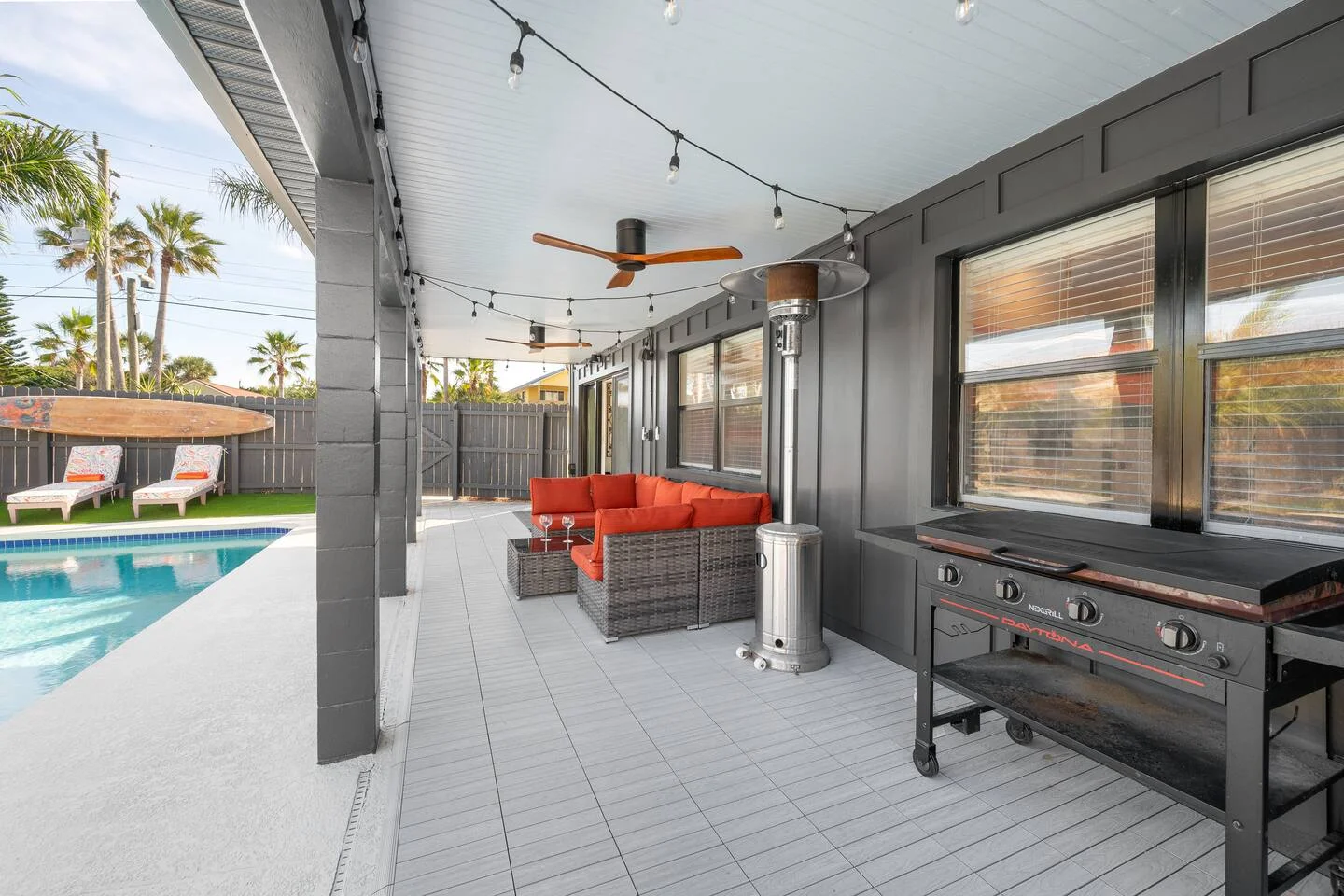
St. Augustine's short-term rental market is one of the strongest in Florida by multiple performance metrics. According to AirDNA data for 2026, the market averages a 56% occupancy rate (up 4% year-over-year), a $285.80 average daily rate (up 3%), and $35,500 in annual revenue per property (up 3%). RevPAR reached $157.50, growing 6% year-over-year, which means the market is not just adding supply; it is filling that supply more efficiently.
The broader market context matters for understanding what those numbers mean. St. Augustine now has 6,865 total available STR listings, with active listings growing 8% over the past 12 months. That supply growth would normally compress revenue if demand were flat. The fact that RevPAR grew faster than ADR tells you that demand is absorbing new supply, at least for now. A good property manager uses this data to price competitively without racing to the bottom.
AirDNA's Market Score for St. Augustine sits at 89 out of 100, rating the city as "Great" overall. The Investability score of 87 and Rental Demand score of 84 confirm what owners managing properties here already know: this is a legitimate, high-demand rental market with strong fundamentals. The Revenue Growth score of 74 reflects continued upward momentum, not a plateau.
For context on which seasons drive the most income, see our breakdown on the best time to visit St. Augustine for maximum vacation rental income.
How Does Neighborhood Affect Performance?
Vilano Beach properties attract a different guest profile than the Historic District, and that difference directly shapes management strategy. Vilano Beach draws families seeking low-key beach access, outdoor activities, and properties with private pools or canal docks. The Historic District attracts couples, cultural travelers, and group reunions who want walkable access to St. George Street, the Castillo de San Marcos National Monument, and the Lightner Museum. Pricing strategy, minimum stay policies, and amenity investment should reflect which audience your property actually serves.
Crescent Beach properties like Point Break in the In The Sun VR portfolio command strong rates from adventure-oriented guests who want kayak and SUP access combined with quiet beach proximity. St. Augustine Beach draws a broader, higher-volume family audience. Each micro-market has its own demand curve, peak windows, and guest expectations. A manager without genuine local presence will not catch those differences.
What Do Full-Service Property Managers in St. Augustine Actually Do?
Full-service property management in St. Augustine, FL means a management company handles every operational layer of your rental, from initial listing setup through guest checkout and owner reporting, without requiring ongoing owner involvement. Specifically, this includes listing optimization across Airbnb and Vrbo, dynamic pricing calibrated to St. Augustine's seasonal demand calendar, 24/7 guest communication, professional cleaning and turnover coordination, maintenance vendor management, regulatory compliance monitoring, and monthly financial reporting.
That list sounds comprehensive on paper, but the quality of execution varies significantly between providers. The industry standard in 2026 among professionally run boutique managers includes:
Listing optimization: Title keyword structure, description depth, amenity tagging, photo ordering, and review velocity management to maximize platform search ranking on Airbnb and Vrbo.
Dynamic pricing: Real-time rate adjustments based on St. Augustine's four seasonal demand peaks, local events like Nights of Lights, competitor rate monitoring, and minimum stay logic to protect revenue during shoulder seasons.
Guest communication: Pre-booking inquiries, pre-arrival instructions, in-stay support, and post-checkout review requests handled professionally across all booking channels.
Cleaning and turnover: Property-specific checklists, quality verification protocols, and vendor reliability systems that maintain hotel-level standards after every checkout.
Regulatory compliance: Florida DBPR vacation rental licensing, St. Johns County ordinance monitoring, and tourist development tax collection and remittance.
Owner reporting: Monthly financial statements, occupancy data, and performance benchmarks accessible in an owner portal.
In The Sun VR builds all of these functions into its managed property model, specifically because St. Augustine's tourism-driven market punishes operational gaps quickly. A single cleaning miss costs you a 5-star review. A single pricing error during Nights of Lights leaves hundreds of dollars in unrealized revenue per night. A compliance lapse can result in fines or forced suspension of your listing.
What Does a Co-Hosting Model Offer Instead?
Co-hosting is a partial-management arrangement where a professional operator supports specific functions, such as pricing, guest communication, or cleaning coordination, while the owner retains control over other aspects of the rental operation. It is the right fit for owners who are not ready to hand over full management but are burning out on the daily tasks that demand immediate attention.
Most St. Augustine property management companies offer a binary choice: full management or nothing. Owners who want flexible, modular support are often left without a viable option. For a detailed comparison of how these two models differ in practice, the complete guide to St. Augustine short-term rental management walks through the trade-offs clearly.
What Are the Costs of Property Management in St. Augustine?
Property management fees in St. Augustine, FL are typically structured as a percentage of gross rental revenue, ranging from 20% to 30% for full-service vacation rental management, with the exact rate reflecting the scope of services, the management company's local expertise, and the property's revenue potential. Some managers also charge flat monthly fees or add-on charges for specific services like deep cleaning, restocking, or listing setup.
For long-term residential property management, the fee structure differs. Based on publicly available pricing from providers like Ocean Realty & Property Management, which has over 20 years of experience in the St. Johns County market, standard long-term management typically runs around 10% of monthly rent plus a lease placement fee. Coastal Realty and RentGains Property Management also operate in this space, each with their own fee models.
For short-term rental owners, the percentage-of-revenue model aligns the manager's incentive with yours: when your property earns more, the manager earns more. Flat-fee models create the opposite incentive structure. Ask any prospective manager how their fee is calculated and what is explicitly included. Hidden fees for maintenance coordination, restocking supplies, or inspection calls are common and should be disclosed before you sign a contract.
Management Type | Typical Fee Structure | Best For |
Full-Service STR Management | 20-30% of gross rental revenue | Out-of-state owners, absentee landlords, multi-property investors |
Co-Hosting / Partial Management | 10-20% of gross revenue (scope-dependent) | Burned-out self-managers who want partial support |
Long-Term Residential Management | 8-12% of monthly rent + lease placement fee | Owners of single-family homes, condos, townhomes |
Tenant Placement Only | One month's rent (one-time) | Owners who self-manage but need tenant sourcing |
One critical question to ask every provider: do they mark up maintenance costs? Ocean Realty publicly advertises zero markup on routine maintenance. Not every company operates that way, and maintenance markups quietly erode your net income over time.
What Are St. Augustine's STR Regulations and Why Do They Matter?
Short-term rental regulations in St. Augustine, FL are governed by a combination of Florida state law and St. Johns County local ordinances, and they carry real financial consequences for owners who fall out of compliance. AirDNA assigns St. Augustine a Regulation score of 64 out of 100, indicating moderate regulatory constraints relative to other Florida markets.
At the state level, Florida requires vacation rental operators to hold a valid license issued by the Florida Department of Business and Professional Regulation (DBPR). The state also mandates collection and remittance of tourist development taxes and sales tax on short-term rental income through the Florida Department of Revenue. These are not optional, and Airbnb's partial tax collection does not cover every obligation in every jurisdiction.
At the local level, St. Johns County and the City of St. Augustine maintain their own ordinance layers covering registration requirements, occupancy limits, parking standards, and noise restrictions. Properties in historic district zones face additional considerations related to exterior alterations and signage. Flood zone designations, which affect a significant share of coastal and canal-front properties in the St. Augustine market, add insurance and compliance dimensions that out-of-state owners frequently underestimate.
In The Sun VR monitors the St. Augustine regulatory environment actively as a core part of its management model, because regulatory changes in Florida's STR market can move faster than owners tracking from out of state can react. A license lapse or missed tax filing can trigger platform listing suspension, which directly hits your revenue.
For a detailed breakdown of your tax obligations as an STR owner in this market, the resource on short-term rental tax deductions in St. Augustine, FL is worth reviewing before tax season.

How Do You Choose the Right Property Management Company in St. Augustine?
Choosing a property management company in St. Augustine, FL requires evaluating local market expertise, fee transparency, service scope, technology infrastructure, and verifiable track record before signing any contract. The right company for a Vilano Beach beachfront house is not necessarily the right company for a Historic District Victorian or a canal-front Crescent Beach property, because the guest profiles and demand patterns differ significantly.
Here is the evaluation framework that separates competent managers from mediocre ones:
Questions to Ask Every Prospective Manager
How many properties do you currently manage in St. Augustine, and in which neighborhoods? A manager with active properties in your specific neighborhood has real, current performance data. One without local properties is essentially guessing.
What is your fee structure, and what specific services are included? Ask for a written list. Vague answers about "full service" are a red flag.
Do you mark up maintenance or vendor invoices? A straightforward answer either way is acceptable. An evasive answer is not.
What pricing technology do you use, and how often do rates update? Daily dynamic pricing updates are the baseline standard in 2026. Weekly or manual updates are insufficient for a market with St. Augustine's demand volatility.
How do you handle a 3am maintenance emergency? The answer reveals whether they have real vendor relationships or just a list of phone numbers.
What does your owner reporting look like, and how frequently do you communicate performance data? Monthly statements are standard. On-demand access through an owner portal is the current expectation.
Can you provide references from owners with properties similar to mine? Testimonials on a company's own website are marketing. Independent references are evidence.
Red Flags to Watch For
Watch out for contracts that lock you in for more than 12 months without a performance exit clause. Be skeptical of management companies that cannot tell you the specific platforms they list on or the pricing tools they use. Any provider that promises a specific revenue guarantee without knowing your property's details is overpromising.
National platforms like Vacasa and Casago offer scale and brand recognition, but multi-market operators often struggle to replicate the local knowledge and hands-on attention that a boutique St. Augustine-focused manager provides. The trade-off is real and worth factoring into your decision.
For a side-by-side look at the top management options in the St. Augustine market, the 2026 guide to vacation rental management companies in St. Augustine provides a structured comparison.
Is Professional Property Management Worth It for St. Augustine Owners?
Professional property management in St. Augustine, FL is worth the management fee for most owners when the alternative is either self-managing from a distance or failing to optimize pricing and occupancy in a market with four distinct demand peaks and growing supply competition. The real question is not whether management fees cost money; it is whether a well-managed property generates enough additional revenue and saves enough owner time to justify the cost.
Consider the math against the verified market benchmarks. A St. Augustine STR averaging $35,500 in annual revenue under professional management, with a 20-25% management fee, costs approximately $7,100 to $8,875 per year in management fees. Self-managing owners who underperform the market average by even 15% in occupancy or ADR, which is common without dynamic pricing tools and professional listing optimization, lose more than that in unrealized revenue. And that calculation does not account for the owner's time, which for out-of-state owners managing emergency calls, cleaning coordination, and guest disputes has a very real value.
The owners who consistently underperform the market average in St. Augustine are the ones setting flat nightly rates, responding to guest inquiries manually on a delayed schedule, and relying on a single platform for all bookings. All three mistakes are correctable through professional management. This is precisely the kind of optimization that our guide on whether property management is worth it works through in detail with a real cost-benefit framework.
What the Data Says About Multi-Platform Distribution
According to AirDNA data, 64% of St. Augustine STR listings appear on both Airbnb and Vrbo simultaneously, while 24% are Airbnb-only. Single-platform owners are systematically limiting their booking reach in a market where strong multi-platform presence is already the competitive baseline. A professional manager handles channel management across Airbnb, Vrbo, and direct booking channels as part of standard service, with synchronized calendars to prevent double-bookings.
Additionally, 59% of St. Augustine STR listings are available 271 to 365 nights per year, meaning the overwhelming majority of the market is operating on a full-time rental basis. If your property sits vacant more than 40% of the time, you are underperforming a market where 56% average occupancy is the baseline.
Frequently Asked Questions: Property Management in St. Augustine, FL
How much does vacation rental property management cost in St. Augustine, FL?
Full-service vacation rental property management in St. Augustine, FL typically costs between 20% and 30% of gross rental revenue. The exact percentage depends on the scope of services, the management company's local expertise, and your property's size and revenue potential. Additional fees for one-time services like deep cleaning, staging, or listing setup may apply and should be disclosed in writing before you sign a contract. Long-term residential management generally runs 8-12% of monthly rent plus a lease placement fee.
What is the average revenue for a short-term rental in St. Augustine, FL?
According to AirDNA market data as of 2026, the average St. Augustine short-term rental generates approximately $35,500 in annual revenue, with a 56% occupancy rate and an average daily rate of $285.80. Revenue per available rental (RevPAR) reached $157.50, up 6% year-over-year. These are market averages; well-managed properties with premium amenities, strong listing optimization, and dynamic pricing consistently outperform the average, while poorly managed properties fall significantly below it.
Do I need a license to operate a short-term rental in St. Augustine?
Yes. Florida requires short-term rental operators to hold a valid vacation rental license issued by the Florida Department of Business and Professional Regulation (DBPR). Additionally, St. Johns County and the City of St. Augustine maintain local registration requirements and ordinance compliance standards. Tourist development taxes and state sales taxes on rental income must also be collected and remitted through the Florida Department of Revenue. Failing to maintain compliance can result in fines and platform listing suspension.
What is the difference between full-service management and co-hosting in St. Augustine?
Full-service property management means the management company handles every aspect of your rental operation, including listing management, dynamic pricing, guest communication, cleaning coordination, maintenance, compliance, and owner reporting, with minimal owner involvement required. Co-hosting is a partial-management arrangement where the professional operator supports specific functions while the owner retains control over others. Co-hosting typically costs less than full management but requires more owner involvement. The right model depends on how hands-on you want to remain and which specific tasks are creating the most operational burden for you.
Dynamic pricing for St. Augustine vacation rentals is a revenue management strategy in which nightly rates automatically adjust based on real-time demand signals, competitor pricing, local event calendars, and occupancy forecasts. Professional managers use tools that update pricing daily, or more frequently, to capture peak revenue during high-demand periods like Nights of Lights, spring break, and summer beach season, while remaining competitive during slower shoulder seasons. Owners who set flat or manually adjusted rates consistently leave revenue on the table during St. Augustine's demand spikes.
What amenities do St. Augustine vacation rental guests prioritize most?
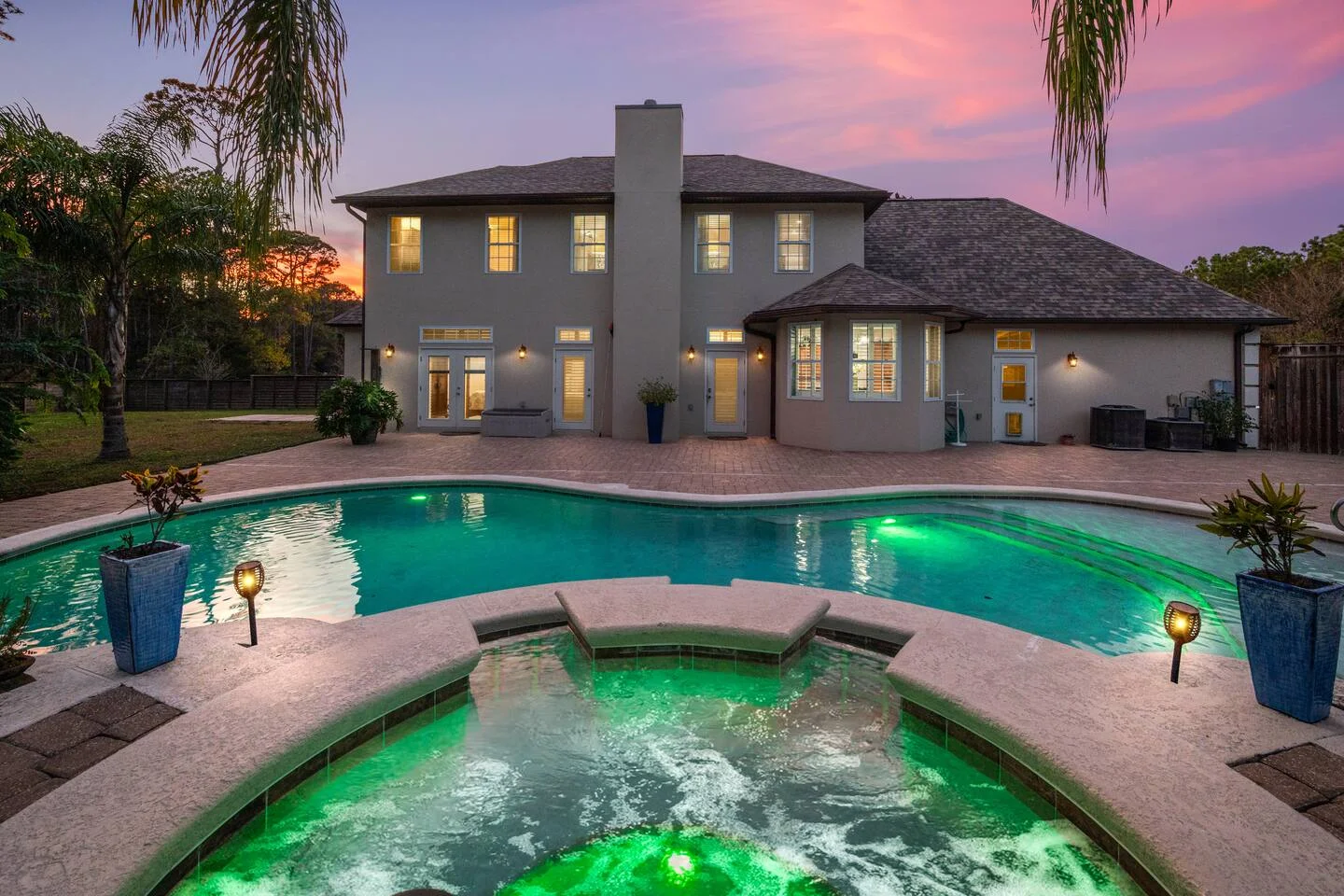
According to AirDNA data, 99% of St. Augustine STR listings offer internet, 97% offer air conditioning, 95% offer wireless internet, and 94% offer parking. These are baseline expectations, not differentiators. The amenities that drive premium nightly rates and strong review scores in St. Augustine's competitive market are private pools, hot tubs, outdoor entertainment spaces (fire pits, tiki bars, outdoor kitchens), pet-friendly accommodations, and activity-specific gear like kayaks, paddleboards, and beach equipment. Outdoor amenity photography consistently earns higher click-through rates on Airbnb than any other image type.
How long does it take a new St. Augustine vacation rental listing to generate consistent bookings?
A new vacation rental listing on Airbnb in St. Augustine typically takes 60 to 90 days to build sufficient review velocity and search ranking to generate consistent bookings without platform promotion. New listings often benefit from Airbnb's "new listing" boost in the first few weeks, which can generate early bookings if the listing is well-optimized. After that initial window, review score accumulation and listing quality become the primary ranking drivers. Professional listing optimization from the start, including strong photography, keyword-rich descriptions, and competitive initial pricing, significantly compresses this ramp-up period.
What makes St. Augustine a strong short-term rental investment market in 2026?
St. Augustine's STR market scored 89 out of 100 on AirDNA's Market Score for 2026, reflecting strong Investability (87), Rental Demand (84), and Revenue Growth (74) scores. The city's unique combination of the oldest continuously occupied European settlement history, Atlantic beaches, annual events like Nights of Lights, and year-round tourism creates four distinct seasonal demand peaks that keep average occupancy above 56%. The rental vacancy rate for St. Augustine's broader housing market sits at just 3.6%, and active STR listings grew 8% in the past year without compressing RevPAR, confirming that demand is absorbing new supply.
How to Get the Most From Your St. Augustine Rental Property in 2026
Maximizing your St. Augustine rental property's performance in 2026 starts with three non-negotiable foundations: a fully optimized listing that ranks well on Airbnb and Vrbo, a dynamic pricing system calibrated to St. Augustine's seasonal demand calendar, and a cleaning and turnover operation that earns consistent 5-star reviews. Every other strategy layer depends on those three working correctly.
Beyond the operational basics, the differentiation opportunities that top-performing St. Augustine rentals consistently exploit are strategic amenity investment and multi-platform distribution. Properties with private pools, hot tubs, or distinctive outdoor features like canal docks or golf simulators command meaningful nightly rate premiums above the $285.80 market average. And as noted earlier, 64% of the market is already dual-listing on Airbnb and Vrbo. Single-platform owners are competing with one hand behind their back.
For the cleaning and turnover side, the vacation rental cleaning checklist for St. Augustine owners provides a practical, property-specific framework that prevents the cleaning gaps that cost owners 5-star reviews.
The one mistake that consistently separates underperforming St. Augustine rentals from strong ones is treating the listing as a static setup task rather than an ongoing optimization project. Airbnb's algorithm rewards click-through rate, booking conversion, and review velocity, all of which change as the market evolves. A listing that performed well in 2025 may need photography updates, description refreshes, and amenity tag additions to stay competitive in 2026 as supply grows.
The difference between a St. Augustine vacation rental that earns its full potential and one that underperforms rarely comes down to location. It comes down to the systems, the standards, and the team managing them. If you want to see what your property is capable of with the right operational foundation, the conversation starts at In The Sun VR.

If you are ready to hand your St. Augustine rental to a team that treats it as a hospitality business, In The Sun VR is accepting new managed properties in 2026. We offer full-service management, co-hosting arrangements, revenue optimization, and STR consulting for owners across Vilano Beach, St. Augustine Beach, Crescent Beach, and the Historic District. Visit In The Sun VR to learn more about our management services and request a no-pressure property assessment.



Comments