

St Augustine Vacation Rental Management: The Real Story

Updated: 18 hours ago
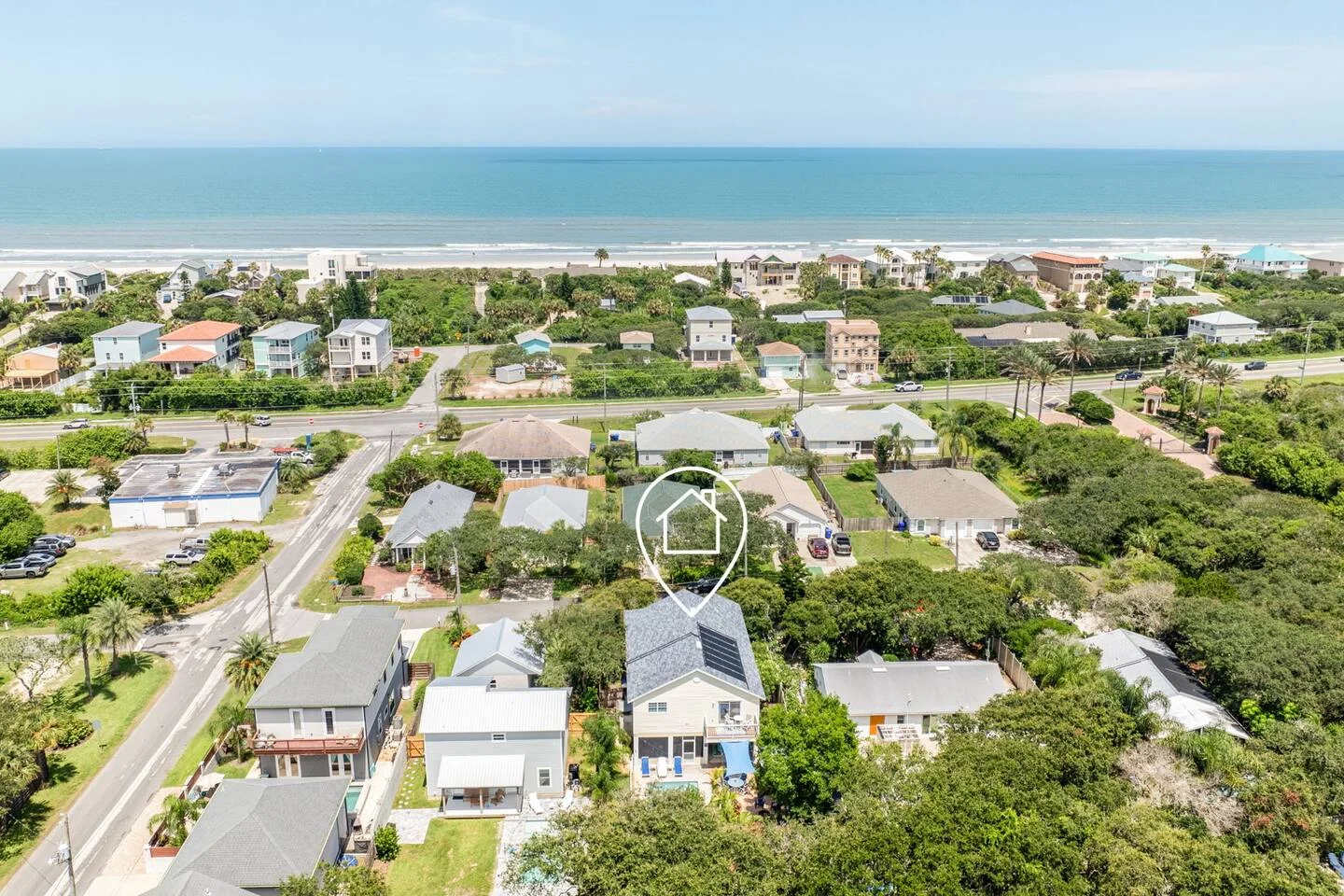
St. Augustine vacation rental management refers to the professional oversight of short-term rental properties in St. Augustine, FL, covering everything from dynamic pricing and listing optimization to guest communication, cleaning coordination, and regulatory compliance. At In The Sun VR, we work with property owners across Vilano Beach, the Historic District, Crescent Beach, and St. Augustine Beach, and the pattern we see repeatedly is this: the gap between a well-managed property and a self-managed one is rarely about location. It is about systems, standards, and who is watching the details when you are not.
St. Augustine STRs average $66,800 in annual revenue per listing, with a 64% annual occupancy rate and an ADR of approximately $283.80, according to AirDNA market data.
Full-service management in St. Augustine typically costs 20-30% of gross rental revenue, covering pricing, guest support, cleaning oversight, and compliance.
The market runs a dual-peak demand cycle: spring (March through May) and the Nights of Lights winter season (November through December), requiring proactive pricing to capture peak rates.
St. Johns County imposes a 6% tourist development tax on stays of six months or less, and local STR operators must obtain a business tax receipt.
Top 10% performers on St. Augustine Beach earn $7,930 or more per month, according to AirROI data, illustrating how management quality directly drives revenue outcomes.
Boutique operators like In The Sun VR offer local, hospitality-driven management that national platforms cannot replicate at the neighborhood level.
The St. Augustine short-term rental market has matured significantly. As of 2026, roughly 6,849 active listings compete for guest bookings across Airbnb, Vrbo, and direct booking channels, according to AirDNA. Standing out in that field, and maintaining strong occupancy through shoulder seasons, takes more than a good property. It takes a management strategy calibrated to how this specific market actually behaves. For a deeper look at the full operational picture, read our ultimate guide to short-term rental management in St. Augustine alongside this article.
This review covers what professional vacation rental management actually costs in St. Augustine, what separates good management companies from mediocre ones, and how to evaluate whether a specific management partner is worth signing with. The intent is honest and direct: you will find real numbers, genuine trade-offs, and specific criteria, not a polished sales pitch for any single company.

What Is St. Augustine Vacation Rental Management and Why Does It Matter in 2026?
St. Augustine vacation rental management is the professional administration of short-term rental properties in St. Augustine, FL, encompassing revenue optimization, guest services, property maintenance coordination, regulatory compliance, and listing performance across platforms like Airbnb and Vrbo. In 2026, the distinction between managed and self-managed properties in this market is measurable in both revenue and review scores.
The St. Augustine STR market carries an investment-grade market score of 91 to 97, per AirDNA, reflecting strong demand fundamentals. But a favorable market does not automatically translate to strong owner returns. According to AirROI seasonal data, median-performing properties on St. Augustine Beach generate around $3,431 per month. Top 10% performers earn more than twice that figure. Professional management is the primary variable separating those two outcomes.
The city's tourism identity, anchored by the Castillo de San Marcos National Monument, the Anastasia State Park shoreline, and the dense walkable core around St. George Street, drives year-round visitor demand. But demand alone does not produce revenue. Capturing peak pricing during Nights of Lights while maintaining acceptable occupancy in October takes deliberate rate management. Most self-managing owners either leave money on the table in peak months or discount too aggressively in slow ones.
In The Sun VR manages 13 properties across the St. Augustine market, from Vilano Beach beach houses to Historic District conversions like the Restored Historic Church, which puts our team in direct contact with the pricing signals, guest behavior patterns, and regulatory changes that determine whether a property thrives or stagnates.
What Is the Average Vacation Rental Management Fee?
Vacation rental management fees in St. Augustine typically range from 15% to 30% of gross rental revenue, depending on the service model, the management company's local presence, and the scope of services included. Industry benchmarks from the Vacation Rental Management Association place full-service management between 20% and 30%, while limited-service or co-hosting arrangements generally fall in the 10% to 20% range.
In St. Augustine specifically, most full-service managers operate in the 20% to 25% range. National platforms like Vacasa tend toward the higher end of that range, with standardized fee structures across their entire portfolio. Local boutique operators often price similarly but include more hands-on oversight and owner communication as part of the base fee rather than as add-ons.
Fee percentage matters less than what the fee actually covers. A 20% fee that includes professional photography, dynamic pricing, 24/7 guest support, cleaning coordination, and regulatory compliance is a fundamentally different proposition than a 20% fee that stops at listing management and outsources everything else to the owner.
What You Get for That Fee: Services That Separate Good Managers from Average Ones
A management fee is only worth paying if the services behind it move the revenue needle. The table below outlines what full-service managers in St. Augustine typically include versus what many operators leave out or charge separately.
Service | Included by Most Full-Service Managers | Often Excluded or Charged Extra |
Dynamic pricing and revenue management | Yes, at most full-service operators | Some charge a separate tech fee or use static pricing |
24/7 guest communication | Yes | After-hours response often delayed at smaller operators |
Professional photography | Varies; some include at onboarding, others charge separately | Commonly a one-time add-on fee |
Cleaning coordination | Coordination is included; cleaning cost passed to guest | Quality control and no-show coverage varies widely |
Listing optimization (ongoing) | Rarely ongoing; usually a one-time setup | Most competitors treat listing as set-and-forget |
Regulatory and compliance tracking | Inconsistent; some leave this entirely to owners | Frequently an owner responsibility |
Interior design and staging guidance | Almost never included in base management | A specialty service most operators do not offer at all |
The services most commonly missing are ongoing listing optimization and proactive regulatory monitoring. Both directly affect revenue and risk. A listing that was well-optimized at launch but never updated loses algorithm traction over time. And a property out of compliance with St. Johns County requirements can be delisted or fined without warning.
How Much Do I Pay Someone to Manage My Airbnb in St. Augustine?
Paying someone to manage your Airbnb in St. Augustine costs roughly 20% to 30% of your monthly gross rental revenue for full-service management, or 10% to 20% for co-hosting or co-management arrangements where you retain more operational responsibility. On a property generating $5,500 per month in peak season, that translates to $1,100 to $1,650 in management fees for full-service oversight.
That figure is not a flat expense. It should be evaluated against what professional management returns in additional revenue, reduced vacancy, and avoided operational costs. According to AirDNA data, the average St. Augustine STR generates approximately $66,800 annually. Properties that move from self-management to professional management mid-cycle often see meaningful occupancy improvement within the first 60 to 90 days, primarily through better pricing calibration and listing visibility improvements.
Before you sign with any management company, ask specifically: does the quoted percentage include dynamic pricing software, professional photography, cleaning quality oversight, and 24/7 guest response? Or are those line items added separately? The effective management cost at some operators is meaningfully higher than the headline percentage once add-on fees are included.
Full-Service vs. Co-Hosting: Understanding the Cost Structures
Full-service management means the management company handles every operational layer, from guest inquiry through post-checkout review, including pricing, communication, cleaning coordination, maintenance dispatching, and regulatory compliance. Co-hosting means the company handles a defined subset of those tasks while the owner remains responsible for others, often at a lower percentage fee.
For out-of-state owners or investors managing multiple properties, full-service is almost always the right structure. The operational risk of a critical task falling through a gap, such as a guest complaint going unanswered at midnight or a cleaner not showing up before a same-day turnover, is too high when you are not on the ground. Co-hosting works well for local owners who want to stay involved but need professional support for specific high-effort tasks like dynamic pricing or platform management.
In The Sun VR offers both models, which is a genuine differentiator in a market where most St. Augustine management companies present a binary choice. If you want a co-hosting arrangement built around the specific tasks burning you out, that conversation is worth having before defaulting to full-service at a higher fee.
Do I Need a Property Manager for My Vacation Rental?
You need a property manager for your St. Augustine vacation rental if you are managing from out of state, if your review score has slipped below 4.7, if your occupancy rate trails the St. Augustine market average of 64%, or if you are spending more than 10 hours per week on operational tasks. Any one of those conditions is a signal that self-management is costing you more than professional management would.
That question deserves a full answer, and we address exactly that in our guide on whether property management is worth it for St. Augustine owners. The short version: if your property is performing at or above the market average with a review score above 4.8 and you are not losing sleep over it, self-management may work. If either of those conditions is not met, the management fee is almost certainly less than the revenue and review cost of continuing to manage solo.
The Real Cost of Self-Managing a St. Augustine STR
Self-management costs more than most owners calculate when they first consider going it alone. The direct costs are obvious: pricing tools like PriceLabs or Wheelhouse run $30 to $100 per month per property, channel management software adds another $50 to $150, and professional photography typically runs $300 to $600 upfront. Those costs are manageable.
The hidden costs are where self-management becomes genuinely expensive. A missed guest message during peak booking season can cost a confirmed reservation. A cleaner who no-shows the morning of a checkout turns a 5-star stay into a complaint. A pricing error during Nights of Lights that leaves your property priced 30% below competitors during a sellout weekend is real money gone. And none of those failures show up as a line item on your income statement until you look at the year-end revenue and wonder why the occupancy was there but the revenue was not.
At In The Sun VR, the most common self-management failure we see is not the big, obvious mistakes. It is the steady accumulation of small optimization gaps: a listing description that has not been refreshed in 18 months, a minimum stay requirement set too high during shoulder season, a photo lineup that buries the outdoor space five photos deep. Each individually costs a fraction of a booking. Together, they can cost you 10 to 15 occupancy points across a full year.
How Does the St. Augustine STR Market Perform in 2026?
The St. Augustine short-term rental market in 2026 is performing with stable demand and modest year-over-year growth, following a period of strong post-pandemic expansion. According to AirDNA, the market averages approximately $283.80 ADR, 64% annual occupancy, and a RevPAR of roughly $155.70, up about 6% year-over-year. With around 6,849 active listings, competition for bookings is real but not oversaturated, particularly for well-differentiated properties.
Revenue growth has moderated to low single digits, with occupancy up approximately 4 to 5% and ADR up around 3% compared to the prior year, per AirDNA and Airbtics data. That moderation is normal for a maturing market. Properties that captured large revenue gains between 2021 and 2023 through simple supply advantages now need genuine management quality to hold those gains as inventory increases.
St. Augustine Beach, specifically, shows a median annual Airbnb revenue of approximately $34,363 per listing, with a 40.6% occupancy rate and an ADR of $291, according to AirROI data. The wide range between median and top-performing properties, where the top 10% earn $7,930 or more per month, reflects the significant impact of listing quality, amenity investment, and pricing discipline on outcomes in a competitive submarket.
Seasonal Demand Cycles Every Owner Must Understand
St. Augustine runs a dual-peak demand calendar that most general STR advice misses entirely. Spring (March through May) is the first peak, driven by spring break traffic and the steady family travel season. In March specifically, peak occupancy can reach approximately 85% with nightly rates climbing to roughly $295.90, per AirDNA. That peak rewards owners who have pre-positioned their pricing to capture demand in late January and February, before the surge hits.
The winter Nights of Lights season, running from November through January, is the second peak. The event transforms the Historic District into one of the most-photographed holiday destinations in the Southeast, drawing repeat visitors and high-intent booking groups. Properties near downtown St. Augustine, including the walkable blocks around Fountain of Youth Archaeological Park and the St. Augustine Lighthouse and Maritime Museum, see outsized demand during this window.
Shoulder season, particularly September and early October, is where many owners lose ground they do not need to lose. Strategic minimum-stay relaxation and moderate discounting can sustain 55 to 60% occupancy through those slower weeks rather than letting the calendar sit empty. Timing your pricing strategy around these demand peaks is covered in detail in our breakdown of the best time to visit St. Augustine for maximum rental income.
How Do the Top St. Augustine Vacation Rental Companies Compare?
St. Augustine vacation rental management companies range from national platforms with standardized systems to local boutique operators with neighborhood-level expertise. The choice between them matters more than most owners realize when signing their first management contract, because switching mid-season is disruptive and often costly.
The three most visible management options in the St. Augustine market in 2026 are national platforms, regional operators, and boutique local companies. Each has real trade-offs.
Management Type | Example Operators | Typical Fee Range | Key Strength | Real Con | Best For |
National platform | 25-35% | Technology infrastructure, brand recognition, broad distribution | High owner-to-manager ratio; limited local oversight; owners often feel like a number | Hands-off investors who prioritize scale over personalization | |
Regional operator | Coastal Realty, Grand Welcome | 20-30% | Established local brand, on-the-ground presence | Service quality can vary by property type; some focus more on condos than houses | Owners of condo-style properties near St. Augustine Beach |
Boutique local operator | In The Sun VR, LUX St Augustine | 20-28% | High owner attention, hospitality-driven standards, flexible service models | Smaller portfolio means fewer economies of scale; carefully vet individual operator experience | Owners who want a real management partner, not a vendor relationship |
One honest note on national platforms: Vacasa and similar operators bring real technology advantages, including dynamic pricing infrastructure and broad booking channel distribution. But their owner-to-manager ratios make deep property-level attention difficult to sustain. If your property sits in a competitive submarket like Vilano Beach where neighborhood character matters to guest decisions, that local knowledge gap shows up in listing quality and guest communication.
If you want a side-by-side comparison of local operators, our roundup of the best vacation rental management companies in St. Augustine breaks down the field by service model and fee structure.
What Should You Look for Before Signing a Management Contract?
Evaluating a St. Augustine vacation rental management contract requires examining seven specific factors before you sign. Most owners focus only on the fee percentage and miss the contract terms that will cost them later. Work through this checklist before committing to any management company.
Contract length and termination terms. A 12-month contract with a 90-day termination notice is a significant commitment. Ask specifically: what happens to existing bookings if you terminate? Who owns the listing and reviews?
Fee structure clarity. Get a written breakdown of every fee, not just the management percentage. Photography, maintenance markups, onboarding fees, and technology fees can add 3 to 8 percentage points to the effective cost.
Dynamic pricing approach. Ask whether the company uses dedicated pricing software like PriceLabs or Wheelhouse, and whether rates are reviewed manually or set algorithmically without human oversight. The best operators combine both.
Cleaning oversight protocol. Inconsistent cleaning is the leading cause of bad reviews in St. Augustine's market. Ask whether the company employs its own cleaning teams or relies entirely on third-party vendors. Ask what happens when a cleaner cancels same-day.
Owner reporting frequency. Monthly owner statements are the minimum standard. Ask whether you get a real-time dashboard, how maintenance expenses are reported, and who approves repairs above a set dollar threshold.
Regulatory compliance responsibility. Confirm explicitly whether the management company handles your St. Johns County business tax receipt, tourist development tax remittance, and platform licensing compliance, or whether those remain your responsibility.
Portfolio size and manager ratio. Ask how many properties each manager oversees. A manager responsible for 80 or more properties in a boutique operation is a red flag. The attention your property receives depends directly on how many others are competing for that manager's time.
Before you finalize your management structure, also review the available short-term rental tax deductions in St. Augustine to understand how management fees can reduce your taxable rental income.
Frequently Asked Questions About St. Augustine Vacation Rental Management
Is St. Augustine a good market for vacation rentals in 2026?
Yes. According to AirDNA, St. Augustine short-term rentals average $66,800 in annual revenue per listing with a 64% annual occupancy rate and an average daily rate of approximately $283.80. The market carries an investment-grade score of 91 to 97, reflecting strong, sustained demand driven by the city's historic tourism identity and dual-peak seasonal cycle spanning spring break and the Nights of Lights winter season. Year-over-year RevPAR growth of approximately 6% indicates the market is still expanding, not contracting.
What licenses or permits do I need to operate an STR in St. Augustine?
St. Augustine and St. Johns County require short-term rental operators to obtain a local business tax receipt and comply with applicable zoning and occupancy limits. St. Johns County also imposes a 6% tourist development tax on stays of six months or less, which must be remitted on schedule. Airbnb and Vrbo may require hosts to provide a valid permit number or tax certificate before a listing goes live. Regulations can change, so verifying current requirements directly with St. Johns County is always the safest approach.
How does dynamic pricing work for St. Augustine vacation rentals?
Dynamic pricing refers to the practice of automatically adjusting nightly rates in response to real-time demand signals, including booking pace, competitor availability, local events, and seasonal patterns. In St. Augustine, effective dynamic pricing targets the spring (March through May) and winter Nights of Lights (November through December) demand peaks with premium rates, while using strategic discounts during shoulder periods to maintain occupancy. Professionally managed properties using data-driven pricing consistently outperform flat-rate or infrequently adjusted pricing structures over a full calendar year.
What amenities do St. Augustine guests prioritize most?
Based on what consistently earns 5-star review mentions in the St. Augustine market, guests prioritize private outdoor spaces (pools, hot tubs, fire pits), fast and reliable WiFi, a fully stocked kitchen, and beach or water access gear such as kayaks, SUP boards, and beach wagons. Pet-friendly policies also drive a significant share of booking decisions, particularly for family and couple travelers. Properties that combine outdoor entertainment amenities with thoughtful indoor comfort reliably outperform generic listings in both booking frequency and nightly rate.
Can I switch from self-management to professional management mid-season?
Yes, transitioning to professional management mid-season is possible, though timing matters. Most management companies will conduct an onboarding review of your existing listing, pricing history, and calendar before taking over. If you have forward bookings already confirmed, a good management partner will honor those reservations and begin optimizing from the current point forward. Transitioning during a slower booking period, such as early fall in St. Augustine, typically allows more time for listing improvements before the next peak season.
How long before a new listing generates consistent bookings?
A new Airbnb or Vrbo listing in St. Augustine typically takes 30 to 90 days to build enough review velocity and algorithm traction for consistent bookings, assuming the listing is well-optimized from day one. Properties with professional photography, complete amenity listings, competitive launch pricing, and fast response rates reach stable booking patterns faster than those that launch with minimal content. Launching before a demand peak, such as January ahead of spring break, is the most effective timing strategy for new St. Augustine listings.
Making the Right Management Decision for Your St. Augustine Property
The difference between a St. Augustine vacation rental that earns its full potential and one that plateaus at mediocre occupancy rarely comes down to the property itself. It comes down to pricing discipline, listing visibility, guest experience consistency, and whether someone is actively watching all three simultaneously. Those are management functions, not luck.
As of 2026, the St. Augustine market rewards owners who treat their rental as a hospitality business, not a passive income source. That means investing in the right management structure from the start rather than waiting until a string of 3-star reviews or a slow shoulder season forces the decision.
If you are evaluating your options right now, the questions that matter most are: Does the management company you are considering have a real local presence in the specific St. Augustine submarket your property sits in? Do they own their cleaning and turnover quality control, or is that entirely outsourced? And will you get transparent, timely owner reporting or have to chase your own performance data?
If you are ready to see what your St. Augustine property is capable of under professional management, In The Sun VR is accepting new managed properties in 2026. Our team handles dynamic pricing, listing optimization, guest communication, cleaning coordination, and regulatory compliance so your rental earns more while demanding less from you.

In The Sun VR manages a portfolio of 13 St. Augustine properties, from Vilano Beach beach houses to Historic District conversions, giving our team firsthand visibility into what actually separates top-performing rentals from the ones that plateau. If you want a management partner who knows this market street by street, not just zip code by zip code, start the conversation at inthesunvr.com.
Written by Seth Balogh, Owner at In The Sun VR


Comments