

Vacation Rental Management Services in St. Augustine FL

Updated: 6 days ago
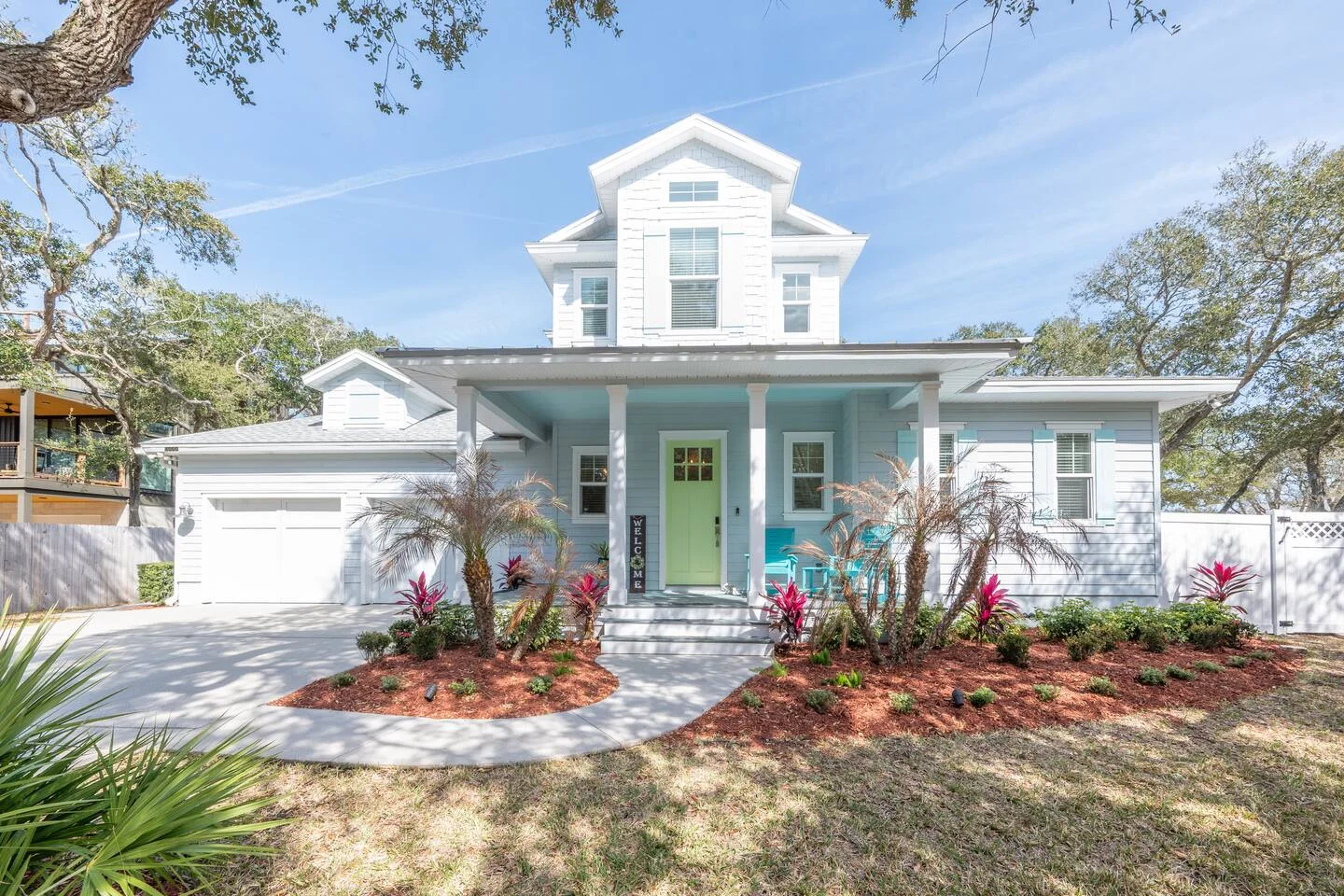
Vacation rental management services in St. Augustine, FL refer to the professional systems, people, and processes that handle every operational layer of a short-term rental property: pricing, guest communication, cleaning, compliance, and marketing. At In The Sun VR, we manage 13 properties across Vilano Beach, Crescent Beach, and the Historic District and have built a direct picture of which services actually protect owner revenue and which ones get cut when management companies trim costs. This checklist walks you through every service category you should expect, how to evaluate each one, and what the St. Augustine market specifically demands in 2026.
Vacation rental management services in St. Augustine FL typically cover dynamic pricing, listing optimization, guest communication, cleaning coordination, and regulatory compliance under one contract.
According to AirDNA market data, the St. Augustine short-term rental market averaged an occupancy rate of about 56% and an average daily rate of roughly $227 in 2026, with top-performing beach properties reaching 70-80% occupancy.
Full-service management fees in St. Augustine generally run 15-25% of gross revenue for local boutique firms; national platforms like Evolve charge around 10% but do not include local cleaning or maintenance.
St. Augustine owners must hold a Florida state vacation rental license, register with St. Johns County, collect a 6% state sales tax plus a roughly 5% local tourism-development tax, and meet city noise and zoning ordinances.
Peak-season revenue in St. Augustine Beach averages about $8,988 per month per property, roughly 2.7 times higher than low-season figures, creating a strong case for professional yield management.
This checklist covers every service category, the regulatory compliance workflow, how to compare managers, and the step-by-step path from property acquisition to first booked stay.
St. Augustine sits in a competitive short-term rental market with roughly 1,132 active Airbnb listings as of March 2026, according to AirBtics. That density means a generic listing with flat pricing and slow guest responses loses bookings to well-managed properties almost immediately. The owners who extract strong revenue from this market treat management as a system, not a checklist of random tasks.
If you want a deeper foundation before working through this guide, the ultimate guide to short-term rental management in St. Augustine covers the structural landscape in full. This article focuses specifically on the service-by-service evaluation framework and the practical steps to get your property performing from day one.

What Do Vacation Rental Management Services in St. Augustine FL Actually Include?
Vacation rental management services in St. Augustine, FL refer to a bundled set of operational functions that a professional management company handles on behalf of the property owner. The scope varies significantly between firms, so use this checklist to verify what each company actually delivers before signing a contract.
Core Service Checklist: What to Expect from a Full-Service Manager
Listing creation and optimization: Professional photography (minimum 25 photos), keyword-structured title and description, complete amenity tagging, and photo ordering that prioritizes outdoor amenities in the first five images. Airbnb's click-through algorithm rewards outdoor entertaining shots above all other image types in St. Augustine's competitive beachside market.
Multi-channel distribution: Active listings on Airbnb, Vrbo, Booking.com, and ideally a direct booking channel. Some local managers list on 50 or more platforms. More distribution channels reduce platform dependency and lower per-booking commission costs over time.
Dynamic pricing: Real-time rate adjustments based on demand signals, competitor pricing, local events, and seasonal calendars. Flat pricing in St. Augustine leaves the most money on the table during the Nights of Lights season (November through January), spring break, and peak summer weeks. This is a non-negotiable service item for any competitive property.
Guest communication: Pre-booking inquiry responses, pre-arrival instructions, in-stay issue handling, and post-stay review requests. Industry-practice benchmarks for St. Augustine STR managers often cite a target response time under 15 minutes. A slow reply on an inquiry converts to a lost booking.
Turnover and cleaning coordination: Scheduled professional cleaning after every checkout, property-specific checklists, photo verification, and restocking of consumables. Our vacation rental cleaning checklist for St. Augustine owners breaks down exactly what hotel-quality turnover requires at each property type.
Maintenance and vendor dispatch: Routine maintenance coordination, emergency repair response (24/7 availability is standard for centralized managers in historic St. Augustine), and qualified vendor networks. Some contracts include a maintenance reserve line of 5-10% of gross revenue for repairs and capital expenditure.
Revenue reporting: Monthly owner statements, real-time booking calendars, and transparent itemized accounting. If a management company cannot produce a clear monthly statement on demand, that is a disqualifying red flag.
Regulatory compliance: Florida DBPR license management, St. Johns County registration, tax collection and remittance (state sales tax plus local tourism-development tax), and monitoring of zoning and noise ordinance changes. More on this in the compliance checklist section below.
Not all firms offer every service on this list. National platforms like Vacasa St. Augustine property management offer broad operational coverage, while platforms like Evolve handle listing creation and dynamic pricing but do not provide local cleaning or maintenance. Know exactly which services are in scope before comparing fees.
How Much Do Property Management Services Cost in St. Augustine?
Property management costs in St. Augustine, FL follow two primary pricing structures: a percentage of gross revenue (the most common model) and a flat monthly fee plus per-service charges. Understanding what each fee structure covers is as important as the percentage itself, because a 10% fee that excludes cleaning coordination often costs more in aggregate than a 20% fee that bundles everything.
Fee Structure Comparison Table
Management Model | Typical Fee Range | What Is Included | What Is Excluded |
Local boutique full-service (e.g., In The Sun VR) | 15-25% of gross revenue | Pricing, listing, guest comms, cleaning coordination, maintenance, compliance, reporting | Major capital repairs (billed separately) |
National full-service platform (e.g., Vacasa) | Varies; often quoted per property | Local teams, cleaning, maintenance, 24/7 guest support, marketing | Some owners report less direct owner communication |
Listing-only platform (e.g., Evolve) | ~10% of gross revenue | Listing creation, dynamic pricing, guest communication | Local cleaning, maintenance, physical property oversight |
Co-hosting / co-management | 10-18% of gross revenue | Selected services (e.g., pricing + guest comms only) | Services outside agreed scope remain owner-managed |
Beyond the management fee, budget for per-stay cleaning fees (typically $100-$200 per turnover in St. Augustine, depending on property size), a maintenance reserve of roughly 5-10% of gross revenue, and platform booking fees (Airbnb charges hosts approximately 3% per booking). A typical well-managed 3-bedroom Historic District property generating $55,000-$80,000 annually can net a solid return after these costs, but accurate projections require honest upfront math.
Some owners fixate on finding the lowest percentage fee. That approach usually backfires. A manager charging 18% who fills your calendar at $227 per night with 60%+ annual occupancy outperforms a 10% manager who delivers 40% occupancy and slow guest responses. Fee percentage matters less than demonstrated performance. Ask every candidate for occupancy and revenue benchmarks from comparable managed properties, not just a quote.
What Does the Regulatory and Compliance Checklist Look Like for St. Augustine STRs?
St. Augustine short-term rental compliance refers to a multi-layer framework covering state licensing, county registration, city ordinances, and tax collection obligations. Florida's regulatory environment for vacation rentals changed materially in the years leading up to 2026, and owners who rely on outdated information face fines, forced shutdowns, and lost booking income.
Regulatory Compliance Checklist
Florida state vacation rental license: Required from the Florida Department of Business and Professional Regulation (DBPR) for any property rented more than three times per year for periods under 30 days. Renew annually. Operating without this license is a violation of Florida Statute 509.
St. Johns County local registration: In addition to the state license, properties in unincorporated St. Johns County require local registration and a Business Tax Receipt. The City of St. Augustine has separate registration requirements for properties within city limits.
State sales tax collection: Florida levies a 6% state sales tax on all short-term rental transactions. This applies to every booking, regardless of platform.
Local tourism-development tax: St. Johns County collects a tourism-development tax of roughly 5% of room revenue. Many short-term rental platforms remit state taxes on hosts' behalf, but local municipal licenses and business-tax obligations remain the host's direct responsibility. Confirm with your manager exactly who handles remittance for each tax type.
Zoning and historic district overlay: St. Augustine's historic district has specific short-term rental zoning overlays that restrict where vacation rentals can legally operate. Some residential neighborhoods limit STRs to owner-occupied properties. Verify zoning eligibility before purchasing any property with STR income in mind.
Noise ordinances: St. Augustine city noise ordinances specifically regulate noise in and near the historic district. Violations create guest complaints, neighbor disputes, and potential permit revocations. Management agreements should include clear guest noise policy language and enforcement protocols.
Safety and parking standards: St. Johns County may require minimum safety standards (smoke detectors, carbon monoxide alarms, fire extinguishers) and adherence to setback and parking rules. Confirm property compliance before listing.
For a detailed breakdown of how these tax obligations affect your net return, the guide to short-term rental tax deductions in St. Augustine covers which expenses offset your tax burden and how to document them correctly. A competent management company handles compliance as a core operational function, not an afterthought.
How Do Local Management Companies Compare to National Platforms Like Vacasa or Evolve?
The local-versus-national management decision is one of the most consequential choices a St. Augustine property owner makes. Local boutique managers and national platforms differ on five dimensions that directly affect owner experience and property revenue: local knowledge depth, service scope, owner communication quality, pricing agility, and fee transparency.
Local Boutique Managers: Strengths and Trade-Offs
Local firms operating specifically in St. Augustine understand neighborhood-level dynamics that national platforms rarely track. Crescent Beach properties attract a different guest profile than Vilano Beach. A 3-bedroom historic cottage six minutes from St. George Street justifies different photography priorities, pricing calendars, and amenity investments than a beachfront house on Anastasia Island. Local managers also build genuine vendor networks over years of operation, which translates to faster maintenance response and more consistent cleaning quality than outsourced national vendor relationships.
Local firms like Coastal Realty vacation rentals and Saint Augustine Vacation Rentals have operated in this market long enough to build that kind of local infrastructure. The trade-off is typically fewer managed properties overall, meaning each manager carries direct accountability for property performance in a way that employees at a 600-property national operation typically do not.
For a vetted comparison of specific companies operating in this market right now, the best vacation rental management companies in St. Augustine 2026 guide breaks down each firm's service scope, specialty areas, and fee structures side by side.
National Platforms: What You Get and What You Give Up
Vacasa manages over 600 homes in Saint Augustine and offers full-service operations including professional cleaning, maintenance coordination, and 24/7 guest support. That scale brings operational infrastructure, brand recognition across booking platforms, and marketing reach that a smaller firm cannot easily replicate. The reported trade-off for many owners is reduced access to local decision-makers and less individualized property strategy.
Evolve operates as a listing and pricing platform rather than a full-service manager. At roughly 10% of gross revenue, Evolve handles listing creation, dynamic pricing, and guest communication but explicitly does not provide local cleaning or maintenance. Owners using Evolve must source and manage their own cleaning and maintenance vendors independently. That arrangement works for local owners who already have reliable vendor relationships, but it is an operational burden, not a savings, for absentee owners.
The right choice depends on how much you value local accountability, personalized service, and direct communication access. Neither model is universally superior. The best manager is the one whose service scope matches your specific property type, location, and ownership situation.
What Should You Look for When Evaluating a St. Augustine Property Manager?
Evaluating a St. Augustine vacation rental management company means asking the right questions, reading contracts carefully, and recognizing the specific red-flag clauses that cost owners money. Most property owners make this decision based on fee percentage alone. That approach consistently produces disappointing results.
Evaluation Checklist: Questions to Ask Every Candidate
Performance benchmarks: Ask for occupancy rates and average daily rates for comparable properties they currently manage in the same neighborhood. Generic "we maximize your revenue" claims are not evidence. Numbers from active properties are.
Contract length and exit terms: Multi-year lock-in contracts with 90-day notice requirements are standard but negotiable. Avoid contracts with excessive early-termination penalties that make it costly to leave an underperforming manager.
Minimum night requirements: Some managers impose minimum stay policies that reduce booking frequency to lower their own operational cost. Confirm whether minimum night policies serve your revenue goals or theirs.
Preferred neighborhoods and property types: A manager specializing in Anastasia Island beach houses may not have the right positioning strategy for a Historic District Victorian. Ask whether they manage comparable properties and for review scores on those properties.
Tax and compliance handling: Who collects and remits the state sales tax and local tourism-development tax? Is that included in the management fee or billed separately? What happens if you receive a compliance notice? Get answers in writing.
Owner reporting cadence: Monthly statements and real-time booking calendars are the baseline standard. Ask how owner communication is handled, specifically how quickly they respond to owner inquiries and who your dedicated contact is.
Cleaning and vendor accountability: Is the cleaning team in-house or third-party? What is the quality control process? How are no-show cleaners handled between bookings? The answer to this question reveals more about operational quality than any marketing claim.
Review management: How does the company solicit and respond to guest reviews? Review velocity and average score are the most visible performance metrics on Airbnb and directly affect your listing's search ranking.
Red-Flag Contract Clauses to Watch For
Clauses that give the management company discretionary authority to discount rates below a floor without owner approval
Maintenance authorization limits so low (under $100-$150 per repair) that every minor fix requires owner approval, creating delays
Opaque fee structures where cleaning fees and maintenance reserves are not itemized
Exclusivity clauses that prevent you from ever listing on direct booking platforms or your own website
What Is the Step-by-Step Workflow from Property Acquisition to First Booked Stay?
The property acquisition to first-booked-stay workflow for a St. Augustine vacation rental covers seven distinct phases, each with specific dependencies and typical timelines. Most first-time owners underestimate the time required for regulatory approvals and listing ramp-up. Planning realistically avoids the costly mistake of purchasing a property with income projections that assume immediate booking volume.
Phase 1: Regulatory Setup (Weeks 1-4)
Apply for a Florida vacation rental license through the DBPR. Processing timelines vary; budget 2-4 weeks minimum.
Register with St. Johns County and, if within city limits, the City of St. Augustine. Obtain a Business Tax Receipt.
Set up sales tax and tourism-development tax remittance accounts with the Florida Department of Revenue and St. Johns County.
Verify zoning eligibility and confirm the property is not in a restricted STR overlay zone.
Phase 2: Property Preparation (Weeks 2-5, runs parallel to regulatory)
Conduct a full safety walkthrough: smoke detectors, carbon monoxide alarms, fire extinguisher, first aid kit, and clear emergency exit signage.
Meet minimum furnishing and amenity standards for your target guest profile. For a Vilano Beach family rental, that means beach gear, outdoor entertaining infrastructure, and high-speed WiFi at minimum.
Complete any deferred maintenance. Guests notice everything a tired owner has learned to ignore.
Stage the property for photography. Outdoor entertaining spaces, the primary bedroom, the kitchen, and the main living area are the five highest-priority shots for Airbnb click-through performance.
Phase 3: Professional Photography and Listing Creation (Week 4-5)
Schedule professional photography on a clear-sky day with optimal natural light. For coastal properties, morning light typically photographs better than afternoon.
Write a keyword-structured listing title and description that names the property's most distinctive amenities and its proximity to specific St. Augustine landmarks.
Complete all amenity tags in Airbnb's back-end; missing tags exclude you from filtered searches.
Set competitive launch pricing slightly below comparable well-reviewed listings to accelerate early bookings and review accumulation.
Phase 4: Multi-Channel Distribution (Week 5-6)
Activate listings on Airbnb, Vrbo, and Booking.com at minimum.
Set up a direct booking channel (property management software or a direct website) to reduce long-term platform fee dependency.
Sync all calendars through a channel manager to prevent double bookings.
Phase 5: Operational Systems Setup (Week 5-6)
Establish guest communication templates for inquiry, booking confirmation, pre-arrival, in-stay, and post-checkout sequences.
Confirm cleaning team schedule and turnover checklist for every checkout date.
Set up smart locks or keypad entry for self-check-in, standard expectation for most 2026 Airbnb guests.
Create a property-specific house manual covering WiFi, parking, noise rules, and emergency contacts.
Phase 6: First Bookings and Review Ramp-Up (Weeks 6-12)
Respond to every inquiry within 60 minutes during the first 30 days; Airbnb's algorithm weights response rate heavily for new listings.
Send a personalized pre-arrival message 24-48 hours before check-in. Guests who feel prepared leave better reviews.
Request a review promptly after checkout. New listings need five reviews minimum to appear credible in search results.
Phase 7: Revenue Optimization (Ongoing)
Review pricing weekly against the competitive set. St. Augustine's demand calendar includes predictable spikes (Nights of Lights, spring break, Memorial Day through Labor Day) that reward proactive rate adjustments.
Analyze review text monthly for recurring guest mentions, positive and negative. Specific mentions in reviews ("the hot tub was perfect" or "the kitchen needed better knives") are your most reliable signal for amenity investment decisions.
Revisit listing photos and description seasonally. Airbnb's algorithm treats recently updated listings as more relevant.
How Do St. Augustine Vacation Rental Revenue and Market Benchmarks Stack Up?
St. Augustine's short-term rental revenue benchmarks in 2026 reflect a market where seasonal demand variation is sharp, neighborhood-level performance differences are significant, and well-managed properties materially outperform median listings. Understanding these benchmarks positions you to evaluate management company claims with real context.
Key 2026 Market Benchmarks (Verified Sources)
Overall STR occupancy: Approximately 56% annual occupancy across all St. Augustine Airbnb listings, per AirDNA market data for 2026. Top-performing beach properties reach 70-80%.
Average daily rate: Roughly $227 across the St. Augustine market in 2026, per AirDNA. Historic District 2-3 bedroom properties typically range from $175-$260 per night; Anastasia Island beachfront properties average $200-$350 per night.
Annual gross revenue: A typical St. Augustine STR generated about $55,000 in annual revenue for the February 2026 to January 2026 period, per AirBtics analysis. Well-managed Historic District 3-bedroom properties can reach $55,000-$80,000 annually.
Seasonal revenue spread: Per AirROI St. Augustine Beach data, peak-season revenue (March, April, June) averages about $8,988 per month per property. Shoulder season averages roughly $6,202 and low season roughly $3,278 per month. That 2.7x spread between peak and low season is exactly why dynamic pricing is not optional in this market.
Active listing count: Approximately 1,132 short-term rental listings were active on Airbnb in St. Augustine as of March 2026, per AirBtics.
Tourism demand: St. Johns County tourism trended about 2% higher than the prior year in early 2026, reinforcing continued demand growth. Florida statewide attracted over 41 million visitors in the first quarter of 2026 alone.
For a detailed breakdown of when demand peaks and how to time your pricing strategy, the best time to visit St. Augustine for max rental income maps the full seasonal calendar against revenue data.
One insight from managing properties across In The Sun VR's portfolio: the gap between a median-performing listing and a top-performing listing at the same address is almost always operational, not locational. A Victorian Villa six minutes from St. George Street that uses professional photos, daily pricing adjustments, and templated guest communication consistently outbooks an identical property managed passively. The market benchmark is the floor, not the ceiling.
Frequently Asked Questions About Vacation Rental Management in St. Augustine
How much do vacation rental management services cost in St. Augustine, FL?
Full-service vacation rental management services in St. Augustine, FL typically cost between 15% and 25% of gross rental revenue for local boutique firms. National platforms like Evolve charge around 10% but do not include local cleaning, maintenance, or on-the-ground support. Most contracts also include per-stay cleaning fees of roughly $100-$200 and a maintenance reserve line of 5-10% of gross revenue. Comparing total cost of management, not just the quoted percentage, is the only accurate way to evaluate fees.
What is typically included in full-service vacation rental management in St. Augustine?
Full-service vacation rental management in St. Augustine covers listing creation and optimization across Airbnb, Vrbo, and direct booking channels; dynamic pricing; professional photography; guest communication from inquiry through checkout; coordinated turnover cleaning; maintenance dispatch; regulatory compliance; and monthly owner reporting. Some boutique firms like In The Sun VR also include interior design consultation and SEO-driven content marketing as part of their management package, which builds direct booking revenue and reduces platform fee dependency over time.
What licenses and permits does a St. Augustine vacation rental require?
St. Augustine vacation rental owners need a Florida state vacation rental license issued by the Florida Department of Business and Professional Regulation, plus local registration under St. Johns County and potentially the City of St. Augustine. Properties must also collect and remit Florida's 6% state sales tax, a local tourism-development tax of roughly 5%, and any applicable county discretionary surtax. Historic district properties face additional zoning overlay restrictions that may limit STR eligibility entirely in certain residential blocks.
What occupancy rate can I realistically expect for a St. Augustine vacation rental?
According to AirDNA market data, the overall short-term rental occupancy rate in St. Augustine averaged about 56% in 2026. Top-performing beachfront properties in St. Augustine Beach can reach 70-80% annual occupancy, while median-level properties cluster around 40-50%. Peak-season occupancy in St. Augustine Beach averages about 57%, while low-season drops to roughly 32%, making dynamic pricing critical to annual performance. Properties managed with professional revenue optimization consistently outperform the median occupancy benchmark.
What is the difference between co-hosting and full-service property management in St. Augustine?
Co-hosting in St. Augustine refers to a flexible arrangement where the management company handles specific operational tasks, such as guest communication, pricing, or cleaning coordination, while the owner stays involved in strategic decisions. Full-service management means the company handles every operational layer with no required owner input. Co-hosting typically costs less and suits owners who want professional support without full delegation. In The Sun VR offers both models to fit different owner preferences and involvement levels.
How does dynamic pricing work for St. Augustine vacation rentals during peak seasons?
Dynamic pricing for St. Augustine vacation rentals uses real-time demand data, competitor rate monitoring, and local event calendars to adjust nightly rates automatically. During peak demand periods like the Nights of Lights season, spring break, and summer beach months, well-configured pricing systems can increase nightly rates significantly above baseline. Per AirROI seasonal data, peak-season monthly revenue in St. Augustine Beach averages about $8,988 per property, roughly 2.7 times the low-season figure. Capturing that differential requires pricing adjustments that start weeks before peak demand, not after it arrives.
How long does it take for a new St. Augustine vacation rental listing to generate consistent bookings?
A newly listed St. Augustine vacation rental typically takes 30-90 days to build enough review history and algorithm credibility to generate consistent bookings on Airbnb and Vrbo. Professional listing optimization, competitive launch pricing, and prompt guest communication in the first weeks accelerate this ramp-up period significantly. Properties managed by experienced local teams that understand Airbnb's search ranking signals typically reach stable occupancy faster than self-managed listings starting from scratch.
Should I hire a local St. Augustine manager or use a national platform like Vacasa?
Local boutique managers offer hands-on oversight, neighborhood-specific knowledge, and direct owner communication that national platforms typically cannot match at scale. Vacasa manages over 600 homes in Saint Augustine and provides full-service operations including cleaning and maintenance, but some owners report less direct access to local decision-makers than they receive from a boutique firm. The right choice depends on how much you value personalized service, local market expertise, and transparent owner communication versus the operational infrastructure a national brand provides.
Ready to Put This Checklist to Work for Your St. Augustine Property?
The difference between a St. Augustine vacation rental that earns its full potential and one that underperforms rarely comes down to location. It comes down to the systems, the standards, and the team executing every item on this checklist. Dynamic pricing that adjusts weekly, listing optimization that keeps photos and descriptions current, compliance management that tracks regulatory changes before they become fines, and cleaning standards that earn first-comment praise in guest reviews: these are the operational layers that separate a top-performing property from a median one in a market with 1,132 active listings competing for the same guests.
Vacation rental management services in St. Augustine FL work best when every layer is handled by a team with direct, local accountability for the property's performance, not a national call center routing tickets to an overextended vendor list.

If you are ready to hand your St. Augustine rental over to a team that treats it as a hospitality business, In The Sun VR is accepting new managed properties in Vilano Beach, Crescent Beach, St. Augustine Beach, and the Historic District. From full-service management to co-hosting to STR consulting, we build the management model around your property and your goals. Start the conversation at inthesunvr.com.
Written by Seth Balogh, Owner at In The Sun VR


Comments