

Vacation Rental Property Management St Augustine FL Guide

Updated: 7 days ago
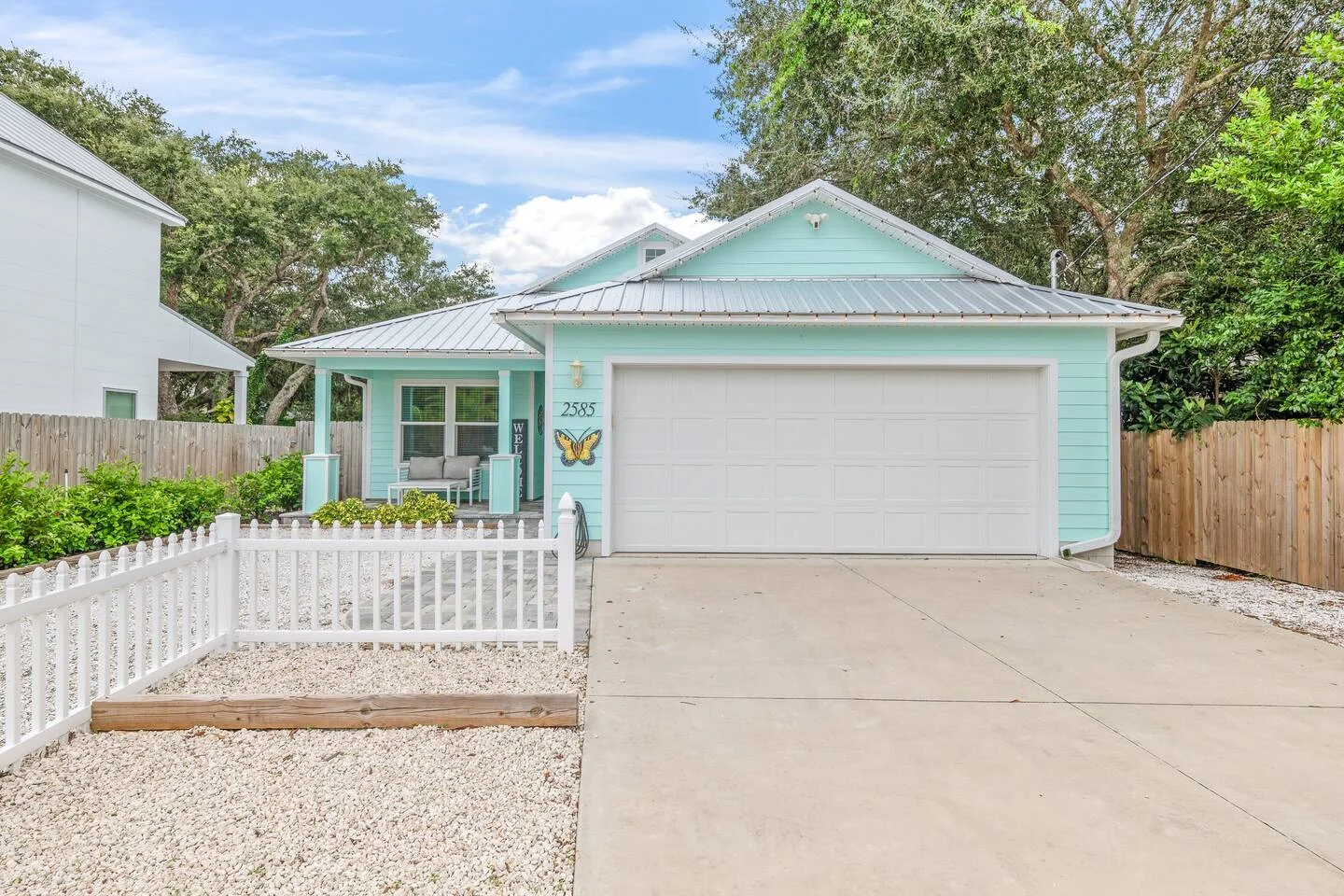
Vacation rental property management in St. Augustine, FL refers to the professional oversight of short-term rental properties, covering everything from dynamic pricing and listing optimization to guest communication, cleaning coordination, and regulatory compliance. At In The Sun VR, we manage a 13-property portfolio across St. Augustine's most competitive rental zones, and the single clearest lesson from that work is this: the gap between a median-performing listing and a top-quartile one is almost never about location. It is about management quality.
Market scale: St. Augustine STR listings averaged $38,919 in annual revenue (June 2026 to May 2026, per AirROI), with a $330 average daily rate and 42.7% market-wide occupancy.
Supply context: Active listings grew 94.1% year-over-year yet nightly rates trended upward, signaling demand still outpaces inventory in 2026.
Performance spread: Top 10% of St. Augustine STRs earn $9,966+ per month; median listings generate roughly $3,557 per month. Professional management is the primary lever separating the two.
Fee benchmarks: Full-service vacation rental management in St. Augustine generally runs 20 to 30% of gross revenue; co-hosting or co-management models can be structured lower for owners who want partial support.
Seasonality: Peak months (March, June, July) average $6,696 in monthly revenue at 57.6% occupancy; low-season months (January, September, October) average $3,376 at 35.4% occupancy: dynamic pricing is not a nice-to-have, it is essential.
Regulation: St. Augustine currently operates under a low STR regulation profile, but the 94% supply surge is drawing local government attention that owners should monitor closely.
What Does Vacation Rental Property Management in St. Augustine Actually Include?
Vacation rental property management in St. Augustine, FL is a full-stack operating service that handles every layer of a short-term rental business on the owner's behalf. Specifically, a complete management engagement covers listing creation and optimization, multi-platform distribution across Airbnb, Vrbo, and direct booking channels, dynamic revenue pricing, professional cleaning and turnover coordination, 24/7 guest communication, maintenance oversight, and ongoing compliance monitoring. The scope goes well beyond simply collecting a booking fee.
For St. Augustine owners, the distinction between a full-service manager and a part-time co-host matters financially. A full-service engagement means the manager owns every outcome: occupancy, reviews, maintenance response time, and year-end revenue. A co-hosting arrangement typically covers a subset of those functions while the owner retains responsibility for others. Understanding which model fits your situation is the first decision you need to make before signing any management agreement.
Across the properties In The Sun VR manages, the services that move the revenue needle most consistently are dynamic pricing, listing optimization, and guest communication quality. These three functions compound on each other: a well-optimized listing attracts more qualified guests, a well-managed guest experience generates stronger reviews, and stronger reviews improve algorithm ranking, which feeds more bookings at higher rates. Owners who treat management as a single line item on their P&L, rather than as an interconnected system, tend to underinvest in the right places.
What a Full-Service Manager Handles Day-to-Day
Day-to-day, a full-service vacation rental management company in St. Augustine handles inquiry response and pre-arrival communication, check-in logistics, in-stay issue resolution, post-checkout cleaning coordination with quality verification, maintenance dispatch, platform review management, and monthly owner reporting. For out-of-state owners especially, that last item, transparent financial reporting, is often what separates a trustworthy management partner from one that keeps owners in the dark.
What Is the Average Property Management Fee for Rental Properties in Florida?
The average property management fee for short-term vacation rentals in Florida runs between 20% and 30% of gross rental revenue, depending on the scope of services included, the management model (full-service versus co-hosting), and the individual company's pricing structure. In St. Augustine specifically, published fee data from local operators confirms this range. Sovereign & Jacobs, for example, charges a flat 20% of gross rent for short-term rentals with no startup costs. Boutique full-service companies handling revenue optimization, interior design consultation, and SEO-driven direct booking development typically price toward the upper end of that band.
The fee percentage alone is a poor basis for comparing management companies. What matters is net owner revenue after all management costs, not gross revenue before fees. A company charging 25% that generates top-quartile occupancy and nightly rates will almost always deliver higher net income than a company charging 18% that manages to median performance. According to AirROI's 2026 data, the top 25% of St. Augustine STR listings earn $6,004 or more per month while the bottom 25% averages $1,959. That $4,000-per-month gap is far larger than any fee differential between management companies.
Fee Comparison: Management Models in St. Augustine
Management Model | Typical Fee Range | Best For | Owner Involvement |
Full-Service Management | 20% to 30% of gross revenue | Out-of-state and absentee owners | Minimal: review monthly reports |
Co-Hosting / Co-Management | 10% to 18% of gross revenue | Burned-out self-managers who want partial help | Moderate: owner retains some functions |
Consulting Only | Project-based or hourly | First-time hosts or investors doing due diligence | High: owner self-manages with expert guidance |
Self-Management | Platform fees only (typically 3% on Airbnb host side) | Local owners with significant available time | Full: every function falls on the owner |
One common mistake is negotiating management fees in isolation from the contract terms. Some companies advertise a low headline fee but charge separately for cleaning oversight, maintenance coordination, photography, and listing setup. Before signing any agreement, ask for a complete fee disclosure that includes every recurring and one-time charge. The total cost of management is what matters, not the percentage on the first page.
What Is the Best Vacation Rental Company for Owners in St. Augustine?
The best vacation rental management company for owners in St. Augustine is one that combines genuine local market expertise with transparent reporting, data-driven revenue management, and a service model calibrated to your specific ownership goals. National platforms like Vacasa offer broad distribution and operational scale but often lack the neighborhood-level pricing intelligence and hands-on attention that St. Augustine's seasonal market requires. Local boutique managers, by contrast, manage fewer properties and can apply more direct oversight to each one.
Casago operates in St. Augustine and positions itself as a franchise-based management model. Coastal Realty has been active in the St. Augustine market for over 30 years, serving St. Augustine Beach, Crescent Beach, and the Intracoastal, with a strong track record of repeat guest relationships. LUX St. Augustine Vacation Rentals focuses on the luxury segment. Each option has a different service model and target property type, so the right choice depends on what you need, not which brand has the most recognition.
For owners who want a hospitality-driven boutique partner with deep familiarity across Vilano Beach, the Historic District, Crescent Beach, and St. Augustine Beach, In The Sun VR is built for exactly that profile. Our revenue management approach combines real-time dynamic pricing tools with local seasonal demand intelligence, and our managed properties span everything from restored historic church conversions to resort-style pool estates, so the operational system is tested across property types.
What to Look for When Evaluating a St. Augustine Manager
Transparent fee disclosure: All fees listed, including setup, photography, cleaning oversight, and maintenance dispatch charges.
Local pricing intelligence: Demonstrated knowledge of St. Augustine's four seasonal demand peaks, not a national algorithm running generically across markets.
Review performance: Ask for the average guest review score across their managed portfolio, not just their highest-rated property.
Owner reporting: Monthly statements showing gross revenue, itemized deductions, and occupancy data by channel.
Maintenance protocols: A licensed vendor network with response time commitments, especially critical for out-of-state owners.
Contract terms: Notice period to exit the agreement, exclusivity requirements, and whether the manager owns or can redirect your guest data.
How Does St. Augustine's Seasonal Market Affect Management Strategy?
St. Augustine's short-term rental market is highly seasonal, and a management strategy that ignores that seasonality will consistently leave revenue on the table. According to AirROI's 2026 dataset covering June 2026 through May 2026, peak season months (March, June, and July) produce an average monthly STR revenue of $6,696 at 57.6% occupancy and a $345 average daily rate. The lowest-demand period, January, September, and October, generates an average of $3,376 per month at 35.4% occupancy and a $310 ADR. That is nearly a 2x revenue swing between peak and trough months.
The implication for property management is direct: flat-rate pricing is a revenue loss strategy in this market. During Nights of Lights in November and December, St. Augustine draws significant visitor traffic that pushes demand well above baseline. Spring break in March compresses the booking window and elevates rates. Summer beach season in June and July sustains high occupancy across Vilano Beach and Crescent Beach properties. Each of these demand spikes requires a different pricing posture.
Owners who self-manage or work with companies using static rate calendars consistently underperform during peak windows. The properties In The Sun VR manages in Vilano Beach and St. Augustine Beach receive dynamic rate adjustments as much as four to six weeks ahead of demand spikes, not the week before. That lead time matters because St. Augustine bookings average 53 days in advance, according to AirROI. By the time a peak week arrives, the pricing window to capture premium rates has largely closed.
St. Augustine STR Performance by Season
Season | Peak Months | Avg Monthly Revenue | Avg Occupancy | Avg Daily Rate |
Peak Season | March, June, July | $6,696 | 57.6% | $345 |
Absolute Peak Month | Single best month | $7,452 | 62.4% | $371 |
Low Season | January, September, October | $3,376 | 35.4% | $310 |
Single Lowest Month | Weakest month | $3,149 | 34.3% | $296 |
Shoulder season management is where average companies and great managers diverge most visibly. Dropping rates indiscriminately in September attracts cost-sensitive guests who are also the most likely to leave critical reviews over minor issues. A better strategy is moderate discounting paired with minimum-stay requirements that protect revenue per booking without filling the calendar with low-value guests. That nuance is hard to execute without genuine local demand knowledge.
What Do St. Augustine Short-Term Rental Regulations Require?
St. Augustine's short-term rental regulatory environment is currently classified as low-restriction, meaning the market does not impose significant local licensing barriers specific to STR operators as of 2026. Notably, AirROI's 2026 dataset identified no licensed listings among the 1,520 active STR listings analyzed, suggesting the current framework does not require a dedicated STR permit at the municipal level. However, this does not mean owners operate in a compliance-free environment.
Florida state law requires vacation rental operators to hold a valid Vacation Rental License issued by the Florida Department of Business and Professional Regulation (DBPR). This license applies to any dwelling rented more than three times per calendar year for periods of less than 30 days. Failure to maintain this license exposes owners to fines and potential forced cessation of rental activity. Separately, short-term rental revenue is subject to Florida state sales tax (currently 6%) plus St. Johns County's Tourist Development Tax, which owners or their management company must collect and remit.
The regulatory landscape in St. Augustine is evolving. The 94.1% year-over-year supply growth documented by AirROI is the kind of market change that historically prompts local governments to introduce registration requirements or zoning restrictions. Owners who treat current light regulation as a permanent condition are taking a risk. A professional management company monitors these regulatory changes actively and adjusts compliance procedures before violations occur, not after.
For a detailed breakdown of St. Augustine STR tax obligations and deductible expenses, the short-term rental tax deductions guide published by In The Sun VR covers the full reporting framework for Florida vacation rental owners.
How Do You Choose Between Self-Managing and Hiring a Property Manager?
Choosing between self-management and hiring a professional vacation rental property manager in St. Augustine is a decision that hinges on three variables: your geographic proximity to the property, your available time per week, and your tolerance for operational risk. Self-management is viable for local owners with genuine availability and hospitality instincts. For everyone else, the math typically favors professional management once you account for the full cost of your own time, the opportunity cost of suboptimal pricing, and the revenue impact of inconsistent cleaning or slow guest response.
The hidden cost of self-management that most owners underestimate is not the platform fees or the cleaning invoices. It is the revenue loss from reactive pricing decisions. An owner who sets nightly rates in January for the coming year and adjusts them occasionally is almost certain to underperform a property managed with real-time dynamic pricing tools calibrated to St. Augustine's specific demand calendar. According to AirROI's 2026 data, the spread between median performance ($3,557 per month) and top-quartile performance ($6,004 per month) is $2,447 monthly. Professional management fees rarely exceed that gap.
Self-Management vs. Professional Management: Decision Framework
Factor | Self-Management | Professional Management |
Geographic requirement | Best when local (within 30 minutes) | Suited for any location, including out-of-state |
Time commitment | 10 to 20+ hours per week at peak | 1 to 3 hours per month reviewing reports |
Pricing sophistication | Limited to manual adjustments | Dynamic pricing with real-time demand data |
Cleaning reliability | Dependent on individual vendors | Managed network with quality oversight |
Guest response time | Owner-dependent (risk of delays) | Professional 24/7 coverage |
Review score risk | Higher exposure to avoidable misses | Systematic hospitality standards reduce risk |
Regulatory monitoring | Owner's responsibility | Managed proactively by the company |
The co-hosting model is worth considering for owners who want professional support without handing over full operational control. Co-hosting arrangements let you stay involved in strategic decisions while delegating the high-volume, time-consuming tasks (guest communication, cleaning coordination, maintenance dispatch) that cause burnout. For a deeper look at how this model works in practice, the short-term rental management guide for St. Augustine covers the co-hosting framework in detail.
What Is the Best Site for Vacation Rentals in Florida for Owner Distribution?
The best booking platform distribution strategy for vacation rental property management in St. Augustine, FL is a multi-channel approach anchored on Airbnb and Vrbo, supplemented by a direct booking channel that reduces long-term platform dependency. Airbnb dominates discovery for first-time guests and shorter stays; Vrbo captures more family groups and longer bookings. Relying on either platform exclusively concentrates risk in a single algorithm's decisions about your listing's visibility.
Direct booking capability is the competitive advantage that separates sophisticated management operations from basic ones. When guests book directly, there is no platform commission deducted from gross revenue, the owner or manager collects the guest's contact information for future marketing, and the booking relationship is not subject to platform cancellation policy changes. Building a direct booking pipeline through SEO-driven content, repeat guest email programs, and a property website with an integrated booking engine typically takes 12 to 24 months to produce meaningful volume, but the long-term margin improvement is significant.
In the St. Augustine market specifically, Airbnb's booking lead time averages 53 days in advance, per AirROI's 2026 data. That window is your primary opportunity to capture bookings before the calendar fills. Listings with strong photo sequencing, keyword-optimized titles and descriptions, and a high review velocity rank higher in Airbnb search results during that 53-day window. Owners who treat platform optimization as a one-time task, rather than an ongoing process, steadily lose ground to competitors who iterate their listings consistently.
For a comprehensive breakdown of how listing optimization affects search ranking and revenue, the St. Augustine management companies guide for 2026 covers the platform-by-platform breakdown in detail.
What Is the Onboarding Process When You Join a St. Augustine Management Company?
Onboarding with a professional vacation rental property management company in St. Augustine, FL typically follows a structured sequence covering property assessment, legal setup, listing creation, and operational readiness before the first guest arrival. Most well-run companies complete this process in three to six weeks, though properties requiring significant staging, photography, or maintenance work may take longer. Knowing what to expect at each stage helps you avoid the delays that cost owners revenue during their first peak season.
Standard Onboarding Sequence
Management agreement execution: Review and sign the property management contract. Confirm fee structure, notice periods, exclusivity terms, and owner access policies before signing.
Property walkthrough and assessment: The management team inspects the property, documents existing condition, identifies maintenance issues to address, and assesses staging and design gaps that would affect listing performance.
Regulatory and compliance setup: Confirm Florida DBPR vacation rental license is active, verify St. Johns County Tourist Development Tax registration, and ensure the management company has the authority to collect and remit taxes on the owner's behalf.
Listing creation and optimization: Professional photography (a minimum of 25 to 30 images is the practical floor for competitive St. Augustine listings), title and description copywriting with platform-specific keyword structure, amenity tagging, and pricing model configuration.
Operational setup: Cleaning team assignment, property-specific turnover checklist creation, smart lock or key system configuration, supply inventory, and emergency contact protocols for guests and vendors.
Soft launch and calibration: The first four to eight weeks typically include active monitoring of booking conversion rates, guest inquiry quality, and pricing performance. Good management companies adjust during this period, not after the first full season.
One detail most owners do not ask about but should: who owns the Airbnb listing after the management relationship ends? Some companies create listings under their own Airbnb account, meaning the reviews and listing history belong to the manager, not the owner. Insist on owning your listing and having the manager operate it through their co-host access. Losing your review history when you change companies is a real and avoidable cost.
Frequently Asked Questions About Vacation Rental Property Management in St. Augustine
How much does vacation rental property management cost in St. Augustine, FL?
Full-service vacation rental property management in St. Augustine, FL typically costs 20% to 30% of gross rental revenue. Sovereign & Jacobs, one of St. Augustine's established local managers, publishes a flat 20% fee for short-term rentals. Boutique full-service companies offering revenue optimization, SEO, and interior design consultation generally price in the 25% to 30% range. Co-hosting or co-management arrangements, where the owner retains some operational responsibilities, typically run 10% to 18%. Always request a complete fee disclosure that includes setup, photography, and maintenance coordination charges beyond the base percentage.
What occupancy rates can I realistically expect for a St. Augustine vacation rental?
Market-wide, AirROI's 2026 data shows a 42.7% average occupancy rate across St. Augustine STR listings. Top 10% of listings achieve 81% or higher occupancy; the top 25% maintain 64% or above; median listings land near 44%. The Airbtics 2026 dataset reported a median occupancy of 63% for the November 2026 through October 2026 period, reflecting the variability across data sources and measurement periods. In practice, professionally managed properties with strong listings, dynamic pricing, and consistent review scores tend to perform in the top quartile, well above the market-wide average.
Do I need a license to operate a short-term rental in St. Augustine?
Yes. Florida state law requires vacation rental operators to hold a valid Vacation Rental License from the Florida Department of Business and Professional Regulation (DBPR) for any property rented more than three times per calendar year for periods under 30 days. At the municipal level, St. Augustine currently operates under a low-restriction STR regulatory profile with minimal additional local registration requirements as of 2026, though this may change as supply growth draws more local government attention. Owners must also register for and remit Florida state sales tax plus St. Johns County Tourist Development Tax on all short-term rental revenue.
What is the difference between co-hosting and full-service property management?
Full-service property management means the management company owns every operational function: pricing, listing management, guest communication, cleaning coordination, maintenance dispatch, and owner reporting. Co-hosting is a flexible model where the property owner retains responsibility for certain functions while the co-host handles others, typically the high-volume tasks that cause burnout, such as guest messaging, turnover scheduling, and 24/7 availability. Full-service management is best suited for absentee and out-of-state owners who want a hands-off experience. Co-hosting suits owners who want professional support for specific pain points without surrendering full operational control.
How does dynamic pricing work for St. Augustine vacation rentals?
Dynamic pricing for St. Augustine vacation rental management refers to a system that automatically adjusts nightly rates based on real-time demand signals, including upcoming local events, competitor availability, booking pace, and seasonal demand patterns. Because St. Augustine guests book an average of 53 days in advance (per AirROI 2026), effective dynamic pricing starts adjusting rates well before peak windows arrive. During high-demand periods like Nights of Lights, spring break, and summer beach season, properties with properly configured dynamic pricing capture significantly higher average daily rates than those on flat or manually adjusted rate calendars. Professional managers typically combine algorithmic tools with local demand knowledge for results that neither approach achieves alone.
What amenities do St. Augustine vacation rental guests prioritize most?
Across the In The Sun VR managed portfolio, the amenities that generate the most frequent positive review mentions are private pools and hot tubs, outdoor entertainment spaces (fire pits, covered patios, tiki bars), beach gear and activity equipment (kayaks, paddleboards, bikes), and fast reliable WiFi. Pet-friendly policies also appear consistently as a positive booking driver in St. Augustine, where a large share of travelers are families or couples who travel with dogs. Interior amenities like fully stocked kitchens, dedicated workspaces, and quality linens matter for multi-night stays, particularly in the shoulder and low seasons when remote workers make up a larger share of the guest mix.
How long does it take for a new St. Augustine Airbnb listing to generate consistent bookings?
A new Airbnb listing in St. Augustine typically requires three to six months to build sufficient review volume for consistent organic search visibility on the platform. Airbnb's algorithm weights review count, review score, acceptance rate, and response time heavily in determining search ranking. New listings that launch with professional photography, a fully optimized description, competitive pricing, and immediate 5-star early reviews from the first few guests can compress this ramp-up period. Launching ahead of a peak season window, specifically before March or June, gives a new listing the best opportunity to accumulate reviews while demand is high enough to fill the calendar consistently.
How does In The Sun VR handle maintenance emergencies for out-of-state owners?
In The Sun VR manages maintenance emergencies through a licensed vendor network with established response protocols for in-stay and post-checkout issues. For in-stay emergencies, the guest communication team is available around the clock to triage the issue, dispatch the appropriate vendor, and keep the guest informed throughout the resolution process. Out-of-state owners receive a notification with a summary of the issue, the response action taken, and any cost implications, rather than a 2am phone call asking them to coordinate a plumber from three states away. Routine maintenance items identified during turnovers are batched into a weekly owner report so owners can approve work on their own schedule.
Ready to See What Your St. Augustine Property Can Realistically Earn?
The difference between a St. Augustine vacation rental that earns at its full potential and one that plateaus well below it almost never comes down to the property itself. It comes down to the systems, the pricing strategy, the listing quality, and the team managing the guest experience consistently across every booking. Professional vacation rental property management in St. Augustine, FL is not a luxury for high-end properties only. It is a revenue decision for any owner who wants to close the gap between median performance and top-quartile results.
The 2026 market data makes the performance spread clear: top-quartile St. Augustine STR listings earn more than $6,000 per month while median listings generate around $3,500. The management structure behind each property, not the property's ZIP code, explains most of that difference. If you want to understand specifically where your property sits in that range and what changes would move it higher, a property assessment is the right starting point.

If you are ready to hand your St. Augustine rental to a team that treats it as a hospitality business from day one, In The Sun VR is currently accepting new managed properties across Vilano Beach, Crescent Beach, the Historic District, and St. Augustine Beach. Reach out through our website to start the conversation about what professional management would look like for your specific property.
Written by Seth Balogh, Owner at In The Sun VR
Content powered by inkSTR.co


Comments