

House Rental in St Augustine FL: The Owner's Checklist


A house rental in St Augustine FL is one of the most consistently profitable short-term rental opportunities on Florida's First Coast, but only when the property is set up, priced, and managed correctly from the start. At In The Sun VR, we manage a portfolio of St. Augustine short-term rentals across Vilano Beach, Crescent Beach, and the Historic District, and the gap between properties that earn their full potential and those that plateau almost always comes down to the same set of avoidable setup and operational mistakes. This checklist exists to close that gap before your first guest checks in.
St. Augustine STR properties generate roughly $55,000 in annual revenue at a median 64% occupancy rate and $227 average daily rate, according to AirBtics 2026 data.
Over 1,100 active listings compete in the St. Augustine market as of January 2026, making professional presentation and amenity differentiation non-negotiable.
Peak months (March, April, June) yield average monthly revenue near $8,988, while low-season months drop to roughly $3,278, underscoring the need for dynamic pricing.
St. Augustine requires STR registration with the city, transient tax collection of 10-12%, and minimum liability insurance of $300,000-$500,000 per occurrence.
Top 10% of St. Augustine Beach properties achieve 79% or higher occupancy, while median properties average around 42%, according to AirROI 2026 data, illustrating how management quality determines which tier you land in.
Professional management fees in the St. Augustine market typically run 15-25% of gross revenue and cover pricing, guest communication, cleaning coordination, and compliance.
St. Augustine welcomed over 3 million tourists between July 2021 and July 2022, according to Downs and St. Germain Research and Florida's Historic Coast, and demand has remained strong into 2026. With more than 1,100 active Airbnb-style listings now competing for those guests, standing out requires more than a decent location. You need the right permits, a competitive amenity set, professional-grade photography, and a pricing strategy built around St. Augustine's distinct seasonal demand spikes. Work through each section of this checklist before you list, and revisit it annually as regulations evolve.
This guide is written specifically for property owners, whether you are preparing a new St. Augustine house rental for its first season or auditing an existing one that has plateaued. Each checklist section covers a distinct phase: legal compliance, property setup, listing optimization, pricing strategy, operations, and ongoing management. Check off every item before you accept your first booking.

What Permits and Licenses Does a St Augustine House Rental Require?
A house rental in St Augustine FL requires registration with the City of St. Augustine before accepting any paying guests. Operating without a valid STR permit exposes you to fines and forced shutdowns that will cost far more than the registration process itself. Work through this compliance checklist completely before listing your property on any platform.
Compliance Checklist: Before You List
City STR Registration: Register your property with the City of St. Augustine and obtain your STR permit number. The permit number must be displayed visibly on the property and included in your listing.
Zoning Verification: Confirm your property's zoning district allows short-term rentals. St. Augustine's STR ordinance prohibits rentals in most residential-only zones. Properties must either be owner-occupied or licensed as a commercial rental depending on the specific district.
Florida DBPR License: Register with the Florida Department of Business and Professional Regulation for a vacation rental license at the state level. State and local requirements stack, so both are mandatory.
Transient Tax Registration: Register to collect and remit St. Augustine's transient (tourist) tax, which typically runs 10-12% of rental revenue. You must also register with the Florida Department of Revenue for state lodging tax obligations, which add several additional percentage points.
Liability Insurance: Obtain a minimum of $300,000-$500,000 per occurrence in liability coverage. Standard homeowner policies do not cover short-term rental activity. Confirm this with your insurance carrier before your first booking.
Safety Equipment: Install functioning smoke detectors and carbon monoxide detectors in all required locations. Document compliance with photographs dated before your first guest stay.
Occupancy Limits: St. Augustine's STR regulations restrict occupancy based on bedroom count. Post the maximum guest limit in your listing and inside the property to avoid nuisance complaints and regulatory violations.
Quiet-Time Rules: Your rental must comply with St. Augustine's noise and nuisance controls, including posted quiet-time hours. Include these rules in your house manual and pre-arrival communications.
Regulations in St. Augustine have tightened as tourism pressure has increased. The Gargoyle at Flagler College has reported on community discussions about STR zoning and affordability that signal ongoing regulatory scrutiny. Check the Castillo de San Marcos National Monument district and surrounding Historic District zoning maps carefully, as proximity to these areas affects permitted STR activity. Review the City of St. Augustine's STR code annually. For a deeper dive into the full short-term rental management landscape in St. Augustine, that guide covers regulatory changes through 2026 in detail.
What Property Setup Does a St Augustine Vacation Rental Need to Compete?
Property setup for a competitive St Augustine house rental refers to the physical, safety, and amenity conditions that determine both your listing's search ranking and your guests' review scores. In the St. Augustine market, where over 1,100 active listings compete for bookings as of 2026, the difference between a 4.3-star and a 4.9-star property almost never comes down to location alone. It comes down to the details guests mention first in their reviews.
Property Setup Checklist
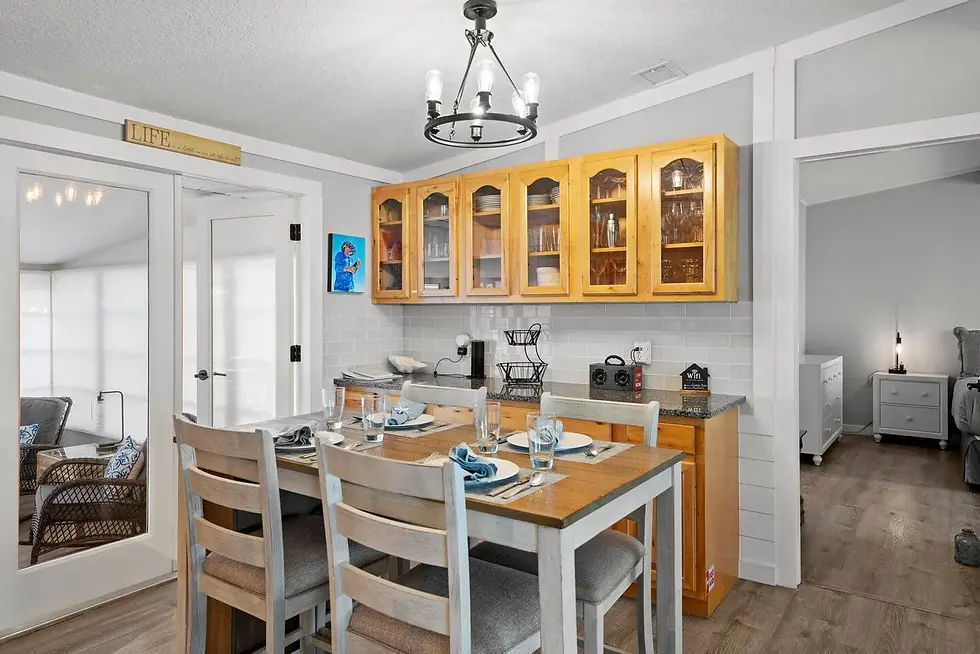
Professional Photography: Commission a professional real estate or vacation rental photographer. Your listing needs a minimum of 25 photos. The first five images should show: the primary outdoor entertaining space or amenity (pool, hot tub, fire pit), the primary bedroom, the kitchen, the main living area, and one signature amenity. Outdoor amenity shots earn more first clicks in St. Augustine's competitive coastal market than any other image type.
Signature Outdoor Amenity: Properties in St. Augustine's market that consistently earn premium nightly rates share one trait: a single standout outdoor feature. A private heated pool, a seven-seater hot tub, a canal dock, a tiki bar, or a fire pit with year-round seating. Choose one and invest in it properly. Half-measures earn average reviews.
Kitchen Fully Stocked: Guests booking a house rental expect a fully operational kitchen. Stock it with enough cookware, utensils, and small appliances for your maximum guest count. Include a coffee maker, sufficient cabinet space, and a dishwasher if the home has one.
Bedroom-to-Bathroom Ratio: Aim for at least one full bathroom per two bedrooms. Properties with cramped bathroom access consistently receive lower review scores regardless of other amenity quality.
High-Speed WiFi: Install a minimum 200 Mbps connection. Remote workers increasingly book St. Augustine rentals year-round, and slow WiFi is the fastest path to a review complaint that outlasts every other positive impression.
Beach Gear Provision: If your property is within two miles of a beach access point, provide chairs, umbrellas, boogie boards, and a beach wagon. Guests book beach rentals expecting this; providing it earns specific mention in reviews and differentiates your listing in search filters.
Pet-Friendly Setup: Pet-friendly listings command a broader booking audience in St. Augustine. If you allow pets, install a fully fenced yard, provide an outdoor shower, and note the pet fee policy clearly in your listing. Ambiguity on pet policies generates guest complaints before checkout.
Starter Consumables: Provide two nights' worth of paper goods, dish soap, coffee, and basic condiments. Guests arriving after a long drive from Atlanta or Charlotte should not need to go to a grocery store before they can make coffee.
House Manual and Digital Guide: Create a property-specific guide covering WiFi passwords, appliance instructions, trash day schedules, parking rules, quiet hours, and your top three local restaurant recommendations. Properties with clear, specific house manuals receive fewer support calls and better reviews.
How Should You Price a House Rental in St Augustine FL?
Pricing a house rental in St Augustine FL means building a dynamic rate structure around the city's four distinct seasonal demand peaks rather than setting a flat nightly rate and waiting for bookings. Flat pricing is the single most common revenue mistake In The Sun VR sees when auditing properties that underperform their potential. According to AirROI 2026 data, peak months in St. Augustine Beach (March, April, and June) yield average monthly revenue near $8,988 at roughly 57% occupancy, while low-season months (January, November, December) generate closer to $3,278 even at lower occupancy. The gap between those numbers rewards owners who price proactively.
Pricing Strategy Checklist
Install a Dynamic Pricing Tool: Connect your listing to a dynamic pricing platform (PriceLabs or a comparable tool) before your first booking. Configure it with St. Augustine-specific demand signals, not default national settings. The defaults are built for average markets, not a coastal city with tourism volume that exceeds its resident population by more than 16,000%, as reported in the Gargoyle's coverage of St. Augustine's tourism impact.
Map St. Augustine's Demand Calendar: Identify your four primary revenue peaks: Nights of Lights (typically mid-November through January), spring break (March and early April), summer beach season (June through August), and fall festivals. Set rate floors and ceilings for each period separately. Pricing these periods identically destroys revenue in peak windows.
Set Minimum-Stay Requirements Strategically: Use two-night minimums during shoulder season to increase occupancy. Use three-to-five night minimums during peak windows to avoid low-value single-night bookings that spike cleaning costs without proportional revenue gains.
Monitor Competitor Pricing Weekly: Check comparable listings in your neighborhood every week during the 60 days before a peak period. St. Augustine's market has more than 1,100 active listings competing simultaneously; you cannot set rates in October and ignore what your neighbors do in November.
Price the Gap Nights: Orphan nights (single-night gaps between bookings) kill occupancy without a discount strategy. Configure your pricing tool to automatically reduce rates on gap nights to fill them rather than leaving them empty.
Factor in All Costs Before Setting Your Floor Rate: Professional STR operators in Florida typically budget 20-30% of gross revenue for variable operational costs including cleaning, utilities, and supplies. Your floor rate must cover those costs plus platform fees before generating net income. Pricing below this floor to chase occupancy is a trap that burns out self-managing owners fast.
Season | Avg Monthly Revenue (St. Augustine Beach) | Avg Occupancy | Avg Daily Rate |
Peak (March, April, June) | $8,988 | ~57% | ~$319 |
Low (January, November, December) | $3,278 | ~32% | ~$345 |
Market Median (12 months to Jan 2026) | ~$4,583 | 64% | $227 |
Source: AirBtics 2026 St. Augustine Airbnb Report; AirROI 2026 St. Augustine Beach Data Report.
Note that low-season ADR ($345) actually exceeds peak-season ADR ($319) in St. Augustine Beach data. This counterintuitive pattern reflects price-sensitive guests booking far in advance during peak periods. Dynamic pricing captures the late-booking premium that flat-rate owners miss entirely. This is exactly the kind of market-specific pricing nuance that In The Sun VR builds into revenue management for every property in its portfolio. For more on timing your pricing strategy around St. Augustine's seasonal peaks, that resource covers each demand window in detail.
What Listing Elements Drive Bookings for St Augustine Vacation Rentals?
Listing optimization for a St Augustine house rental refers to the combination of title structure, description depth, amenity tagging, photo ordering, and review velocity that determines how Airbnb and Vrbo rank your property in search results. A well-optimized listing earns more clicks, converts more clicks into bookings, and commands a higher nightly rate than a comparable property with a weak listing, even if the physical properties are nearly identical.
Listing Optimization Checklist
Title Structure: Your listing title must front-load the property's strongest feature, not the location. "Private Heated Pool, Hot Tub, Walk to Beach" outperforms "Charming St. Augustine Beach House" in click-through tests because guests scan amenity keywords before they read neighborhood names.
Description Depth: Write a minimum 400-word listing description. Cover the indoor experience, the outdoor experience, proximity to specific St. Augustine landmarks (the Fountain of Youth Archaeological Park, Anastasia State Park, St. George Street), and a specific paragraph on what makes your property's guest experience different from the 1,100 other listings in this market.
Amenity Completeness: Tag every amenity your property offers. Missing amenity tags make your property invisible in filtered searches. Guests booking a St. Augustine house rental commonly filter for hot tub, pool, pet-friendly, and beachfront access specifically. If you have any of these and have not tagged them, you are losing bookings every day.
Photo Quantity and Order: Upload at least 25 photos. Order them: outdoor amenity first, primary bedroom second, kitchen third, living room fourth, signature feature fifth. Every photo after the first five should show a different reason to book, not a different angle of the same room.
Review Velocity: Request a review from every guest within 24 hours of checkout using a templated message that makes the request feel personal. New listings need 10 reviews before Airbnb's algorithm begins ranking them competitively. Prioritize review accumulation over nightly rate optimization during your first 90 days.
Multi-Platform Distribution: List on Airbnb and Vrbo at minimum. Consider a direct booking website to reduce platform commission dependency over time. Relying solely on one platform leaves your revenue exposed to algorithm changes and platform fee increases.
Update Listing Photos Annually: Refresh your photo set every 12 months. Worn furniture, outdated decor, and seasonal exterior changes visible in photos signal to guests that the listing is not actively maintained. Fresh photos also give the algorithm a reason to reindex your listing.
What Operations Systems Does a St Augustine House Rental Need?
Operations for a St Augustine house rental refers to the recurring systems that govern turnover cleaning, guest communication, maintenance response, and vendor coordination across every booking cycle. Most self-managing owners underestimate the operational weight before their first season and are overwhelmed by the second month. Building systems before your first booking is the difference between a rental that runs smoothly and one that consumes every weekend you own it.
Operations Checklist
Cleaning and Turnover Protocol: Create a written property-specific cleaning checklist before your first booking, not after your first complaint. The checklist should cover every room, every surface, every consumable restocking task, and a photo-verification step confirming the hot tub, pool, and outdoor amenities are reset. Inconsistent turnover quality is the leading cause of review score decline. For a detailed template, the vacation rental cleaning checklist for St. Augustine owners covers each phase of the turnover process.
Reliable Cleaning Vendor: Contract with a vacation rental cleaning company that has backup staff capacity. A cleaner who cannot cover a Sunday morning turnover during Nights of Lights season will cost you your next booking's check-in review. Freelance cleaners with no backup availability are a single point of failure you cannot afford.
Guest Communication Templates: Build a message sequence covering: booking confirmation, pre-arrival instructions (72 hours out), check-in day welcome, mid-stay check-in (day two), and post-checkout review request. Automate these through your property management software. A guest who does not hear from you until check-in day is already at higher risk of a support call or a complaint review.
Emergency Maintenance Contact: Identify and pre-contract with a plumber, HVAC technician, and electrician who will respond to after-hours calls. A hot tub that stops working at 10pm on a Friday before a $2,000 weekend stay is a 1-star review waiting to happen if you have no one to call.
Keyless Entry: Install a smart lock with unique codes generated per booking. Never issue physical keys. Keyless entry eliminates late-night lockout calls, reduces security risk, and allows you to manage access remotely regardless of where you live.
Pool and Hot Tub Maintenance Schedule: If your property has a heated pool or hot tub, contract weekly maintenance visits. Chemistry failures that result in a cloudy or unusable pool earn you the worst possible review: a guest who paid a premium specifically for the amenity you did not maintain.
Property Inspection Cadence: Schedule a full property walk-through between every four to six bookings, or monthly at minimum. Small maintenance issues (a sticky drawer, a burnt-out bulb, a cracked tile) accumulate invisibly until a guest documents them in a review.
Owner Reporting and Financial Tracking: Track gross revenue, net income after expenses, occupancy rate, ADR, and cleaning costs on a monthly basis. Owners who do not track these numbers cannot tell whether a management company or a pricing change is improving or hurting their performance.

Should You Self-Manage or Hire a Property Manager for Your St Augustine Rental?
The self-management versus professional management decision for a St Augustine house rental is a question of how much your time is worth relative to the revenue gap between a self-managed and professionally managed property. Self-management offers full control and saves the 15-25% management fee. But that saving disappears quickly if your occupancy rate runs 15-20 percentage points below a professionally managed comparable, if a single bad review from a preventable issue costs you a booking season, or if emergency calls from 700 miles away become a regular feature of your evenings.
Self-Management vs. Professional Management: Decision Framework
Factor | Self-Managing | Professional Management |
Time commitment per week | 8-15 hours (peak season) | 0-2 hours owner involvement |
Dynamic pricing expertise | Requires owner setup and monitoring | Handled by dedicated revenue manager |
Cleaning coordination | Owner coordinates directly | Managed with backup coverage built in |
Guest communication response time | Depends on owner availability | Professional SLA, typically under 1 hour |
Regulatory compliance monitoring | Owner responsibility | Managed proactively |
Cost (% of gross revenue) | 0% fee, but full time cost | Typically 15-25% of gross revenue |
Best for | Local owners with STR experience and bandwidth | Out-of-state owners, burned-out hosts, investors scaling |
If you live more than 90 minutes from your St. Augustine property, self-management is functionally a part-time job with on-call emergency obligations and no paid time off. That math changes when you factor in what a 20-point occupancy improvement under professional management is worth on a property earning $55,000 annually. For St. Augustine property owners evaluating whether professional management makes financial sense, the guide to whether property management is worth it walks through the specific cost-benefit calculation.
If you want professional support without transferring full operational control, co-hosting is a third option worth understanding. In The Sun VR's co-hosting model steps in for the specific functions that drain owner time (pricing adjustments, guest messaging, cleaning coordination) while leaving you in the ownership seat for strategic decisions.
Platforms like Casago and Vacasa offer management services in the St. Augustine market, but their national scale comes with trade-offs on local responsiveness and property-specific attention that boutique operators can provide. Evaluate any management company against a clear list of what is included in the fee, not just the percentage.
Frequently Asked Questions About House Rentals in St Augustine FL
How much does a house rental in St Augustine FL typically earn per year?
According to AirBtics 2026 data, a typical St. Augustine short-term rental generates approximately $55,000 in annual revenue at a median 64% occupancy rate and $227 average daily rate. Top-performing properties, specifically those in the top 10% by amenity quality and management, achieve occupancy above 79%, which translates to significantly higher annual revenue. Location, amenity set, listing quality, and pricing strategy all influence where your property lands in that performance range.
Do I need a permit to operate a house rental in St Augustine FL?
Yes. St. Augustine requires all short-term rental properties to be registered with the city and to display a visible STR permit number. You also need a Florida DBPR vacation rental license at the state level. Properties must comply with zoning requirements specific to their district, and rentals in most residential-only zones are prohibited. Failure to register before listing on Airbnb or Vrbo exposes you to fines and potential forced shutdown of your rental operation.
What taxes apply to a St Augustine vacation rental?
St. Augustine hosts must collect and remit a transient (tourist) tax that typically runs 10-12% of rental revenue, plus Florida state lodging tax obligations administered through the Florida Department of Revenue portal. These tax obligations apply to every booking, including those booked through Airbnb and Vrbo. Some platforms remit taxes on your behalf in Florida, but you remain responsible for confirming compliance. Consult the Florida Department of Revenue directly or work with a property manager who handles regulatory compliance as part of their service.
What amenities matter most to guests booking St Augustine house rentals?
In St. Augustine's coastal market, the amenities that consistently appear in guest review mentions and drive booking decisions are private pools, hot tubs, outdoor fire pits, pet-friendly fenced yards, and beach gear provisions. Properties with a single standout outdoor feature, specifically a heated pool or a large hot tub, command nightly rate premiums above comparable listings without them. High-speed WiFi has also become a baseline expectation for year-round bookings, including guests working remotely during shoulder season stays.
How much do property management companies charge in St Augustine FL?
Professional STR management fees in St. Augustine typically run 15-25% of gross revenue, covering guest communication, dynamic pricing, cleaning coordination, listing management, and regulatory compliance. Full-service boutique operators generally sit toward the higher end of that range and include more hands-on oversight. National platforms like Vacasa often have additional fee structures beyond the headline percentage. Always request a written breakdown of what is and is not included in any management fee before signing a contract.
What is the best season to earn the most revenue from a St Augustine house rental?
St. Augustine's highest-revenue months are March, April, and June, when beach demand and event-driven traffic peak simultaneously. According to AirROI 2026 data, peak-season months yield average monthly revenue near $8,988 for St. Augustine Beach properties at roughly 57% occupancy. The Nights of Lights season, running mid-November through January, also drives above-average demand that a flat-rate pricing strategy consistently under-captures. Shoulder-season revenue depends almost entirely on whether the property has an active dynamic pricing strategy in place.
Can I allow pets at my St Augustine vacation rental?
Yes, and you should seriously consider it. Pet-friendly listings reach a broader audience in St. Augustine, where families and couples frequently travel with dogs. According to Vacasa's St. Augustine market data, a significant share of vacation rental guests filter specifically for pet-friendly properties. To operate a pet-friendly rental effectively, install a fully fenced yard, provide an outdoor shower, and set a clear per-pet fee policy. State the policy explicitly in your listing to prevent disputes and protect your property from undisclosed pet damage.
Your Next Step as a St Augustine House Rental Owner
The difference between a St. Augustine house rental that earns its full potential and one that stagnates at average occupancy comes down to the systems, the presentation, and the pricing strategy behind it. Work through this checklist before your first booking, revisit the compliance section every January as regulations evolve, and audit your amenity set and listing photography annually. The market rewards prepared, professionally run properties with occupancy and rate premiums that more than justify the operational investment.
For owners who want expert guidance on any section of this checklist, whether that is listing optimization, dynamic pricing setup, regulatory compliance, or full-service management across your St. Augustine portfolio, the team at In The Sun VR works with property owners at every stage of the process. Explore more resources in our St. Augustine property owner guides or review the 2026 guide to vacation rental management companies in St. Augustine to understand your options before making a management decision.

If you are ready to hand your St. Augustine house rental to a team that treats it as a hospitality business, not a management checklist, In The Sun VR is accepting new managed properties in St. Augustine, Vilano Beach, Crescent Beach, and the Historic District. Reach out through the website to start the conversation about what your property could realistically earn under professional management in 2026.
Written by Seth Balogh, Owner at In The Sun VR


Comments