

How to Manage an Airbnb in St. Augustine If You Live Out of State

Updated: Sep 25
You can absolutely manage an Airbnb in St. Augustine if you live out of state, but doing it well requires a deliberate system: reliable local vendors, remote access technology, a clear compliance structure, and ideally a professional co-host or full-service property manager handling on-the-ground operations on your behalf. Without those foundations, absentee ownership becomes a 24/7 stress test.
Out-of-state Airbnb owners in St. Augustine need a local co-host or full-service property manager to handle guest check-ins, maintenance emergencies, and cleaning coordination reliably.
St. Augustine short-term rental operators must hold a Florida DBPR Transient Public Lodging Establishment license, a St. Johns County Local Business Tax Receipt, and a Florida Department of Revenue sales tax certificate.
According to AirDNA market data, average annual revenue for Airbnb hosts in the St. Augustine Beach area reaches approximately $66,800, with peak occupancy hitting 85% in March.
Smart locks, remote monitoring devices, and dynamic pricing tools like PriceLabs allow out-of-state owners to manage access, security, and revenue optimization without being physically present.
Full-service property management fees in the St. Augustine market typically run between 20% and 30% of gross rental revenue, covering guest communication, cleaning coordination, maintenance, and compliance.
In The Sun VR manages a portfolio of 13 St. Augustine short-term rentals and regularly works with out-of-state owners who need a hands-off, professionally managed operation.
TL;DR
Remote Airbnb management in St. Augustine is feasible with the right local team, but self-managing from across the country without on-the-ground support leads to missed maintenance issues, slow guest response times, and avoidable regulatory violations.
St. Augustine requires multiple licenses and registrations before your first guest checks in, including a Florida DBPR license, county business tax receipt, and fire safety inspection through the St. Augustine Fire Department.
The highest-performing neighborhoods for out-of-state owners are Vilano Beach, St. Augustine Beach (Anastasia Island), Crescent Beach, and the Historic District, each attracting distinct guest profiles with different amenity priorities.
Comparing full-service management, co-hosting, and DIY remote management reveals meaningful trade-offs in cost, control, and operational risk that every out-of-state owner should evaluate before committing to a structure.
Insurance, liability coverage, and legal protections deserve specific attention when you are not physically present to respond to incidents, and most absentee owners underestimate this exposure.
Managing a vacation rental from hundreds of miles away is one of the most common challenges facing St. Augustine property owners in 2026. The city ranked 16th nationally among small towns to visit in a 2026 travel ranking, and it was the only Florida destination to crack the top 25 in that category, according to reporting from iHeartMedia. That demand signal is real, and it attracts investors and second-home buyers from across the country. But strong market fundamentals do not automatically translate to smooth remote operations.
At In The Sun VR, we work directly with out-of-state owners managing properties across St. Augustine, Vilano Beach, Crescent Beach, and the Historic District. The questions we hear most often are not about pricing or amenities. They are about trust: how do you know your cleaner actually showed up? How do you respond to a guest locked out at 10pm when you are in a different time zone? Who calls the plumber when a pipe bursts on a holiday weekend? This guide answers those questions with the specificity they deserve.
You will find practical frameworks for remote access technology, honest comparisons of management structures, a plain-language breakdown of St. Augustine's licensing requirements, and guidance on the insurance and liability protections most absentee owners overlook entirely. Whether you are evaluating a new purchase or trying to improve a property you already own, these systems work.
Can You Manage an Airbnb from Another State?
Managing an Airbnb from another state is operationally viable, but only with a reliable local infrastructure in place. Remote Airbnb management refers to the practice of operating a short-term rental property without being physically present, relying instead on technology, local vendor relationships, and sometimes a co-host or property manager to handle on-the-ground tasks. The degree to which you can do this effectively depends on how well you have built that infrastructure before your first guest arrives.
The honest answer is that fully remote, hands-on self-management, where you handle every inquiry, coordinate every cleaning, and troubleshoot every maintenance issue yourself from out of state, is exhausting and risky. Response time suffers across time zones. A guest who messages at 11pm EST about a broken air conditioner is dealing with a hospitality crisis whether you are asleep in Seattle or not. Slow responses drive down review scores, and in St. Augustine's competitive market, review scores directly affect how Airbnb's algorithm ranks your listing.
What actually works is a hybrid model: you retain strategic oversight of pricing, booking policies, owner blocks, and major decisions, while a trusted local partner handles everything that requires physical presence. That partner can be a professional co-host, a boutique management company like In The Sun VR, or a vetted combination of individual vendors. The sections below break down each option in detail, including what each costs and where each one falls short.
Is Airbnb Allowed in St. Augustine, Florida?
Short-term rental operations are legal in St. Augustine, Florida, but they are subject to a layered set of licensing, zoning, safety, and tax requirements that vary depending on whether your property sits within St. Augustine city limits or the broader St. Johns County jurisdiction. Operating without the required permits exposes you to fines, forced shutdowns, and loss of rental income, which is a significant risk for out-of-state owners who are not actively monitoring regulatory changes.
Here is what the compliance stack looks like as of 2026:
Florida DBPR License: You must register your property as a Transient Public Lodging Establishment with the Florida Department of Business and Professional Regulation. This applies statewide and requires an inspection before your license is issued.
St. Johns County Local Business Tax Receipt: Required for all rental operators in the county, including those within city limits.
Florida Department of Revenue Certificate: A Certificate of Sales and Use Tax from the Florida Department of Revenue is required to legally collect and remit state sales tax.
Life Safety Inspection: Properties within St. Augustine city limits must pass an annual fire safety inspection conducted by the St. Augustine Fire Department, both at initial registration and each year thereafter.
Registration Documentation: When registering, you must provide a sample rental agreement, maximum occupancy, maximum number of vehicles, and local contact information.
Zoning matters too. In RS-1 and RS-2 zoning designations, rentals are permitted for stays of one week or longer. In HP-1 zoning, only monthly or longer stays are allowed. St. Johns County caps occupancy at 10 guests per unit. Within St. Augustine city limits, the cap is 12 individuals, calculated as two persons per bedroom plus two children under 18.
Registration fees in St. Augustine are tiered: a base rate of $294.48 plus $73.81 per rental bedroom. Each unit must also provide at least one on-site parking space per bedroom. For a broader look at short-term rental management requirements in St. Augustine, including tax filing timelines and common compliance pitfalls, that resource covers the full regulatory picture in detail.
Airbnb and VRBO may collect and remit state lodging taxes on your behalf, but the county's Tourist Development Tax is your responsibility to confirm. Do not assume platform-level tax collection covers every obligation. In The Sun VR monitors St. Augustine's STR regulatory landscape for all managed properties, which is particularly important for out-of-state owners who cannot easily track local ordinance updates from a distance.
What Technology Do You Need to Manage an Airbnb Remotely?
Remote Airbnb management technology refers to the suite of digital tools and smart devices that allow out-of-state owners to control property access, monitor conditions, automate guest communication, and optimize pricing without requiring physical presence. Specifically, five categories of technology form the foundation of any functional remote management system for a St. Augustine short-term rental.
Smart Access and Security
A smart lock is the single most important piece of hardware for an out-of-state Airbnb owner. Systems like August, Schlage Encode, and Yale Assure allow you to issue unique access codes for each guest reservation, rotate codes automatically after checkout, and grant temporary access to your cleaner or maintenance vendor without sharing a physical key. Pair this with a WiFi-connected video doorbell at the entry and, where appropriate, an exterior security camera, so you can verify vendor arrivals and guest check-ins remotely. Never place cameras inside the property; Airbnb prohibits interior surveillance devices.
Dynamic Pricing Tools
Flat-rate pricing is one of the most common and costly mistakes out-of-state owners make. St. Augustine's market has clearly defined demand peaks, including spring break in March (when occupancy reaches 85% and daily rates climb to $295.90, according to AirDNA data), summer beach season, the Nights of Lights holiday festival, and fall events. Tools like PriceLabs integrate directly with Airbnb and adjust your nightly rate in real time based on local demand signals. Without dynamic pricing, you will either leave revenue on the table during peak weeks or price yourself out of shoulder-season bookings.
Noise and Environmental Monitoring
Noise monitors like Minut or NoiseAware detect decibel levels without recording conversations, alerting you when a gathering exceeds acceptable thresholds. This is particularly useful in St. Augustine neighborhoods with HOA rules or city noise ordinances, and it protects you from the guest situations that generate property damage and negative neighbor complaints.
Guest Communication Automation
Platforms like Hospitable (formerly Smartbnb) or Hostfully automate pre-arrival instructions, check-in details, mid-stay check-ins, and checkout reminders. The best setups layer automation with human oversight, so routine messages go out on schedule while a real person (you, a co-host, or a management team) handles anything outside the template. For a practical look at St. Augustine short-term rental management systems that include guest communication frameworks, that guide covers the operational details in full.
Property Monitoring and Utility Management
Smart thermostats (like Ecobee or Nest) let you adjust temperature settings between guests and monitor HVAC performance remotely, catching issues before they become expensive repairs. Leak detectors under sinks and near water heaters provide early warnings for the kind of slow water damage that costs tens of thousands when left undetected. These tools are inexpensive to install and pay for themselves the first time they catch a problem before your next guest arrives.
How Do You Vet and Hire a Local Co-Host or Property Manager from Out of State?
Hiring a local co-host or property manager for your St. Augustine Airbnb while living out of state means selecting a professional or company to handle on-the-ground operations, including guest check-ins, cleaning coordination, maintenance oversight, and emergency response, on your behalf. The quality of this relationship determines the quality of your investment's performance more than almost any other factor.
Full-Service Management vs. Independent Co-Host vs. DIY Remote
Structure | Cost Range | What You Get | Best For | Watch Out For |
Full-Service Management | 20-30% of gross revenue | Guest comms, pricing, cleaning, maintenance, compliance, reporting | Owners who want true hands-off operations | Large national platforms with low local accountability |
Independent Co-Host | 10-20% of gross revenue | Guest comms and check-ins, often cleaning coordination | Owners who manage pricing/strategy and need local execution support | Single point of failure if co-host becomes unavailable |
DIY Remote | Platform fees only | Full owner control, maximum revenue retention | Owners with established vendor networks and significant time available | Time cost, slow emergency response, review risk from distance |
What to Ask Before You Hire
When vetting a local co-host or management company from out of state, ask these questions directly and push for specific answers, not marketing language:
How do you handle maintenance emergencies outside business hours? Who is your on-call contact and what is their response time commitment?
How do you verify cleaning quality after each turnover? Do you use photo documentation or a property-specific checklist?
How do you communicate with owners? What does a typical monthly owner report include?
What is your average review score across your managed portfolio, and what is the most common guest complaint you receive?
How do you handle a situation where a guest causes property damage? Walk me through your process from discovery to resolution.
Can you provide references from out-of-state owners you currently manage?
Red flags include vague answers about emergency protocols, inability to provide owner references, and reluctance to discuss how they handle guest complaints or cleaning misses. National platforms like Vacasa and Casago offer management services in St. Augustine and provide a baseline comparison point, but boutique local operators often deliver more personalized owner communication and more direct accountability.
Building Your Local Vendor Network
Even with a management company in place, building your own relationship with a backup plumber, electrician, and HVAC technician in St. Augustine is sound risk management. Ask your management partner who they use and get those contact details for your records. If a management relationship ever ends, you do not want to restart vendor sourcing from scratch while a property sits vacant.
What Is the 75-55 Rule for Airbnb?
The 75-55 rule for Airbnb refers to a pricing and performance benchmark used by some short-term rental operators: aim for an average nightly rate that is at least 75% of your top-season rate during shoulder periods, and target a minimum annual occupancy rate of 55% to sustain positive cash flow on a typical short-term rental investment. This is not an official Airbnb policy but a widely cited rule of thumb in STR investing circles for evaluating whether a market or property can support a profitable rental operation.
For St. Augustine, this benchmark is worth contextualizing against actual market data. According to AirDNA figures cited in current market analyses, the average occupancy rate for listings in the St. Augustine Beach area sits at approximately 64%, comfortably above the 55% threshold. Average daily rates in that submarket reach $283.80, with March peak rates rising to $295.90. Annual revenues average around $66,800 for hosts in that area.
What this means practically: St. Augustine's occupancy numbers suggest the market is healthy enough to exceed the 55% floor without aggressive management. But hitting the 75% rate retention during shoulder months (typically November through mid-February, excluding the Nights of Lights festival period) requires intentional pricing strategy, not flat-rate listings. Out-of-state owners who set a rate and forget it during off-peak months consistently underperform this benchmark. Dynamic pricing tools, combined with local demand knowledge, are what close the gap.
Where Is the Highest Demand for Airbnb in Florida, and How Does St. Augustine Compare?
Airbnb demand in Florida is concentrated in coastal markets, major theme park corridors, and high-profile urban destinations, with Orlando, Miami, Tampa, and the Gulf Coast barrier islands typically generating the highest total booking volume statewide. St. Augustine occupies a distinct and advantageous position: it is Florida's best-performing small town for short-term rental demand, recognized as the only Florida destination in the top 25 small towns nationally in a 2026 travel ranking, according to iHeartMedia reporting.
The demand profile in St. Augustine is different from beach resort markets. Visitors come for history, specifically the Castillo de San Marcos National Monument, the Spanish colonial architecture of the Historic District, the St. Augustine Lighthouse and Maritime Museum, and attractions like the Fountain of Youth Archaeological Park. They also come for beaches. This dual-pull, cultural tourism plus coastal recreation, extends the viable booking season well beyond summer, which is a meaningful structural advantage for out-of-state investors.
Top-performing neighborhoods as of 2026 include Vilano Beach (known for direct beach access and a low-key surf-town atmosphere close to downtown), St. Augustine Beach on Anastasia Island, Crescent Beach (popular for sunrise and sunset views and proximity to Anastasia State Park), and the Historic District for walkable downtown access. Each neighborhood attracts a different guest profile, and your pricing strategy, amenity investment, and listing photography should reflect which audience you are actually targeting.
How Do Out-of-State Owners Handle Guest Issues and Emergencies Remotely?
Handling guest emergencies remotely as an out-of-state Airbnb owner in St. Augustine means having documented protocols, trusted local contacts, and clear communication systems in place before the first guest ever checks in. The biggest mistake absentee owners make is treating emergency response as something they will figure out when it happens. By then, it is already a review problem.
Build a Tiered Response System
Tier your response plan by urgency. A guest who cannot connect to the WiFi needs a quick text-based solution. A guest with a gas smell needs a local emergency contact who can be on-site within 30 minutes. Define which situations you handle directly, which go to your co-host or management company, and which require an emergency vendor. Write this down and share it with every party in your local network.
Time Zone Communication
If you are managing from the Pacific or Mountain time zone, a guest checking in at 4pm EST is contacting you during your workday, which is manageable. A 10pm EST issue lands at 7pm or 8pm your time, still manageable. But the 2am EST emergency is what breaks most self-managing out-of-state owners. A local co-host or management team with after-hours coverage eliminates this entirely. It is worth whatever the service costs to not receive that 2am call.
The Guest Guidebook as a First Line of Defense
A well-built digital guidebook, through tools like Hostfully, Touchstay, or even a simple Google Doc, resolves the majority of guest questions without requiring owner intervention. Include WiFi credentials, appliance instructions, local restaurant recommendations, parking guidance, trash pickup schedules, and answers to the 10 questions guests ask most often at your property specifically. At In The Sun VR, turnover teams verify guidebook accuracy during each property inspection so the information stays current as St. Augustine's local landscape changes.
What Insurance and Legal Protections Do Out-of-State Owners Need?
Insurance and legal protections for out-of-state short-term rental owners refer to the specific coverage types and liability structures that protect an absentee property owner from financial exposure when they cannot physically inspect or respond to incidents at their rental. This is one of the most consistently overlooked areas in remote Airbnb management, and the gap in coverage becomes very visible the first time something goes wrong.
Standard Homeowner Insurance Is Not Enough
A standard homeowner insurance policy typically excludes or significantly limits coverage for short-term rental activity. If a guest is injured on your property and you are operating a rental business, a standard policy may deny the claim. You need either a dedicated short-term rental insurance policy or a landlord policy that explicitly covers transient rental use. Carriers like Proper Insurance, Steadily, and CBIZ offer STR-specific coverage that includes liability, property damage, and loss-of-income protection.
Airbnb's AirCover and Its Limits
Airbnb's AirCover program provides up to $3 million in host liability insurance and up to $3 million in host damage protection for eligible bookings. This is genuinely useful, but it covers Airbnb bookings only. If you operate on VRBO, direct booking channels, or accept off-platform reservations, those stays are not covered under AirCover. Out-of-state owners who run multi-platform operations need standalone insurance that covers all booking sources, not just Airbnb.
LLC Structure and Property Ownership
Many STR investors hold their rental properties in a limited liability company rather than in their personal name. An LLC creates a legal separation between your personal assets and any liability arising from rental operations. Consult a Florida-licensed attorney familiar with real estate and short-term rental law before restructuring ownership, as the process involves deed transfers, lender notification requirements, and potential title insurance implications. This is a one-time setup cost that provides ongoing protection for absentee owners.
Guest Damage Deposits and Security Policies
Set clear, documented house rules in your listing, including your policy on parties, pets, smoking, and maximum occupancy. Document the property's condition before and after every stay with timestamped photos. Your management company or co-host should perform this documentation as a standard turnover procedure. Consistent photo records are your primary evidence in any damage dispute, and out-of-state owners who cannot personally inspect the property between stays rely entirely on this documentation when filing claims. For guidance on what a complete vacation rental cleaning and inspection checklist for St. Augustine properties should include, that resource covers the specifics in detail.
Is Hiring a Property Manager Worth It for Out-of-State Airbnb Owners?
For out-of-state Airbnb owners in St. Augustine, hiring a professional property manager is almost always worth the cost, specifically because the alternative, full DIY remote management, carries hidden costs in time, review score risk, and operational vulnerability that rarely show up in simple fee comparisons. The real question is not whether to hire management help, but which model fits your ownership goals and how involved you want to stay in the operation.
Full-service management fees in St. Augustine typically run between 20% and 30% of gross rental revenue. On a property earning the market average of approximately $66,800 annually, that fee range translates to roughly $13,360 to $20,040 per year. That figure sounds significant in isolation. But weigh it against what you are buying: professional dynamic pricing that captures St. Augustine's March peak rates (which average $295.90 per night), consistent 5-star cleaning that protects your review scores, 24/7 guest communication, annual compliance management across the DBPR, county, and fire safety requirements, and a local emergency response network you do not have to build or maintain yourself.
The properties that underperform in St. Augustine's market are almost never underperforming because of location. They underperform because of inconsistent cleaning, slow guest responses, and flat nightly rates that miss demand spikes. All three of those problems are what professional management solves. For a direct evaluation of whether management fees make sense for your specific situation, the property management cost-benefit guide for St. Augustine owners breaks down the math with real market benchmarks.
In The Sun VR's co-hosting model is worth considering if you are not ready to hand over full control. It provides professional support for the specific operational layers that are hardest to manage from a distance, specifically guest communication, cleaning oversight, and emergency response, while you retain control over pricing strategy, booking policies, and major property decisions. It is a middle path that works well for owners who are engaged but geographically limited.
Frequently Asked Questions
What are the legal requirements to operate an Airbnb in St. Augustine as an out-of-state owner?
Out-of-state owners must obtain the same licenses as any other St. Augustine short-term rental operator: a Florida Department of Business and Professional Regulation Transient Public Lodging Establishment license, a St. Johns County Local Business Tax Receipt, and a Florida Department of Revenue Certificate of Sales and Use Tax. Properties within St. Augustine city limits also require an annual Life Safety Inspection conducted by the St. Augustine Fire Department. Registration with the city requires providing a local contact person, which is particularly important for out-of-state owners who cannot serve as their own on-site contact. Failing to register before your first guest stay exposes you to fines and potential forced closure.
Full-service property management fees in the St. Augustine market typically range from 20% to 30% of gross rental revenue. On a property generating approximately $66,800 in annual revenue (the St. Augustine Beach area average per AirDNA data), that translates to roughly $13,000 to $20,000 per year. Co-hosting arrangements, which cover on-the-ground operations but leave strategic decisions with the owner, generally cost between 10% and 20% of gross revenue. Fees vary based on the scope of services included, whether cleaning is managed separately, and the management company's local market positioning. Always review what is explicitly included in the management fee before signing a contract.
Can I self-manage my St. Augustine Airbnb from out of state without a property manager?
You can technically self-manage a St. Augustine Airbnb from out of state, but it requires a robust local vendor network, smart home technology for remote access and monitoring, automated guest communication tools, and the bandwidth to respond to issues across time zones. The primary risks are slow emergency response times, inconsistent cleaning quality without on-site verification, and the operational burden of managing regulatory compliance from a distance. Most out-of-state owners who start with full DIY management eventually transition to at least a co-hosting arrangement after experiencing a maintenance emergency or review-impacting cleaning miss that could have been prevented with a local professional on the ground.
What technology do I need to manage an Airbnb remotely in St. Augustine?
The five core technology categories for remote Airbnb management in St. Augustine are: smart locks for keyless access management (systems like August or Schlage Encode), dynamic pricing tools like PriceLabs for automated rate optimization, noise monitoring devices like Minut for occupancy and rule compliance, guest communication automation platforms like Hospitable for pre-arrival and in-stay messaging, and smart home devices including thermostats and leak detectors for property condition monitoring. Smart locks are the single most critical investment, as they eliminate the physical key handoff problem entirely and allow you to grant temporary access to cleaners and vendors remotely without sharing permanent credentials.
What are the best neighborhoods for Airbnb investment in St. Augustine?
The top-performing neighborhoods for short-term rental investment in St. Augustine as of 2026 are Vilano Beach (direct beach access, close to downtown, low-key atmosphere that attracts repeat visitors), St. Augustine Beach on Anastasia Island (high summer demand, proximity to Anastasia State Park), Crescent Beach (sunrise and sunset access, near Fort Matanzas National Monument), and the Historic District (walkable to St. George Street, the Castillo de San Marcos, and downtown dining). Each neighborhood attracts a distinct guest profile with different amenity priorities. Vilano Beach draws families seeking beach access plus downtown proximity. The Historic District attracts groups focused on cultural tourism who prioritize walkability over beach access.
How does In The Sun VR support out-of-state property owners in St. Augustine?
In The Sun VR provides full-service property management and co-hosting services designed specifically to support absentee and out-of-state owners. Services include guest communication and support across all booking platforms, professional cleaning and turnover coordination with photo verification, dynamic pricing and revenue management tailored to St. Augustine's seasonal demand calendar, regulatory compliance monitoring across city and county requirements, and transparent owner reporting so you always know how your property is performing. Out-of-state owners working with In The Sun VR receive proactive communication rather than reactive updates, which is the core difference between a management partner and a management vendor.
What insurance does an out-of-state Airbnb owner need in Florida?
Out-of-state short-term rental owners in Florida need three layers of insurance protection: a dedicated short-term rental insurance policy or commercial landlord policy that explicitly covers transient rental use (standard homeowner policies typically exclude this activity), supplemental liability coverage beyond Airbnb's AirCover program for stays booked outside of the Airbnb platform, and, if applicable, umbrella liability coverage for properties with pools, hot tubs, or water access amenities that carry elevated injury risk. Carriers including Proper Insurance and Steadily specialize in STR-specific coverage. Holding your property in a Florida LLC also provides a legal liability separation that protects personal assets from rental-related claims.
What is the average occupancy rate for Airbnb properties in St. Augustine?
According to AirDNA market data, the average occupancy rate for short-term rental listings in the St. Augustine Beach area is approximately 64%, with the peak month of March reaching 85% occupancy. Occupancy varies meaningfully by neighborhood, property type, and how aggressively the listing is managed. Properties in Vilano Beach and the Historic District can achieve above-average occupancy year-round due to St. Augustine's dual appeal as both a beach destination and a cultural tourism market. Properties with static pricing or inconsistent cleaning records typically underperform the 64% market average, while professionally managed listings with dynamic pricing and strong review scores tend to exceed it.
What Is the Right Management Structure for Your St. Augustine Property?
Choosing the right management structure for your St. Augustine Airbnb as an out-of-state owner comes down to three variables: how much time you can realistically commit to the operation, how risk-tolerant you are about operational gaps when you cannot be present, and what financial trade-off between management fees and revenue retention makes sense for your investment goals.
If you purchased the property as a passive income investment and want minimal ongoing involvement, full-service management is the only structure that actually delivers what you are expecting. Co-hosting is excellent for owners who want to stay involved in strategy and pricing but need reliable local execution. Pure DIY remote management works, but only for owners who have already built a local vendor network and are genuinely available to respond quickly across time zones.
One practical step before making this decision: review your property's current or projected performance against St. Augustine's market benchmarks. Average annual revenue of $66,800 for the St. Augustine Beach market, 64% average occupancy, and a peak daily rate of $295.90 in March are the baselines against which your property should be measured. If you are significantly below these figures, the gap is almost certainly a management and pricing problem, not a location problem. The best vacation rental management companies in St. Augustine for 2026 provides a direct comparison of local operators to help you evaluate your options.
Also worth reviewing: the best times for maximum vacation rental income in St. Augustine so your pricing strategy is calibrated to the specific demand calendar your property will experience.
Making Remote Airbnb Ownership Work in St. Augustine
Managing an Airbnb in St. Augustine from out of state works when you build the right foundation: compliance before the first guest, remote access technology before handoff day, and a local team you trust before the first maintenance emergency. None of these are difficult to set up. All of them become significantly harder to fix after something goes wrong at midnight while you are three time zones away.
The market fundamentals in St. Augustine reward owners who manage their properties well. A 2026 national ranking that named it Florida's only top-25 small town travel destination reflects sustained visitor demand that supports strong year-round occupancy. The opportunity is real. The question is whether your current or planned management structure is positioned to capture it.
If you are evaluating your options for how to manage an Airbnb in St. Augustine as an out-of-state owner, the decision point usually comes down to one question: do you have a local team you trust completely? If the answer is uncertain, that uncertainty is your answer.
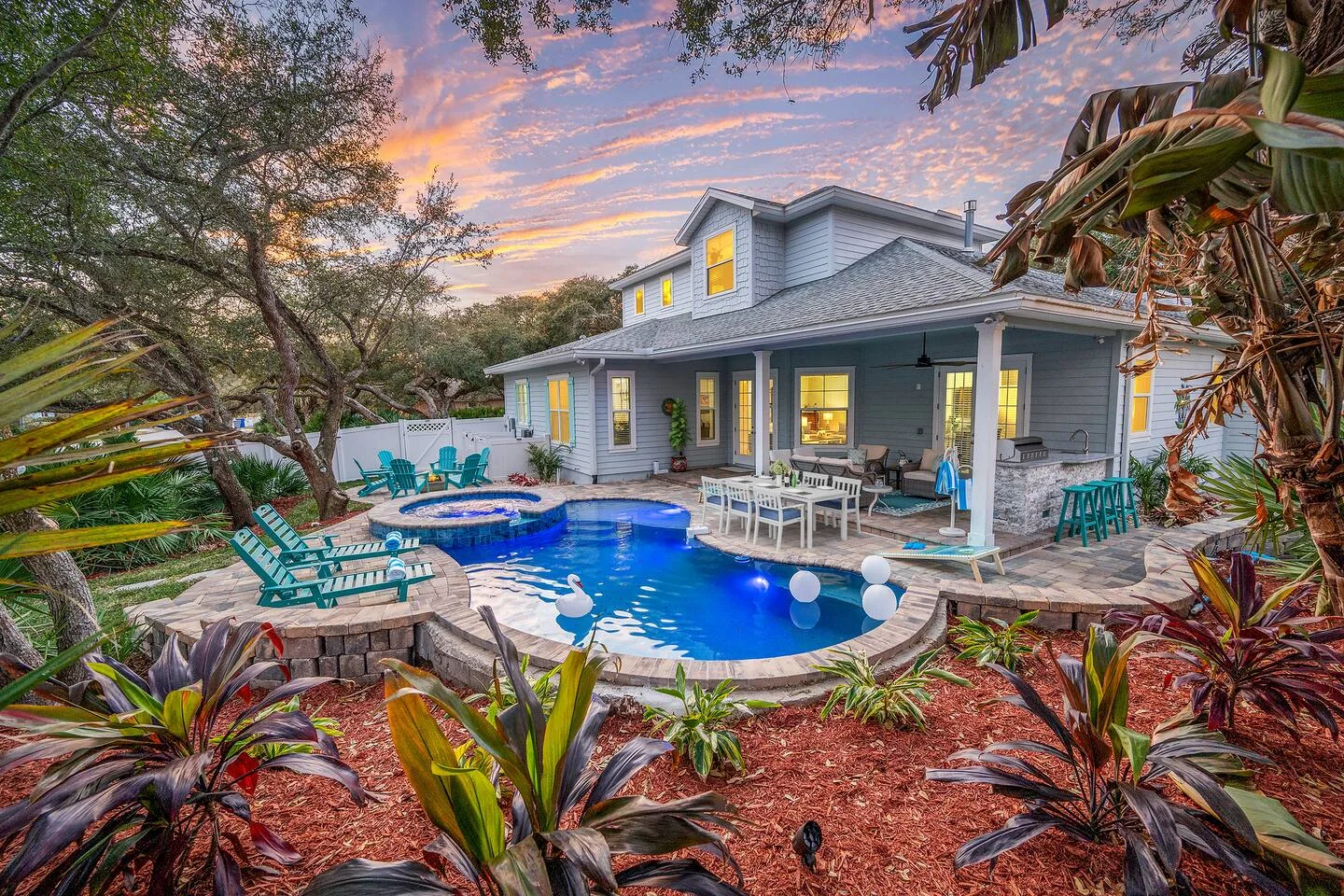
If you are ready to hand your St. Augustine rental over to a team that treats it as a hospitality business, In The Sun VR is accepting new managed properties across Vilano Beach, the Historic District, St. Augustine Beach, and Crescent Beach. We handle compliance, dynamic pricing, guest communication, cleaning oversight, and emergency response so you can focus on your investment from wherever you live. Learn about our property management services at In The Sun VR or reach out directly to discuss what your property could realistically earn under professional management.




Comments