

Rental House St Augustine FL: A Guest Story Worth Sharing
- Seth Balogh

- May 23
- 15 min read

A rental house in St. Augustine, FL is a private vacation home available for short-term stays in one of the oldest continuously occupied European-settled cities in the United States. At In The Sun VR, we manage a portfolio of 13 short-term rental houses across St. Augustine, and the stories guests bring back after their stays reveal exactly what makes this market unlike any other in Florida. The city draws over 3 million tourists annually, and the guests who choose a private rental house over a hotel are almost always after the same thing: space, authenticity, and a place that feels like it belongs here.
St. Augustine's Airbnb market averages $326 ADR and $41,270 in annual revenue per listing, according to AirROI 2026 data covering May 2026 through April 2026.
Peak rental season runs March, June, and July, when average monthly revenue reaches $6,441 and occupancy climbs to 57.3%.
There are 1,143 active short-term rental listings in St. Augustine as of 2026, a 118.5% supply increase year-over-year, yet nightly rates have continued rising.
The city operates with a relatively low STR regulation profile, though requirements vary by zoning district, and City Commission registration is required.
Top 10% performing properties earn $9,758 or more per month, with occupancy above 80% and average nightly rates above $559.
Average booking lead time is 58 days, meaning most guests plan nearly two months ahead, which matters for your pricing strategy.
St. Augustine is not a city that competes on novelty. It competes on depth. The Castillo de San Marcos National Monument, the gas-lit lanes of St. George Street, the working waterfront at the Bridge of Lions, the surf-town ease of Vilano Beach: these are not manufactured attractions. They have been here for centuries. Travelers who find their way to a rental house here, rather than a chain hotel, tend to be the ones who want to absorb all of it at their own pace.
For property owners, that visitor profile translates to consistent demand, strong repeat booking potential, and guests who genuinely care about the quality of the space they stay in. What follows is the kind of guest story we hear regularly, woven together with the practical details every prospective visitor and every curious property owner should understand before engaging with this market in 2026.

What Makes a Rental House in St. Augustine Different From Anywhere Else in Florida?
A rental house in St. Augustine, FL is distinct from typical Florida beach rentals because the city layers authentic historical architecture, a walkable downtown, and genuine coastal character into a single destination that no other Florida market replicates. Guests do not just get a beach house here. They get proximity to coquina stone forts, centuries-old city blocks, and a food scene that punches well above the city's 15,596-person resident population.
Most Florida beach towns offer variations on the same theme: sand, chains, and seafood shacks. St. Augustine operates differently. You can walk from a 16th-century Spanish fort to a craft cocktail bar in under ten minutes. The Fountain of Youth Archaeological Park sits a short drive from Vilano Beach surf breaks. The St. Augustine Lighthouse and Maritime Museum rises above Anastasia Island less than two miles from resort-quality rental homes.
That layered character drives booking behavior in a specific way. According to AirROI 2026 data, the average booking lead time in St. Augustine is 58 days. Guests plan carefully here because the destination rewards planning. They want the right house in the right neighborhood for the specific mix of activities their group has in mind.
Families visiting with young children tend to anchor near Anastasia State Park or Crescent Beach, where a 0.1-mile walk to the water keeps logistics simple. Groups focused on the Historic District gravitate toward properties within walking distance of St. George Street and the Colonial Quarter. Understanding this geography is the first decision a guest or a property owner needs to get right.
What Was the Guest Experience Actually Like at a St. Augustine Rental House?
A St. Augustine rental house experience typically begins the moment guests cross the Vilano Beach Bridge or drive down A1A through Anastasia Island, and the best properties are designed to extend that arrival feeling from the first step inside. Here is the kind of story that captures what a well-managed rental house in this market delivers.
Consider a family of eight arriving for a week in late June, one of the city's peak months. They chose a Vilano Beach property specifically because they wanted beach proximity without the heavier foot traffic of St. Augustine Beach. The backyard hot tub, dual fire pits, outdoor shower after beach sessions, and a fully fenced yard for their dog made the property the functional core of their trip rather than just a place to sleep.
Mornings started with coffee on the screened lanai before the beach crowds built. Afternoons were split between the water and the backyard. Evenings went two directions: some nights they walked to a local Vilano Beach restaurant for grouper sandwiches, other nights they grilled in the backyard while the kids played yard games under the fire pit glow.
The Historic District got two full days. The Lightner Museum, housed in the former Alcazar Hotel built by Henry Flagler, held the history-obsessed members of the group for most of a morning. St. George Street was better on a weekday morning than a weekend afternoon: fewer crowds, the same character. Flagler College's Ponce de León Hall, visible from the street with its Spanish Renaissance towers, stopped every first-time visitor in their tracks.
This is the structure of a strong St. Augustine rental house week: a private property that handles the downtime brilliantly, paired with a city that handles the adventure days just as well.
Which St. Augustine Neighborhoods Should You Choose for a Rental House Stay?
The right St. Augustine rental house neighborhood depends entirely on your group's priorities, and the differences between neighborhoods are significant enough to change the whole character of your stay. St. Augustine's primary short-term rental markets each offer a genuinely distinct experience, and choosing carelessly is the most common mistake first-time visitors make.
Vilano Beach
Vilano Beach sits north of the historic city center across the Vilano Beach Bridge. The vibe is low-key surf town: wide streets, modest commercial strips, and direct Atlantic access without the resort density of St. Augustine Beach to the south. Properties here tend to sit on larger lots with room for outdoor amenity investment. The In The Sun VR portfolio includes several Vilano Beach houses, including properties with outdoor summer kitchens, backyard putt-putt greens, and 7-seater hot tubs on corner lots. If your group prioritizes outdoor entertaining space and a quieter residential feel, Vilano Beach is the right call.
St. Augustine Beach and Anastasia Island
St. Augustine Beach, on Anastasia Island south of the inlet, offers the classic Florida beach experience with more commercial infrastructure, closer proximity to the St. Augustine Amphitheater, and easy access to both Anastasia State Park and Fort Matanzas National Monument. Crescent Beach, the southernmost strip of Anastasia Island, runs quieter still. Point Break, one of the In The Sun VR managed properties, sits 0.1 miles from Crescent Beach access and draws guests who want beach immediacy with a private backyard complete with kayaks and SUP boards.
Historic District
Staying inside or within walking distance of the Historic District puts you six minutes on foot from St. George Street and within easy reach of the city's best restaurants, museums, and evening activity. The trade-off is smaller lots, less outdoor space, and higher noise levels on weekend evenings. For groups focused primarily on cultural exploration and dining rather than outdoor recreation, the walkability advantage is worth it. Victorian Villa, the In The Sun VR 6-bedroom restored Victorian property, demonstrates what a well-managed historic property delivers: multiple living spaces, balconies, and a private fenced courtyard, all a short walk from the city's best blocks.
What Do the Numbers Say About Renting a House in St. Augustine in 2026?
St. Augustine's short-term rental market in 2026 is defined by a paradox that property owners need to understand: supply has grown 118.5% year-over-year, yet nightly rates and total revenue have both trended upward. According to AirROI 2026 data, the city averages $326 ADR and $41,270 in annual revenue per listing. Traveler demand is outpacing new inventory rather than being diluted by it.
Performance Tier | Monthly Revenue | Occupancy Rate | Average Nightly Rate |
Top 10% | $9,758+ | 80%+ | $559+ |
Top 25% | $5,708+ | 65%+ | $371+ |
Median | ~$3,343 | ~44% | ~$253 |
Bottom 25% | Lower | Lower | $67 RevPAR |
Peak Season (Mar, Jun, Jul) | ~$6,441 | 57.3% | $343 |
Low Season (Jan, Sep, Oct) | ~$3,343 | 36.0% | $303 |
Source: AirROI St. Augustine Airbnb Market Data 2026 (May 2026 through April 2026).
The spread between top performers and median properties is the most important data point here. Top 10% properties earn more than double the median monthly revenue. That gap does not come from location alone. It comes from amenity quality, listing optimization, dynamic pricing, and professional management standards. Properties that sit in the median tier are almost always there because of avoidable operational gaps, not because demand does not exist.
For guests, the numbers confirm that St. Augustine remains a strong-value destination compared to Miami or the Florida Keys, where comparable private homes command far higher nightly rates for equivalent amenity packages. For property owners, the data frames a clear question: are you running a top-quartile operation, or are you leaving significant revenue on the table each month?
If you want a data-backed view of what your specific St. Augustine property could realistically earn, our guide to maximizing income by season breaks down the demand calendar in detail.
What Should You Look for in a Quality St. Augustine Rental House?
A quality rental house in St. Augustine, FL shares a consistent set of characteristics that separate memorable stays from forgettable ones. These are the signals that experienced guests and property managers both recognize immediately, and they are worth knowing before you book or before you invest in a property of your own.
Outdoor Amenity Investment
St. Augustine's climate makes outdoor living central to the experience for roughly nine months of the year. Properties that invest in hot tubs, fire pits, screened lanais, outdoor kitchens, and fenced yards consistently outperform those that treat the backyard as an afterthought. In the In The Sun VR portfolio, outdoor entertaining spaces are the amenity category that generates the most first-comment praise in 5-star reviews, and they are the feature guests reference most when explaining why they booked a specific house over a comparable alternative.
Location Precision
Distance to the beach or downtown is one of the most misrepresented details in rental listings across St. Augustine. "Minutes from downtown" can mean 5 minutes by car or a 25-minute walk depending on which side of the Bridge of Lions you are on. Always verify actual walking distance if walkability matters to your group. For beach proximity, confirm whether the access point is a public beach ramp, a pedestrian path, or a drive. The difference between a 0.1-mile walk and a 0.4-mile walk with a loaded beach wagon and two children is significant.
Property Management Quality
Well-managed properties show in the details: fresh premium linens, a fully stocked kitchen with more than the bare minimum, property-specific local guides, and responsive communication before and during the stay. The difference between a self-managed listing and a professionally managed property is felt most clearly when something goes wrong. A broken A/C at 9 pm on a Saturday night tests every rental relationship. Properties managed by professional teams resolve issues faster because vendor networks, maintenance protocols, and escalation processes are already in place before the guest ever arrives.
For property owners researching the full range of management options, the ultimate guide to short-term rental management in St. Augustine covers the decision framework in detail.
What Are the Practical Logistics of Booking a St. Augustine Rental House?
Booking a rental house in St. Augustine, FL follows a relatively straightforward process, but several logistics catch first-time renters off-guard. Understanding these details before you commit saves frustration and, in some cases, money.
When to Book
With an average booking lead time of 58 days, most St. Augustine guests plan nearly two months ahead. For peak season weeks in March, June, and July, 58 days is often not early enough for the best properties. Houses with outdoor kitchens, heated pools, and beachside locations in the top performance tier regularly book out 90 to 120 days in advance during peak demand windows. The Nights of Lights winter season, which historically runs from mid-November through January, creates its own secondary demand spike. Book before mid-September if that season is your target.
Minimum Stay Requirements
Minimum stay requirements in St. Augustine vary by zoning district. City Commission regulations, updated with Resolution 2025-41, specify that RS-1 and RS-2 zoning districts allow rentals of one week or longer only. HP-1 zoning restricts rentals to monthly periods or longer. All other zoning districts permit nightly rentals with approved registration. Verify your target property's zoning before booking if you need a stay shorter than one week, as many residential-zone houses have a seven-night minimum regardless of how the listing is presented on booking platforms.
What Fees to Expect
Beyond the nightly rate, rental house bookings in St. Augustine typically include cleaning fees, platform service fees, and applicable Florida sales and use tax. Florida's state sales tax applies to short-term rental stays, and St. Johns County levies an additional tourist development tax. These costs are disclosed before booking on major platforms. When evaluating total trip cost, factor in the cleaning fee as a fixed expense that is more significant on shorter stays and less significant when spread across a full week.
Several established property management companies and rental agencies operate in the St. Augustine market. Coastal Realty and Property Management and Casago are among the local operators managing vacation inventory. Each company manages a different property mix with varying service standards, so reviewing recent guest feedback for specific properties matters more than company reputation alone.

What Do St. Augustine Rental Guests Say They Wish They Had Known?
St. Augustine rental house guests consistently surface a handful of practical insights that would have improved their trip if they had known them before arriving. These are not complaints about specific properties. They are structural observations about the destination that apply broadly.
The Historic District Is Best on Weekday Mornings
St. George Street on a Saturday afternoon in July is crowded. The same street at 8:30 on a Tuesday morning, when the light falls through the narrow lane and the shops are just opening, is genuinely special. If your rental house is not within walking distance of downtown, plan your Historic District visits for weekday mornings and leave weekend afternoons for your backyard or the beach. The Colonial Quarter living history museum is less crowded mid-week as well.
Vilano Beach and St. Augustine Beach Draw Different Crowds
Vilano Beach north of the inlet has a local, quieter character. St. Augustine Beach on Anastasia Island has more commercial infrastructure, more transient summer visitors, and a livelier strip along A1A. Neither is better universally. Vilano is right for groups that want space and local restaurant character. St. Augustine Beach is right for groups that want convenience and beach-town energy. Choose based on your group's actual temperament, not just distance to the Castillo.
Pack for Rain Without Sacrificing Outdoor Plans
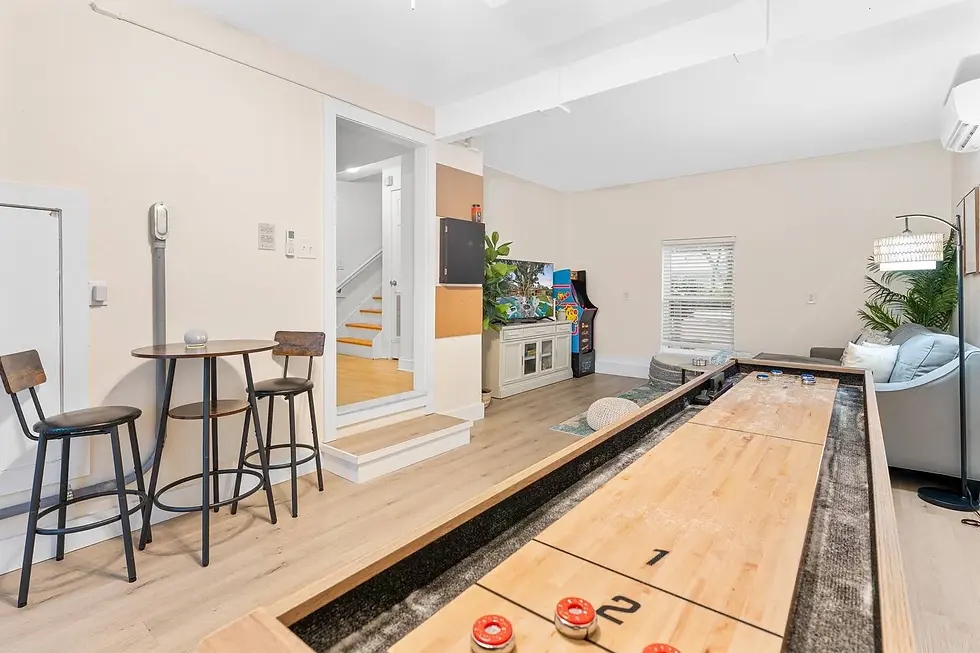
Northeast Florida summer afternoons bring brief but heavy thunderstorms, typically between 2 pm and 5 pm. Build afternoon flexibility into your beach and outdoor plans. Properties with screened lanais, covered patios, and indoor game rooms handle rainy afternoons significantly better than properties that rely entirely on open-air outdoor space. This is one reason the In The Sun VR team incorporates indoor activity options into managed properties as a deliberate design choice, not an afterthought.
Seafood Is Best Off the Beaten Path
The restaurants directly on St. George Street serve their purpose, but the most memorable meals in St. Augustine typically happen a few blocks off the main tourist spine or across the Bridge of Lions. Sea Fair on the waterfront is a well-reviewed option worth knowing. Vilano Beach has its own small cluster of local restaurants within walking distance of properties on the north side. Ask your host for current recommendations rather than relying on aggregator rankings, which update slowly in a market this active.
Frequently Asked Questions About Rental Houses in St. Augustine, FL
What is the average cost of a rental house in St. Augustine, FL per night?
The average nightly rate for a short-term rental house in St. Augustine, FL is approximately $326 as of 2026, according to AirROI market data covering May 2026 through April 2026. Peak season months of March, June, and July average $343 per night, while the low season months of January, September, and October average around $303. Top-tier properties with premium amenities like heated pools, hot tubs, and beachfront access command rates of $559 or more per night. Budget-tier options exist well below the market average, particularly for smaller properties or those farther from beach access.
Do you need a permit or registration to rent a house short-term in St. Augustine?
Yes, St. Augustine City Commission regulations require registration for short-term rentals, and requirements vary by zoning district. RS-1 and RS-2 zoned properties may only be rented for periods of one week or longer. HP-1 zoning limits rentals to monthly or longer periods. All other zoning districts permit nightly rentals with approved registration. Registration fees follow a tiered structure: a base rate of $303.03 plus $79.30 per rental bedroom, per Resolution 2025-41. AirROI 2026 data notes that formal licensing enforcement appears limited in practice, but hosts should verify current requirements directly with St. Augustine city authorities, as the regulatory environment may tighten in response to rapid supply growth.
When is the best time to visit St. Augustine for a rental house stay?
March, June, and July are St. Augustine's peak rental months, with the highest occupancy, best property availability at top-tier houses, and the most active event calendar. However, peak season means higher rates and more competition for the best properties, with 58-day average booking lead times extending further during these months. The Nights of Lights winter season from mid-November through January creates a secondary demand spike with genuinely special atmosphere. If you want lower rates with excellent weather, late April through May and October through early November offer strong value: mild temperatures, fewer crowds, and lower nightly rates across the market.
What neighborhoods in St. Augustine are best for vacation rental houses?
St. Augustine's main short-term rental neighborhoods each serve different guest profiles. Vilano Beach, north of the city center, offers larger lots, a quieter surf-town feel, and direct Atlantic access without resort-density crowds. St. Augustine Beach and Crescent Beach on Anastasia Island provide classic Florida beach proximity with more commercial infrastructure nearby. The Historic District and its surrounding streets offer walkability to St. George Street, the Castillo de San Marcos, and the city's best restaurants. The right choice depends on whether your group prioritizes outdoor space and beach access, cultural walkability, or a mix of both.
How far in advance should you book a St. Augustine rental house?
The average booking lead time in St. Augustine is 58 days, according to AirROI 2026 data. For peak season weeks in March, June, or July, booking 90 to 120 days ahead is a more realistic target for securing the best properties. The Nights of Lights season from November through January books up quickly for waterfront and historic-area properties, and September is not too early to lock in those dates. Off-peak shoulder seasons offer more last-minute flexibility, but well-managed properties with premium amenities rarely go unbooked regardless of season.
What amenities make the biggest difference in a St. Augustine rental house?
Outdoor amenity investment consistently separates top-performing St. Augustine rental houses from median-tier options. Hot tubs, fire pits, screened-in lanais, fenced yards for pets, outdoor kitchens, and beach gear storage are the features guests mention most in 5-star reviews. For families, properties with bunk rooms, games, kayaks, and paddle boards extend the property's utility across all age ranges. For groups, outdoor entertainment infrastructure, including covered patios and multiple seating zones, determines how much time the group spends at the property versus feeling like they have to go elsewhere to keep themselves occupied.
Is St. Augustine a good market for short-term rental property investment in 2026?
St. Augustine shows strong fundamentals for short-term rental investment in 2026. The market averages $41,270 in annual revenue per listing, with top quartile properties earning $5,708 or more per month at 65% or higher occupancy, according to AirROI 2026 data. Despite 118.5% year-over-year supply growth, revenue and nightly rates have both trended upward, suggesting demand is absorbing new inventory. The city's relatively low STR regulation profile compared to other Florida markets reduces operational risk. The primary performance variable is management quality: well-managed properties earn dramatically more than median-tier competitors, making professional management a core investment decision rather than a discretionary expense.
What Should Property Owners Know Before Listing a Rental House in St. Augustine?
Listing a rental house in St. Augustine, FL for short-term rental requires navigating zoning requirements, pricing strategy, listing optimization, and guest management simultaneously from day one. The market's growth, 118.5% more active listings in 2026 than the prior year per AirROI data, means that new listings enter a significantly more competitive environment than existed even 18 months ago.
The gap between top performers and median properties is not primarily a location gap. It is a management and marketing gap. Top 10% properties achieve $9,758 or more per month and 80% or higher occupancy. Median properties earn roughly $3,343 per month at 44% occupancy. The same house, in the same neighborhood, can sit at either performance level depending on how well it is priced, photographed, listed, and managed.
Dynamic pricing is the single highest-leverage operational decision most self-managing owners underinvest in. Flat or manually adjusted nightly rates consistently miss St. Augustine's demand spikes around spring break, summer beach season, the Nights of Lights winter season, and fall festival weekends. A professionally calibrated dynamic pricing system adjusts rates in real time against live demand signals, capturing premium rates during high-demand windows without pricing out the shoulder-season bookings that sustain year-round revenue.
Listing optimization is the second most common gap. Airbnb's algorithm rewards click-through rate, and click-through rate starts with the first five photos. Outdoor entertaining space, primary bedroom quality, kitchen condition, and at least one signature amenity shot need to appear before any interior generic room photos. A listing that leads with an unladen living room couch before showing the hot tub and fire pit is leaving bookings on the table regardless of how competitive the nightly rate is.
For a full breakdown of how the management decision plays out financially, the property management worth-it guide for St. Augustine owners walks through the real cost comparison in detail. And if you are evaluating which companies currently serve the market, the 2026 guide to the best vacation rental management companies in St. Augustine provides a current comparison.
Ready to Get More From Your St. Augustine Rental House?
The difference between a St. Augustine rental house that earns its full potential and one that plateaus at median performance rarely comes down to location or property size. It comes down to the systems, the standards, and the team running the operation. Properties managed with professional pricing, optimized listings, hotel-quality turnover protocols, and responsive guest communication consistently outperform self-managed alternatives in the same neighborhoods at the same price points. The AirROI 2026 data confirms the gap: top-quartile properties earn more than double the median monthly revenue in this market, and that gap is achievable for well-managed houses across all of St. Augustine's key neighborhoods.
If you are a property owner considering your options in 2026, the conversation is worth having before another slow season passes. In The Sun VR is currently accepting new managed properties across St. Augustine, Vilano Beach, Crescent Beach, and the Historic District.

If you are ready to see what your St. Augustine property is capable of under professional, hospitality-driven management, get started with In The Sun VR and request your no-pressure property assessment today.
Written by Seth Balogh, Owner at In The Sun VR


Comments