

Short-Term Rental Regulations in St Augustine Florida: 2026 Guide


Short-term rental regulations in St. Augustine, Florida are governed by two separate jurisdictions: the City of St. Augustine and St. Johns County for unincorporated areas. The city adopted its STR framework through ORD 2019-50, 2019-51, and 2019-52 in 2019. Rules vary significantly by zoning district, and every property must be registered before accepting guests.
The City of St. Augustine and St. Johns County (unincorporated areas) operate under entirely separate STR ordinances. Knowing which jurisdiction applies to your address is the single most important first step.
City registration fees range from $303.03 for a studio to $699.53 for a 5-plus bedroom property, based on the 2025-41 fee resolution currently in effect as of 2026.
RS-1 and RS-2 zoning districts prohibit nightly rentals. Stays of less than one week are not permitted in those zones, regardless of registration status.
A Life Safety Inspection by the St. Augustine Fire Department is required at registration and annually thereafter. Missing compliant fire extinguishers and emergency lighting are the most common first-time failures.
St. Johns County operators must hold three separate credentials: a Local Business Tax Receipt, a Florida DBPR Transient Public Lodging Establishment license, and a Florida Department of Revenue sales tax certificate.
Platforms like Airbnb and VRBO remit some taxes on your behalf, but Florida state sales tax and county tourist development tax obligations may still require direct host action depending on your setup.
TL;DR
St. Augustine's STR market includes 6,940 active listings with a 56% occupancy rate and an average daily rate of $288.70, according to AirDNA's Saint Augustine Market Overview.
City of St. Augustine STR registration follows a tiered fee schedule and requires an annual Life Safety Inspection by the Fire Department.
RS-1 and RS-2 zoning prohibit stays shorter than one week; HP-1 zoning requires monthly minimums; all other zones allow nightly rentals with registration.
St. Johns County has its own ordinance (ORD 2021-23) with different occupancy caps, parking rules, and a 5% total tourist development tax rate.
Non-compliance risks fines, permit revocation, and forced closure. Operating without registration is the most common and most expensive mistake new hosts make.
At In The Sun VR, we manage a portfolio of 13 short-term rental properties across St. Augustine, Vilano Beach, Crescent Beach, and St. Augustine Beach. We have guided owners through the city's registration portal, scheduled Fire Department inspections, and helped first-time hosts understand which jurisdiction their address falls under. That last point trips up more owners than any other. Two properties on the same street can sit in different jurisdictions with fundamentally different rules. This guide covers both, in enough detail to act on.
The St. Augustine STR market earned a Market Score of 90 (Great) with an Investability score of 84, according to AirDNA data. That is a strong signal for new investment. But a high market score does not protect you from operating outside compliance. Understanding the regulatory framework before your first guest checks in is the difference between a profitable rental and a forced shutdown.
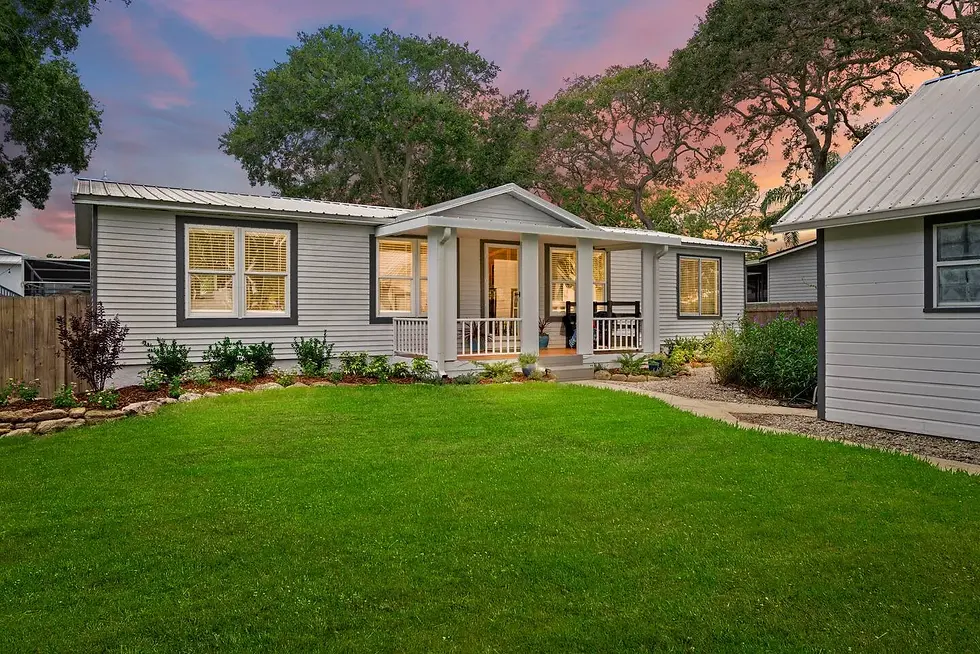
Does St. Augustine Allow Short-Term Rentals?
Yes, St. Augustine allows short-term rentals, but the rules depend entirely on your property's zoning district. The City of St. Augustine adopted its short-term rental regulatory framework in 2019, establishing that rentals are permitted in most zones with an approved registration. The critical distinction is that some residential zones prohibit stays shorter than one week, which effectively eliminates nightly vacation rental income for properties in those zones.
First, identify your zoning district. You can look up any St. Augustine address using the St. Augustine ArcGIS Zoning Lookup Tool. The result determines everything about what you can and cannot do with your property.
Here is how zoning breaks down under the city's ordinance:
RS-1 and RS-2 (Single-Family Residential): Rentals are permitted for periods of one week or longer with registration. Nightly rentals are explicitly prohibited. Only one stay per week is allowed, even if the stay itself is fewer than seven nights.
HP-1 (Historic Preservation): Rentals are permitted on a monthly basis or longer only. Short-stay rentals, including weekly stays, are not permitted in HP-1 zones with registration.
All other zoning districts: Nightly rentals are permitted with an approved registration. This covers the majority of properties that generate typical vacation rental income.
One detail competitors routinely misstate: in RS-1 and RS-2 zones, the weekly minimum means only one guest group per week, not a 7-night stay requirement. A stay of 5 nights still counts as occupying that week, and no second guest can check in during the remaining 2 nights. That is a real operational constraint for owners hoping to maximize turnover in those zones.
For the full legal text of the city's residential zoning restrictions, see ORD 2019-51 covering RS-1 and RS-2.
How Do You Register a Short-Term Rental in St. Augustine?
Short-term rental registration in the City of St. Augustine is handled through the HostCompliance online portal. Every property that accepts paying guests must be registered before the first booking. The registration period follows the city's fiscal year, running from October 1 through September 30, and renewals must be submitted by October 1 each year to avoid a $100 late fee.
Here is a step-by-step walkthrough of the actual registration process:
Confirm your zoning district. Use the city's ArcGIS lookup tool before doing anything else. Your zoning determines whether nightly rentals are legal at your address.
Create an account on the HostCompliance portal. Navigate to the St. Augustine STR Registration Portal and complete the property profile with your address, owner information, and rental unit details.
Pay the registration fee. Fees are set by Resolution 2025-41 and are currently: Studio $303.03, 1 Bedroom $382.33, 2 Bedrooms $461.63, 3 Bedrooms $540.93, 4 Bedrooms $620.23, and 5 or more bedrooms $699.53. Fees are non-refundable if your application is denied or your property fails the final inspection.
Schedule your Life Safety Inspection. Contact Fire Safety Inspector Dustin Hamilton at 904-808-3369. The inspection is conducted by the St. Augustine Fire Department and must be passed before your registration is finalized.
Receive your registration number. Once you pass inspection, the city issues your STR registration. This number must be displayed on all listings.
One important operational note: each individual rental listing must be registered separately. If you have two Airbnb listings on the same property (for example, a main house and a detached guest suite), each listing requires its own registration and fee. This surprises most owners who assume one registration covers the entire address.
New registration fees are not prorated. If you register in March, you pay the full annual fee and renew by October 1 regardless of how many months of the fiscal year remain.
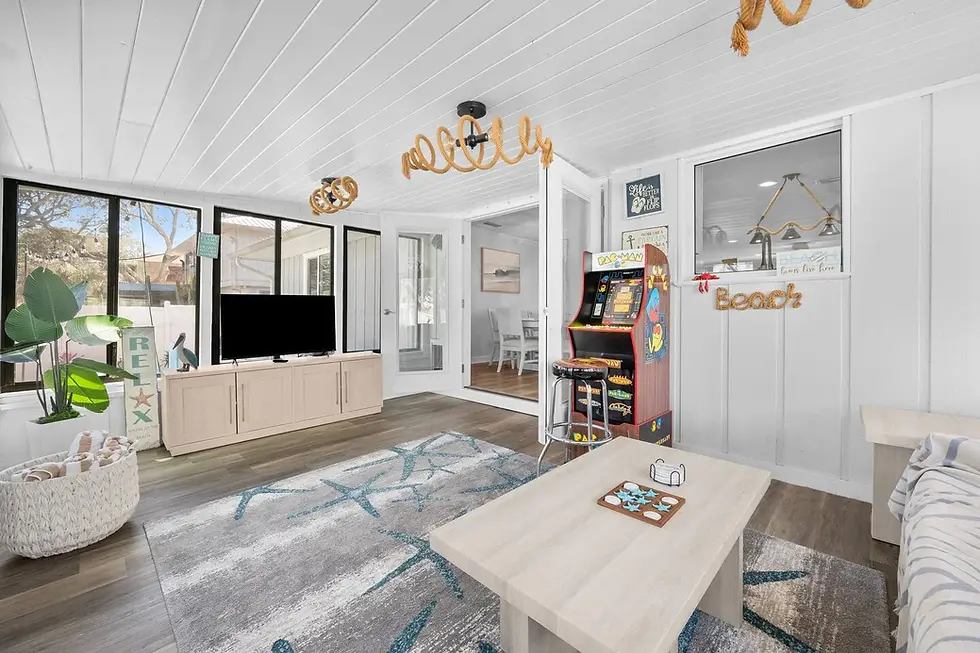
What Are the Life Safety Requirements for St. Augustine Short-Term Rentals?
The Life Safety Inspection for St. Augustine short-term rentals is conducted by the St. Augustine Fire Department and is required at initial registration and once per year thereafter. The inspection evaluates fire safety, emergency egress, and hazard compliance throughout the property. Failing the initial inspection means your application fee is not refunded, and you must correct deficiencies and pay a $50 re-inspection fee before the registration is issued.
Specifically, here is what inspectors verify at every STR Life Safety Inspection:
Address visibility: Property address numbers must be at least 4 inches tall and visible from the street.
Smoke alarms: Required in each sleeping room and on every level of the property.
Carbon monoxide detectors: Required wherever gas appliances exist or where an attached garage is present.
Fire extinguishers: One 2A10BC multi-purpose portable fire extinguisher required on each level, mounted accessibly, and either less than 1 year old or inspected and tagged within the last 12 months annually.
Emergency lighting: Battery-backup emergency lighting is required along the path between bedrooms and exit doors.
Exit signs: Required over all exit doors.
Secondary egress: Each sleeping room must have one additional emergency escape route, either a second door or an openable window of adequate size.
Clear egress paths: All hallways and exit paths must be unobstructed.
Emergency evacuation information: A posted evacuation plan must be displayed in a central location inside the property.
No extension cord wiring: Extension cords cannot substitute for permanent electrical wiring anywhere in the property.
From our experience preparing properties for inspection across St. Augustine, the most common first-time failures involve fire extinguishers (expired or missing from upper floors) and emergency lighting (not installed or installed but non-functional due to dead batteries). Both are inexpensive to address. Buy compliant 2A10BC extinguishers at hardware stores like Home Depot or Lowe's, and install plug-in battery-backup emergency path lights between bedrooms and exterior doors. Address those two items before you call the inspector and you will eliminate the most frequent re-inspection scenarios.
For the official inspection checklist, see the St. Augustine STR Life Safety Inspections page.
What Is the Maximum Occupancy for St. Augustine Short-Term Rentals?
Maximum occupancy for short-term rentals in the City of St. Augustine is calculated as 2 persons per bedroom plus 2 additional children under age 18, with a hard cap of 12 total occupants. Studio or efficiency spaces are limited to 2 occupants total. These limits are not suggestions. Exceeding them constitutes a compliance violation and can result in complaint investigations through the city's hotline.
Practically speaking, a 3-bedroom property can accommodate up to 8 adults and 2 additional children under 18, for a total of 10. A 5-bedroom property reaches the 12-person cap. No property registered under the city's STR ordinance may host more than 12 persons regardless of size.
In St. Johns County unincorporated areas, the occupancy formula differs. The county limits occupancy to 2 transient occupants per sleeping room or designated common area, with a maximum of 10 total, excluding children age 12 and under. The county's exclusion applies only to children 12 and under, while the city's exclusion applies to children under 18. This is a meaningful difference if you are managing properties in both jurisdictions.
What Are the Parking Requirements for St. Augustine STRs?
Parking requirements for St. Augustine short-term rentals are specific and enforceable. The city requires a minimum of 1 on-site parking space per bedroom. Off-site parking arrangements require special approval from the City's Planning and Zoning Board, which is not a casual process. For most properties, if you cannot provide at least one on-site space per bedroom using an approved surface, you have a compliance problem before you have a guest.
Approved parking surfaces include concrete, asphalt, pavers, and gravel. Grass, mulch, and sand are explicitly not permitted. This matters for older St. Augustine properties with unpaved yards, which are common in the Historic District and surrounding neighborhoods. If your current parking surface is grass or shell, plan to resurface before your inspection.
In St. Johns County, the parking standard is different: a minimum of 1 off-street space per 3 transient occupants. The county also prohibits boats, RVs, and trailers from being parked on the street or in the front yard. Only vehicles belonging to current occupants may park overnight. The county's standard gives more flexibility for larger properties but adds the vehicle-type restriction that city rules do not explicitly include.
What Is the Difference Between City of St. Augustine and St. Johns County STR Rules?
The City of St. Augustine and St. Johns County govern short-term rentals under entirely separate ordinances, and many property owners do not know which jurisdiction applies to their address. The City of St. Augustine's ordinances (ORD 2019-50 through 52) cover properties within city limits. St. Johns County's Ordinance ORD 2021-23 covers unincorporated county areas outside city limits. A property one block outside the city boundary operates under an entirely different compliance framework.
The table below compares the key differences side by side:
Requirement | City of St. Augustine | St. Johns County (Unincorporated) |
Governing Ordinance | ORD 2019-50, 2019-51, 2019-52 | ORD 2021-23 |
Registration Platform | HostCompliance (city portal) | HostCompliance (county portal) |
Max Occupancy | 2 per bedroom + 2 children under 18, cap of 12 | 2 per sleeping room/common area, cap of 10, excl. children 12 and under |
Parking Standard | 1 on-site space per bedroom | 1 off-street space per 3 transient occupants |
Life Safety Inspection | St. Augustine Fire Department (annual) | Separate county process |
State License Required | No explicit DBPR requirement in city ordinance | Florida DBPR Transient Public Lodging Establishment license required |
Tourist Development Tax | Applicable county rate | 5% total (1% added via ORD 2021-43, effective October 1, 2021) |
Solid Waste Rule | Not separately specified in city STR ordinance | Minimum 1 covered trash container per 4 transient occupants; curbside timing rules apply |
Exemptions | None specified | Properties west of Intracoastal Waterway; owner-occupied homestead dwellings; HOA/condo-governed properties with on-site management |
If you are not certain which jurisdiction applies, search your property address in the city's ArcGIS zoning lookup tool first, then cross-reference with the St. Johns County property records. Never assume. The compliance requirements in each jurisdiction are different enough that operating under the wrong ruleset could result in penalties even if you believe you are compliant.
What Tax Obligations Do St. Augustine Short-Term Rental Owners Have?
Short-term rental tax obligations in St. Augustine involve three separate layers: Florida state sales tax, St. Johns County tourist development tax, and any applicable local taxes. Understanding which taxes your booking platform remits automatically versus which ones you must handle yourself is essential to staying compliant without overpaying or leaving obligations unmet.
Here is how each layer works in 2026:
Florida State Sales Tax
Florida imposes a 6% state sales tax on short-term rental income, collected under the Florida Department of Revenue's sales and use tax framework. You must register with the Florida Department of Revenue and obtain a Certificate of Sales and Use Tax. Platforms like Airbnb and VRBO remit sales tax on your behalf for bookings made through their platforms. However, direct bookings you take outside these platforms require you to collect and remit sales tax independently. Review your platform's tax remittance confirmation annually, as platform policies change.
County Tourist Development Tax
St. Johns County levies a tourist development tax on short-term rental income. An additional 1% was added via ORD 2021-43, effective October 1, 2021, bringing the total tourist development tax rate to 5%. Registration with the St. Johns County Tax Collector is required to obtain your Local Business Tax Receipt. Airbnb and VRBO remit tourist development taxes in many Florida jurisdictions, but you should verify this in writing for St. Johns County specifically, as remittance agreements between platforms and counties are reviewed periodically.
Florida DBPR License (St. Johns County Operators)
If your property is in the unincorporated county rather than the city, you must also obtain a Florida Department of Business and Professional Regulation Transient Public Lodging Establishment license through MyFloridaLicense.com. This is a state-level license separate from your county registration. City of St. Augustine operators are not explicitly required to obtain this license under the city's STR ordinances, but confirming with the city's planning department for your specific situation is advisable.
If you use Airbnb or VRBO, you must submit a statement confirming that the third-party platform is collecting and remitting tourist development tax on your behalf. The St. Johns County Tax Collector requires this documentation. Keep records of the confirmation annually.
What Is the 7-Day Rule for Short-Term Rentals?
The 7-day rule for short-term rentals in St. Augustine refers specifically to the minimum rental period restriction in RS-1 and RS-2 zoning districts. In those zones, rentals are only permitted for periods of one week or longer. This does not mean guests must stay exactly 7 nights. It means only one guest group may occupy the property per calendar week, and stays shorter than a full week are not permitted even if the guest's total nights fall within the 7-day window.
For example: if a guest checks in on a Monday and checks out Thursday (a 3-night stay), that property has used its one allowable stay for that week. No second guest can check in Thursday, Friday, or the following Sunday. The 7-day rule is not about the guest's duration. It is about limiting turnover frequency in residential zones.
This rule has direct financial consequences. A property in RS-1 or RS-2 zoning that commands $300 per night can earn a maximum of roughly 52 weeks multiplied by 7 nights of potential occupancy. But if occupancy averages 4 nights per stay (as many leisure stays do), the weekly minimum forces lost revenue on the 3 unused nights each week. Owners considering purchasing in these zones should model revenue against this constraint before buying.
Under Florida Statute Section 509.242, the state legally defines vacation rentals as dwelling units rented to transient occupants, distinct from hotels and motels. This state definition applies regardless of local zoning, which is why local ordinances must be layered on top of state definitions when determining what you can legally do.
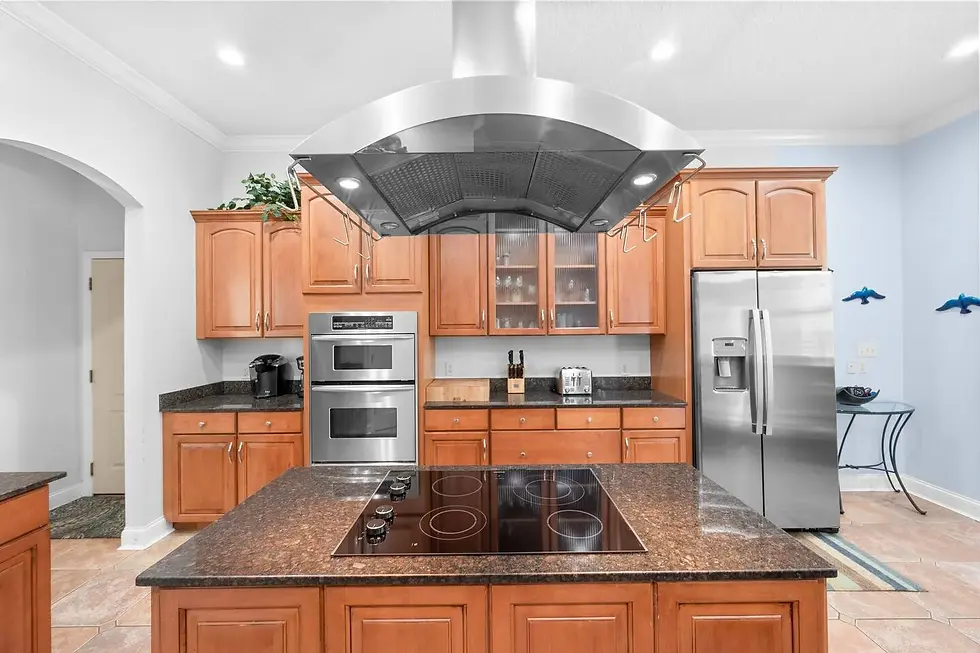
What Happens If You Violate St. Augustine Short-Term Rental Rules?
Operating a short-term rental in St. Augustine without registration or in violation of the city's ordinance exposes you to enforcement actions that most competitors ignore entirely. The city operates a complaint hotline at 904-569-7077 and accepts online complaints through HostCompliance. Neighbor complaints are the most common enforcement trigger, and the city's online portal makes submitting a complaint fast and anonymous.
Specifically, here is what enforcement can look like:
Operating without registration: The most common violation. The city can issue citations and require immediate cessation of rental activity. All booking revenue earned during the unregistered period remains at risk.
Occupancy violations: Hosting more guests than your occupancy limit allows, whether 10 or 12 depending on your property type, is a citable offense. This applies to guests who arrive after check-in as well as those listed on the reservation.
Noise violations: St. Augustine enforces a noise ordinance codified in Chapter 11 of the City Code of Ordinances. Complaints trigger inspections, and repeat violations can jeopardize your registration.
Parking violations: Using unapproved surfaces or exceeding on-site capacity generates both neighbor complaints and city enforcement attention.
Failed re-inspection: Paying the $50 re-inspection fee and failing again creates a registration delay. During that delay, you cannot legally rent the property.
Registration revocation is the ultimate penalty. A revoked registration means you cannot legally rent the property until you re-apply and pass inspection again, with no guarantee of approval during the revocation period. For owners who depend on rental income to cover mortgage payments, a revocation is financially catastrophic.
In The Sun VR's regulatory and compliance service monitors registration renewal deadlines, annual inspection scheduling, and complaint activity for every property we manage. Most violations are preventable with basic calendar management and pre-inspection preparation. But self-managing owners who let renewals lapse or defer inspections are the ones who receive the surprise citations.
What Loophole Exists for Short-Term Rentals?
The most commonly referenced loophole for short-term rentals in Florida relates to a 2011 state preemption law that restricted local governments from banning STRs entirely or imposing regulations that effectively eliminate them. Under Florida law, municipalities cannot prohibit short-term rentals outright if the property was operating as an STR before local regulations took effect. However, this preemption applies to outright bans, not to reasonable zoning and registration requirements like those St. Augustine has in place.
In practical terms for St. Augustine: there is no exploitable loophole that allows a property owner to bypass registration, skip the Life Safety Inspection, or circumvent zoning restrictions. The city's regulations are structured as permit requirements and operational standards, not as a ban. Florida courts have upheld this type of regulatory framework as distinct from an outright prohibition.
Some owners interpret the RS-1 and RS-2 weekly minimum as a loophole opportunity in reverse, reasoning that they can accept 7-night minimum stays and remain compliant. That interpretation is correct. A property in RS-1 or RS-2 that requires a 7-night minimum booking is operating within the ordinance. It is not a loophole but rather the only legal structure available in those zones.
According to AirDNA's Saint Augustine Market Overview, 17.8% of St. Augustine STR listings already require a minimum stay of 30 or more nights. Some of those may reflect owner decisions shaped by zoning constraints, not just guest preference. If your property is in a restrictive zone, consulting with the city's Planning and Zoning department before listing is the right move, not searching for workarounds that courts have consistently rejected.
What Are the Required Postings Inside St. Johns County Short-Term Rentals?
St. Johns County short-term rental operators must post specific information at or near the main entrance door of every rental unit. These required postings are part of the county's STR ordinance (ORD 2021-23) and are verified during compliance inspections. Missing any of them constitutes a violation.
Required postings in each St. Johns County STR unit include:
Owner or property manager phone number
Maximum number of occupants
Maximum number of vehicles permitted on-site
Location of the evacuation route map
Address of the nearest hospital
Marine turtle regulatory policies (per Section 4.01.08.B.03)
The marine turtle posting requirement reflects St. Johns County's coastal geography. Properties within proximity to nesting beaches must inform guests of lighting restrictions, beach behavior guidelines, and reporting obligations related to sea turtle nesting season. This is a detail that many new coastal STR operators overlook entirely until their first county inspection.
Print these postings on a single laminated sheet and mount it near the front door. Include your cell number directly rather than just a property management company contact, unless that management company is available 24 hours per day. Guest emergencies happen at 2 a.m., and an unreachable contact number on the required posting is a liability, not a compliance checkbox.
What Are the St. Augustine STR Market Conditions in 2026?
St. Augustine's short-term rental market in 2026 reflects strong fundamentals alongside growing supply. According to AirDNA's Saint Augustine Market Overview, the market currently holds 6,940 active STR listings with a 56% occupancy rate (up 4% year-over-year), an average daily rate of $288.70 (up 3%), and a RevPAR of $158 (up 6%). Average annual revenue per listing sits at $35,700. The market earned a Rental Demand score of 87, confirming that guest demand is real and consistent.
Active listings grew 8% in the past 12 months, meaning supply is expanding faster than at any point in recent years. For new owners, that means the competitive environment is tightening. Properties that are not optimized on listing quality, amenities, and pricing will fall behind as the supply pool deepens.
Notably, 96% of St. Augustine STR listings are entire home rentals, with only 4% classified as private rooms. That composition is consistent with the city's family and group traveler profile. Two-bedroom properties represent the largest share of supply at 40%, followed by 3-bedroom at 25% and 1-bedroom at 21%. Three-bedroom properties like those In The Sun VR manages across Vilano Beach and Crescent Beach sit in the sweet spot of group demand without the cost overhead of larger estates.
For a deeper look at how to position your property within this market, see our complete guide to short-term rental management in St. Augustine, which covers pricing strategy, seasonal demand peaks, and listing optimization in detail.
Frequently Asked Questions About St. Augustine Short-Term Rental Regulations
Do I need a permit to operate a short-term rental in St. Augustine, Florida?
Yes. Every short-term rental in the City of St. Augustine must be registered with the city before accepting guests. Registration is processed through the St. Augustine STR Registration Portal, hosted by HostCompliance. Properties in St. Johns County's unincorporated areas must register separately through the county's HostCompliance portal and obtain additional credentials including a Florida DBPR Transient Public Lodging Establishment license and a Florida Department of Revenue sales tax certificate. Operating without registration exposes you to citations, forced cessation, and financial penalties.
How much does it cost to register a short-term rental in St. Augustine?
Registration fees in the City of St. Augustine are set by Resolution 2025-41 and are based on bedroom count. A studio costs $303.03, a 1-bedroom costs $382.33, a 2-bedroom costs $461.63, a 3-bedroom costs $540.93, a 4-bedroom costs $620.23, and a 5-plus bedroom property costs $699.53. A $100 late renewal fee applies if you miss the October 1 annual renewal deadline. Re-inspection after a failed Life Safety Inspection carries a $50 fee. All fees are non-refundable if the application is denied or the property fails its final inspection.
Can I rent my property on Airbnb or VRBO in RS-1 or RS-2 zoning in St. Augustine?
You can list a property in RS-1 or RS-2 zoning on Airbnb or VRBO, but you must enforce a one-week minimum stay. Nightly rentals are explicitly prohibited in those zones under ORD 2019-51. Only one guest group may occupy the property per calendar week, even if their stay is shorter than 7 nights. Failing to enforce this restriction constitutes a zoning violation and can result in registration revocation. If your property is in an RS-1 or RS-2 zone, platform minimum night settings must reflect this restriction.
What happens during the Life Safety Inspection for an STR in St. Augustine?
The Life Safety Inspection is conducted by the St. Augustine Fire Department and covers smoke alarms in every sleeping room and on every level, carbon monoxide detectors where gas appliances or an attached garage exist, a 2A10BC portable fire extinguisher on each level, battery-backup emergency lighting along egress paths, exit signs over exit doors, secondary egress from each sleeping room, clear exit paths, and a posted emergency evacuation plan. Contact Fire Safety Inspector Dustin Hamilton at 904-808-3369 to schedule. Failed inspections require deficiency correction and a $50 re-inspection fee before registration is issued.
What is the tourist development tax rate for short-term rentals in St. Johns County?
The total tourist development tax rate in St. Johns County is 5% as of 2026. An additional 1% was added via ORD 2021-43, effective October 1, 2021, raising the rate from 4% to 5%. This tax applies to short-term rental revenue earned from properties in St. Johns County, including the unincorporated areas surrounding the City of St. Augustine. Platforms like Airbnb and VRBO may remit this tax on your behalf for platform-booked stays, but you must confirm remittance in writing with the county and submit the required documentation to the St. Johns County Tax Collector.
Are there exemptions from St. Johns County's STR ordinance?
Yes. St. Johns County exempts several property types from its short-term vacation rental ordinance (ORD 2021-23). Exempt properties include those located west of the Intracoastal Waterway, owner-occupied single-family dwellings with a homestead exemption, owner-occupied two-family dwellings with a homestead exemption, and multi-family properties governed by an HOA or condo association with on-site professional management. If your property meets one of these exemptions, confirm the exemption status with the county before assuming compliance is not required, as exemption conditions can change.
How does the annual renewal process work for St. Augustine STR registrations?
St. Augustine STR registrations must be renewed annually by October 1, following the city's fiscal year calendar (October 1 through September 30). Renewals are processed through the same HostCompliance portal used for initial registration. If you miss the October 1 deadline, a $100 late fee is assessed. Annual Life Safety Inspections by the St. Augustine Fire Department are also required at renewal. Registration periods are not prorated, and new registrations issued mid-year still require renewal by the following October 1. Set a calendar reminder in August each year to prepare inspection documentation and submit renewal paperwork before the deadline.
What noise rules apply to short-term rentals in St. Augustine?
St. Augustine's noise ordinance is codified in Chapter 11 of the City Code of Ordinances. Short-term rental guests are subject to the same noise standards as permanent residents, and complaints from neighbors can trigger city enforcement visits. Repeat noise complaints against a registered STR can jeopardize the property's registration at renewal. Posting quiet hours in your guest information packet, setting expectations in pre-arrival communications, and choosing properties in zones where residential density is lower all reduce noise complaint risk. Complaints can be submitted by neighbors through the city's complaint hotline at 904-569-7077 or online through HostCompliance.
Your Next Step as a St. Augustine STR Owner
The short-term rental regulations in St. Augustine, Florida are detailed, jurisdiction-specific, and updated periodically. Getting the zoning right before you list, scheduling your Life Safety Inspection before guests arrive, and maintaining your annual registration renewal are the three actions that separate owners who operate profitably from those who receive citations. Everything else, pricing, amenities, guest experience, follows from a compliant foundation.
For more guidance on operating a profitable STR in this market, the St. Augustine short-term rental tax deductions guide covers what you can legitimately write off, and the seasonal revenue timing guide explains when to price aggressively and when to discount. Both are worth reading before your first booking season.
St. Augustine's STR market earned a Market Score of 90 in 2026 for a reason. The demand is real, the nightly rates are strong, and the guest volume that flows through this city year-round creates consistent earning potential. But that potential only materializes for owners who are operating inside the regulatory framework, not scrambling to catch up after a complaint or a missed renewal.

If navigating St. Augustine's STR regulations feels like more than you want to manage alone, In The Sun VR handles registration compliance, annual inspection preparation, tax documentation coordination, and guest management for property owners across St. Augustine, Vilano Beach, Crescent Beach, and St. Augustine Beach. Our regulatory and compliance service means you are never the last to know about an ordinance update or a renewal deadline. Learn about In The Sun VR's property management services and start a conversation about what professional management looks like for your property.


Comments