

St Augustine Rentals: What Every Property Owner Should Know in 2026


St Augustine rentals represent one of the most resilient short-term rental markets on Florida's Northeast Coast, combining the draw of the oldest city in the United States with consistent year-round beach demand. According to AirDNA market data, the St. Augustine STR market holds a Market Score of 90 out of 100, rated "Great," with an average annual revenue of $35,700 per property and an occupancy rate of 56%, up 4% year-over-year. If you own a rental property here, or are evaluating whether to list one, the 2026 market data makes a compelling case for taking this market seriously.
St. Augustine's STR market averages $288.70 per night (ADR) and earns a RevPAR of $158, both up year-over-year per AirDNA data.
The market holds 6,940 total available listings, with active listings growing 8% in the past year, making competition real but demand strong.
Two-bedroom properties represent the largest share of inventory at 40%, while 96% of all listings are entire-home rentals.
St. Augustine draws more than 6 million annual visitors, per Florida's Historic Coast tourism data, with two distinct demand peaks: spring (March through May) and the Nights of Lights holiday season (November through December).
Neighborhood choice matters significantly: Vilano Beach, the Historic District, St. Augustine Beach, and Crescent Beach each serve distinct guest profiles and support different pricing strategies.
Property owners who understand seasonal pricing, platform distribution, and local regulations consistently outperform those relying on flat-rate or set-and-forget strategies.
At In The Sun VR, we manage a portfolio of St. Augustine short-term rentals across Vilano Beach, Crescent Beach, the Historic District, and St. Augustine Beach. From that vantage point, we've watched this market mature significantly, and we've seen exactly which decisions separate properties that consistently earn above the market average from those that plateau near the floor. This guide covers what you need to know in 2026, whether you're evaluating your first listing or reconsidering how your current rental is managed.
The research below draws on verified AirDNA market data, Florida's Historic Coast tourism figures, and practical experience managing properties across St. Augustine's most active rental corridors. We've organized it to answer the questions property owners actually search, covering neighborhood strategy, seasonal pricing, regulatory basics, and what professional management actually delivers in this specific market.

What Makes St. Augustine a Strong Market for Vacation Rentals?
St. Augustine is a high-performing short-term rental market because it combines rare assets: the cultural magnetism of America's oldest city, founded in 1565, with immediate access to Atlantic beaches, a walkable historic core, and a tourism demand calendar that stretches across twelve months. Specifically, the combination of heritage tourism, beach access, and marquee events like the Nights of Lights winter festival prevents the sharp off-season cliff that punishes single-draw destinations.
According to AirDNA, St. Augustine's Rental Demand score is 84 out of 100 and its Investability score is 87 out of 100, both placing it among Florida's top-tier STR markets. Florida's Historic Coast tourism data confirms more than 6 million annual visitors arrive in St. Johns County each year, which supports strong mid-week occupancy even outside peak weekends.
The demand calendar has two defined peaks. The spring surge runs March through May, driven by spring break travel and the city's ideal weather before Florida's summer humidity arrives. The holiday peak runs November through December, when Nights of Lights transforms the historic district into one of the most photographed events in the Southeast. Summer, June through August, provides a secondary high-demand window driven by school breaks and beach travel. January and February are the softest months, but even then, the city's historical attractions and mild-by-comparison Northeast Florida winters pull visitors who would never venture to a purely beach-dependent destination.
The Seasonality score of 71 out of 100 reflects moderate seasonal variation, meaning savvy owners don't face the dramatic winter dead zones common in mountain markets. That balance is genuinely rare, and it's a core reason the St. Augustine rental market continues to attract new investment in 2026.
Which St. Augustine Neighborhoods Perform Best for Short-Term Rentals?
St. Augustine neighborhood selection for short-term rentals is one of the most consequential decisions a property owner makes, because different areas attract fundamentally different guest profiles, support different price points, and require different amenity investments. Choosing the wrong positioning relative to your property's location is a common and expensive mistake.
Vilano Beach
Vilano Beach operates as a low-key surf-town enclave just north of the historic district, connected by the Vilano Beach bridge. Properties here attract guests who want direct beach access without the density of St. Augustine Beach, and the neighborhood's quieter character supports premium nightly rates for well-appointed homes. From the In The Sun VR portfolio, properties like Vilano Vista and the four-bedroom Vilano Beach house at 4000 Palm St demonstrate how the right outdoor amenity investment, including private pools, hot tubs, and outdoor summer kitchens, justifies rates well above the market's $288.70 average daily rate.
Historic District
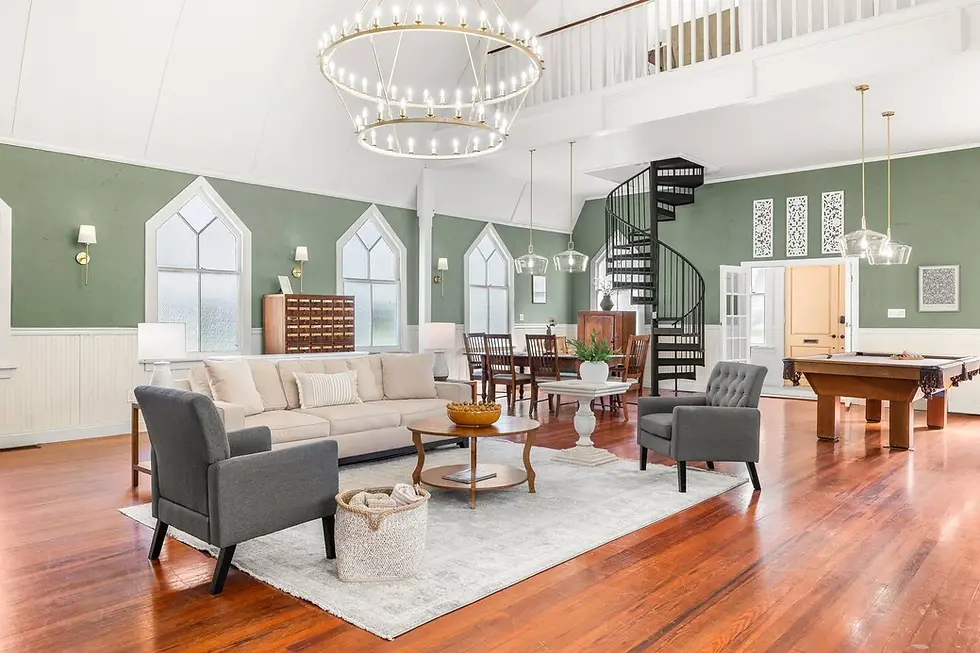
The Historic District appeals to guests who want to walk to St. George Street, the Castillo de San Marcos National Monument, and the city's concentrated dining and nightlife. Walkability is the primary premium here. Properties within a 10-minute walk of the historic core command stronger weeknight occupancy than comparable beach properties, because cultural tourists tend to book midweek stays around events and tours rather than weekend-only beach trips. Our Victorian Villa, a restored three-story property six minutes from St. George Street, is a clear example of how architectural character combined with downtown proximity supports strong average nightly rates for large-group bookings.
St. Augustine Beach and Crescent Beach
St. Augustine Beach and Crescent Beach serve the classic Florida beach vacation guest: families with young children, groups seeking water access, and seasonal snowbirds looking for a warm-weather base. Properties here compete primarily on amenities and beach proximity. The guest profile differs meaningfully from the historic district crowd, and listing photography, description language, and amenity investment should all reflect that distinction. Families searching near Anastasia State Park or Fort Matanzas want outdoor gear, multiple bedrooms, and pet-friendly yards, not cathedral ceilings and Victorian architecture.
Intracoastal and Canal-Front Properties
Canal-front and Intracoastal properties occupy a specific niche that attracts guests seeking water access without ocean-facing prices. Properties with private docks, kayaks, and heated pools, like The Salty Air Retreat and The Treasure Beach Retreat in the In The Sun VR portfolio, attract boaters and families who want the flexibility of private water access. These properties also perform well in shoulder seasons because the canal lifestyle appeal doesn't depend on beach weather.

How Do St. Augustine Rental Prices Vary by Season?
St. Augustine rental pricing follows a predictable seasonal structure, but owners who apply flat rates across the year consistently leave money on the table during demand peaks while also pricing themselves out of shoulder-season bookings. Understanding the full seasonal rhythm is the first step toward a pricing strategy that performs.
The Nights of Lights season, November through December, is arguably the highest-yield period in the annual calendar for historic district and centrally located properties. Demand for this event-driven period compresses inventory sharply, and properties with optimized listings and flexible minimum stays during this window earn a disproportionate share of annual revenue.
Spring, specifically March through May, drives the second demand surge. Spring break travel from families across the Southeast fills beach-area properties, while cultural tourists targeted at the city's 17th-century landmarks and the Fountain of Youth Archaeological Park extend midweek occupancy.
Summer months, June through August, sustain high demand for beach-facing and amenity-rich properties, though the guest profile shifts toward families on school-break schedules who book weekend-heavy stays. This period rewards properties with outdoor entertainment features, including fire pits, pools, and beach gear, because guests want immersive outdoor time.
The softest window, January through February, still generates bookings from snowbirds and remote workers, especially for properties offering reliable WiFi and comfortable indoor spaces. According to AirDNA data, 17.8% of St. Augustine STR listings require a minimum stay of 30 or more nights, reflecting how many owners successfully target the longer-stay market during the slow months. For properties with the right configuration, monthly rates during this window can maintain occupancy without the churn of nightly turnovers.
This is exactly the kind of nuanced, season-by-season pricing calibration that In The Sun VR's revenue management and dynamic pricing service handles across its managed portfolio. Setting static rates for a market with this much seasonal variation is the most predictable way to underperform the market average.
What Do St. Augustine's STR Regulations Require from Property Owners?
St. Augustine short-term rental regulations refer to the overlapping layer of requirements from Florida state law, St. Johns County ordinances, and the City of St. Augustine's own permit framework that govern how owners can legally operate a vacation rental. This regulatory stack matters because non-compliance carries real financial consequences, and the landscape shifted meaningfully in 2026.
At the state level, Florida requires vacation rental operators to hold a valid Florida Department of Business and Professional Regulation (DBPR) license. This applies to any dwelling rented more than three times per year for periods of fewer than 30 days. The DBPR license must be renewed annually and displayed in your listing. Florida also requires STR operators to collect and remit both state sales tax and local tourist development tax on all short-term rental income, which in St. Johns County includes the county's tourist development tax rate on top of Florida's base rate.
At the local level, the City of St. Augustine and St. Johns County both have registration or permit requirements that operate separately from the state license. Owners operating within city limits need to verify their specific zoning designation before listing, as some historic district zones carry additional restrictions on use and occupancy. The AirDNA Regulation score of 67 out of 100 for St. Augustine reflects a moderately regulated environment, not a hostile one, but one that requires active monitoring because requirements can change without broad public notice.
The most common compliance mistakes we see, from working with owners across the St. Augustine market, involve failing to maintain current DBPR license status, under-remitting tourist development tax during high-revenue months, and missing local registration renewals when address or ownership information changes. None of these are catastrophic in isolation, but each carries fine exposure and the risk of forced listing suspension on platforms that require license number verification.
For a detailed breakdown of the tax side of STR compliance, the guide to short-term rental tax deductions in St. Augustine covers which expenses offset your gross rental income and how to structure your recordkeeping to support those deductions.
How Does the St. Augustine Rental Market Compare: Key Data for Owners
St. Augustine's STR performance metrics, verified by AirDNA, provide a clear baseline for evaluating whether your property is performing at, above, or below market. Use this table to benchmark your current results.
Metric | St. Augustine Market (2026) | Year-over-Year Change |
Average Daily Rate (ADR) | $288.70 | Up 3% |
Occupancy Rate | 56% | Up 4% |
Revenue per Available Rental (RevPAR) | $158 | Up 6% |
Annual STR Revenue (avg per property) | $35,700 | Up 3% |
Total Available Listings | 6,940 | Active listings up 8% |
Market Score (AirDNA) | 90 / 100 | Rated "Great" |
Investability Score | 87 / 100 | Strong |
Entire-Home Listings | 96% of total | Stable |
Dual-Platform Distribution | 64% of listings | Majority on Airbnb + VRBO simultaneously |
A few patterns in this data are worth highlighting. The 6% RevPAR growth outpacing both ADR (3%) and occupancy (4%) growth tells you the market is getting more efficient, not just bigger. Properties are converting available nights to booked nights more effectively than in prior years. That's a signal that well-positioned listings benefit from compound gains, while under-optimized ones fall further behind the average.
The 64% dual-platform distribution rate is a practical benchmark. If your property is only listed on Airbnb and not on VRBO, or vice versa, you're starting the revenue conversation with one hand behind your back. The properties that reach peak occupancy in St. Augustine are almost universally available across multiple booking channels. For a broader look at how management companies approach listing strategy, the best vacation rental management companies in St. Augustine 2026 guide covers how the leading local operators approach channel distribution.
Short-Term vs. Long-Term Rentals: Which Strategy Fits Your St. Augustine Property?
The short-term vs. long-term rental distinction for St. Augustine properties refers to a fundamental strategic choice: whether to operate as a nightly or weekly vacation rental, targeting leisure travelers and earning ADRs near $288.70 per night, or to lease at monthly rates targeting snowbirds, remote workers, and annual tenants. Both models work in this market, but they serve very different owner goals and property types.
Short-term vacation rentals, the model driving the AirDNA data above, offer significantly higher gross revenue potential in a market with 6 million annual visitors and strong seasonal peaks. According to AirDNA, 59% of St. Augustine STR listings are available 271 to 365 nights per year, indicating that the majority of owners treat this as a full-time rental strategy, not a part-time supplement. The trade-off is operational intensity: regular turnovers, continuous guest communication, dynamic pricing management, and ongoing compliance monitoring.
Long-term rentals, defined as leases of 30 days or more, appeal to owners who want predictable monthly income without the turnover frequency. St. Augustine attracts a meaningful snowbird population, particularly from the Northeast and Midwest, and properties marketed as monthly winter rentals can maintain strong occupancy from November through March specifically targeting that demographic. The 17.8% of listings with 30-plus night minimums reflects this segment of the market. Some owners blend both models: offering 30-night minimums in January and February to fill slow months without nightly turnover costs, then switching to short-term availability for the spring and summer peaks.
The right answer depends on your property type, location, and bandwidth. Beachfront and amenity-rich properties in Vilano Beach or St. Augustine Beach nearly always earn more under a full short-term model. Smaller condos or properties farther from primary attractions may find a hybrid approach more financially sensible. If you're unsure which model fits your specific property, In The Sun VR offers STR consulting and advisory services that provide a data-backed property analysis before you commit to either direction.
What Should Property Owners Look for in St. Augustine Rental Management?
St. Augustine vacation rental management refers to the professional oversight of a short-term rental property, covering everything from listing optimization and dynamic pricing to guest communication, cleaning coordination, and regulatory compliance. For owners evaluating management options in 2026, the St. Augustine market includes national platforms, local boutique firms, and co-hosting arrangements, each with meaningfully different service models and fee structures.
National Platforms vs. Local Management
National platforms like Vacasa and Casago offer operational scale and brand recognition, which can be reassuring for first-time owners who want a known entity. The trade-off is that national platforms manage hundreds or thousands of properties across multiple markets, and the local expertise that actually drives performance in a market like St. Augustine, knowing which Vilano Beach properties peak during Nights of Lights versus summer, how to position a historic district property for midweek cultural tourism, can be diluted.
Local boutique management companies operate with fewer properties and more direct owner contact, which typically translates to more responsive communication and faster resolution of maintenance issues. For out-of-state owners especially, the difference between a 4-hour response and a 24-hour response to a guest issue can mean the difference between a 5-star review and a 3-star one.
Co-Hosting as a Middle Option
Co-hosting is a flexible management arrangement where a professional partner handles specific operational functions, such as guest communication, pricing, or cleaning coordination, while the owner retains control over other decisions. This model suits owners who are not ready for full management handover but are burning out on specific tasks. Most St. Augustine management companies offer a binary choice: full management or nothing. In The Sun VR's co-hosting model fills that gap for owners who need a tailored level of professional support without fully relinquishing their rental strategy.
What Full-Service Management Actually Covers
Full-service management in the St. Augustine market typically includes listing creation and ongoing optimization, dynamic pricing management, guest screening and communication, professional cleaning and turnover coordination, maintenance oversight, regulatory compliance monitoring, and monthly owner reporting. Management fees in St. Augustine generally run in the range of 20 to 30 percent of gross revenue, though the exact structure varies by company and service scope. Before signing any management agreement, confirm exactly which services are included and which carry additional fees, specifically cleaning coordination, maintenance markup, and platform listing fees.
For a thorough evaluation framework, the guide on whether property management is worth it for St. Augustine owners walks through the full cost-benefit analysis across different owner situations.
Frequently Asked Questions About St. Augustine Rentals
What is the average nightly rate for St. Augustine vacation rentals in 2026?
According to AirDNA market data, the average daily rate (ADR) for St. Augustine short-term rentals is $288.70 per night as of 2026, up 3% year-over-year. Actual rates vary significantly by property type, bedroom count, location, and amenity level. Properties in Vilano Beach with private pools and premium outdoor amenities routinely exceed the market average, while smaller condos or properties farther from the beach and historic core typically price below it. Seasonality also plays a major role: Nights of Lights season (November through December) and spring break (March through May) command the highest nightly rates.
Do I need a license to operate a short-term rental in St. Augustine, FL?
Yes. Florida law requires all vacation rental operators to hold a valid license from the Florida Department of Business and Professional Regulation (DBPR) before listing a property for short-term rental. This requirement applies to any property rented more than three times per year for periods of fewer than 30 days. Additionally, operators must collect and remit Florida sales tax and St. Johns County tourist development tax on all rental income. Local city and county registration requirements may apply on top of the state license. Non-compliance carries fine exposure and can result in platform listing suspension.
What occupancy rate should I expect for a St. Augustine vacation rental?
The St. Augustine STR market averages a 56% occupancy rate, per AirDNA data, which is up 4% year-over-year. Well-managed properties with optimized listings, competitive pricing, and strong amenity packages consistently outperform this average, particularly during the spring and Nights of Lights peaks. Properties with poor listing photography, static pricing, or limited platform distribution frequently underperform the average. Your property's specific location, bedroom count, and amenity mix all influence realistic occupancy expectations within this range.
Which St. Augustine neighborhoods are best for vacation rental investment?
The four primary St. Augustine rental corridors are Vilano Beach, the Historic District, St. Augustine Beach, and Crescent Beach, each serving distinct guest profiles. Vilano Beach supports premium nightly rates for beach-access properties with outdoor amenities. The Historic District earns strong midweek occupancy from cultural tourists and event-driven visitors. St. Augustine Beach and Crescent Beach attract families seeking classic beach vacations and perform best with properties offering multiple bedrooms, outdoor recreation gear, and pet-friendly policies. Canal-front and Intracoastal properties occupy a separate niche that performs well year-round for water-access-motivated guests.
What amenities do St. Augustine vacation rental guests prioritize most?
According to AirDNA data, internet access is listed as an amenity in 99% of St. Augustine STR listings, air conditioning in 97%, and parking in 93%, establishing these as baseline expectations rather than differentiators. The amenities that drive booking decisions and 5-star review mentions in this market are private pools, hot tubs, outdoor entertaining spaces (fire pits, grills, covered patios), pet-friendly policies, beach gear, and in-unit laundry. Properties with golf simulators, kayaks, arcade games, or unique features like outdoor pizza ovens or backyard sports courts consistently earn above-market nightly rates because they create memorable experiences guests specifically search for and mention in reviews.
What is the difference between co-hosting and full-service property management for St. Augustine rentals?
Full-service property management means a management company handles all operational responsibilities: listing optimization, pricing, guest communication, cleaning coordination, maintenance, compliance, and owner reporting. Co-hosting is a partial-service model where the owner retains involvement in some decisions while the co-host manages specific tasks, typically guest messaging, pricing adjustments, or cleaning coordination. Full-service management suits out-of-state owners or those who want complete hands-off operation. Co-hosting suits owners who want professional support for specific pain points without fully delegating control. Most St. Augustine management companies offer only full-service contracts; In The Sun VR offers both models to match different owner situations.
Is long-term rental or short-term rental more profitable in St. Augustine?
Short-term vacation rentals generate significantly higher gross revenue potential for well-located St. Augustine properties, with the market averaging $35,700 in annual STR revenue per AirDNA data. However, short-term rentals require active management, frequent turnovers, and ongoing platform and compliance monitoring. Long-term rentals of 30 or more nights, often targeting snowbirds and remote workers, offer lower but more predictable monthly income with fewer operational demands. Some owners use a hybrid approach: monthly minimums during January and February to reduce turnover during slow months, switching to nightly minimums during the spring and summer peaks to capture maximum revenue. The right strategy depends on your property's location, configuration, and your capacity for operational involvement.
What to Do Next If You Own a St. Augustine Rental Property
St. Augustine's short-term rental market in 2026 rewards owners who make intentional decisions: about neighborhood positioning, seasonal pricing, platform distribution, amenity investment, and regulatory compliance. The gap between a property earning the market average of $35,700 per year and one consistently outperforming that figure almost always traces back to those specific decisions, not to luck or location alone.
If your current rental isn't hitting the market benchmarks outlined above, start with an honest assessment of three variables: whether your listing is optimized for both Airbnb and VRBO simultaneously (64% of top performers are on both), whether your nightly rates actually adjust with seasonal demand or stay static, and whether your amenity investment reflects what St. Augustine guests specifically mention in 5-star reviews. These three levers, listing reach, dynamic pricing, and amenity relevance, are the ones In The Sun VR consistently uses to move underperforming properties toward and above the market average.
For owners ready to explore what professional management looks like for their specific property, the complete guide to short-term rental management in St. Augustine covers the full scope of what a well-run management relationship includes and how to evaluate your options.

If you're ready to stop guessing on pricing, platform strategy, and compliance, and start running your St. Augustine rental as the revenue-generating asset it can be, In The Sun VR is currently accepting new managed properties across Vilano Beach, the Historic District, St. Augustine Beach, and Crescent Beach. Our full-service management handles every operational layer, from dynamic pricing and listing optimization to cleaning, guest communication, and regulatory compliance, so your property earns more while demanding less from you. Visit In The Sun VR to start the conversation.



Comments