

How to Optimize Your Airbnb Listing to Rank Higher in Search Results

To optimize your Airbnb listing to rank higher in search results, focus on six core levers: listing completeness, professional photo order, Instant Book activation, competitive dynamic pricing, minimum stay settings, and consistent review velocity. Airbnb's algorithm analyzes over 100 data points per listing, and properties that score well across all six areas consistently outperform comparable homes that treat optimization as a one-time setup task.
Airbnb's search algorithm evaluates over 100 ranking factors, including listing completeness, response rate, Instant Book status, pricing competitiveness, and review quality across six sub-categories.
Enabling Instant Book is one of the highest-impact single changes a host can make; Airbnb reports it increases bookings by approximately 20%.
According to AirDNA market data, the St. Augustine STR market holds a Market Score of 90 out of 100, with an average annual revenue of $35,700 per listing, making listing visibility a direct revenue driver.
Photo order, not just photo quantity, directly affects click-through rate. Your cover image and first five photos determine whether a guest clicks or scrolls past.
Lowering your minimum stay setting increases the number of search result pages your listing appears on, a direct visibility multiplier most hosts overlook.
Listing optimization is an ongoing process, not a one-time launch task. Platform algorithm weights shift, guest search behavior evolves, and competing listings improve constantly.
Why Does Airbnb Search Ranking Matter So Much in 2026?
Airbnb search ranking refers to where your property appears in the results when a guest searches for a rental in your area, on a specific date range, for a given guest count. The higher your listing ranks, the more views it receives, and more views translate directly into more bookings at higher rates. In a market like St. Augustine, where AirDNA data shows 6,940 total available listings and active inventory grew 8% year-over-year, a listing buried on page three earns a fraction of the revenue a page-one listing captures.
The St. Augustine STR market currently holds a Market Score of 90 out of 100, with a RevPAR of $158 and an average daily rate of $288.70, both trending upward according to AirDNA. That means more supply is entering the market every month. Properties that do not actively manage their search ranking get pushed down as new, better-optimized listings appear. The competitive floor is rising.
At In The Sun VR, we manage a portfolio of St. Augustine short-term rental properties across Vilano Beach, the Historic District, Crescent Beach, and St. Augustine Beach. Listing optimization is not a pre-launch checklist we complete and forget. It is an ongoing discipline we revisit every time the algorithm shifts, every time a competing listing refreshes its photos, and every time a property's booking rate trends below its market segment average. That continuous approach is what separates listings that consistently rank on page one from properties that plateau.

What Does the Airbnb Algorithm Actually Use to Rank Listings?
The Airbnb search algorithm is a personalized ranking system that evaluates over 100 data points per listing to decide which properties appear first for any given search. Airbnb publicly discloses some ranking factors, including listing completeness, response rate, review scores, Instant Book availability, pricing competitiveness, and acceptance rate. The majority of the algorithm's weighting remains undisclosed, which is why consistent, broad optimization outperforms chasing any single factor.
Specifically, Airbnb's algorithm personalizes results based on the guest's prior searches, booking history, and demographic signals. A guest who consistently books pet-friendly properties will see pet-friendly listings ranked higher in their personal results. A group searching for eight guests will see larger properties ranked above studios. This personalization layer means your listing title and description are not just communicating to an algorithm; they are communicating to a specific type of guest whose search behavior Airbnb has already profiled.
The ranking system evaluates five primary signals that hosts can directly control:
Listing quality: Completeness of all fields, photo count and order, amenity accuracy, and description depth.
Host performance: Response rate, response time, acceptance rate, and cancellation frequency.
Review performance: Total review count, average overall star rating, and scores across Airbnb's six sub-categories (Accuracy, Cleanliness, Check-in, Communication, Location, and Value).
Pricing: Competitiveness relative to comparable listings, consistency with local market rates, and use of dynamic or seasonal pricing adjustments.
Availability and booking settings: Minimum stay length, Instant Book activation, and calendar update frequency.
For St. Augustine hosts, the practical implication is clear. With 99% of local listings already offering internet access and 97% offering air conditioning, according to AirDNA, the baseline is high. Matching the baseline keeps you in contention. Exceeding it in specific categories, particularly photos, amenities, and review scores, is what moves you up the rankings.
How to Increase Airbnb Search Ranking Through Listing Completeness?
Listing completeness is a direct Airbnb ranking factor. A fully completed listing, covering every available field in the Airbnb host dashboard, signals to the algorithm that you are a serious, detail-oriented host. Incomplete listings rank lower regardless of their other merits. Specifically, this means filling in every amenity checkbox, writing captions for every photo, completing your host bio, and verifying your identity through Airbnb's official verification process.
Walk through your Airbnb listing dashboard field by field and treat each section as a ranking signal, not optional padding:
Title
Your listing title is limited to 50 characters and carries significant weight in both guest click-through rate and algorithmic relevance. Lead with your most compelling differentiator. "Private Pool + Hot Tub | 3BR Vilano Beach House" performs better than "Cozy Beach Getaway" because it answers the guest's primary questions (what amenities, how many bedrooms, where) before they click. Avoid all-caps and special characters; they are penalized in Airbnb's quality scoring.
Description
Write your description for the specific guest segment your property attracts, not for a generic family. Airbnb's personalization algorithm matches listings to guests based on prior behavior. If your property is designed for groups seeking outdoor entertainment, use language that reflects that experience in the first two sentences of your description. Those first sentences appear in search previews and influence click-through rate before a guest even reads the full listing.
Amenity Checklist
Every amenity you add to your listing expands the number of filtered searches your property appears in. A guest searching specifically for a pool, a hot tub, or pet-friendly accommodations filters their results, and only listed amenities qualify your property for those filtered views. According to AirDNA data, 93% of St. Augustine listings already offer parking and 92% offer heating. But fewer list specific standout amenities like outdoor fire pits, kayaks, or arcade game rooms, which are exactly the features that differentiate a listing in a crowded search.
Photos and Captions
Airbnb requires a minimum of one photo to publish a listing, but the algorithm rewards listings with comprehensive photo libraries. Aim for a minimum of 25 photos. More importantly, write a caption for every image. Captions improve listing completeness scores and give the algorithm additional keyword context. A photo of your hot tub with the caption "Private 6-person hot tub, heated year-round" tells Airbnb's system exactly what that image represents and matches it to relevant guest searches.
What Is the Right Photo Order Strategy to Maximize Click-Through Rate?
Photo order is one of the most underestimated ranking-adjacent factors in Airbnb listing optimization. Your cover photo and first five images determine whether a guest clicks on your listing or scrolls past it. A high click-through rate signals demand to Airbnb's algorithm, which rewards it with improved ranking. In contrast, a low click-through rate, even from a well-reviewed property, signals weak appeal and suppresses visibility.
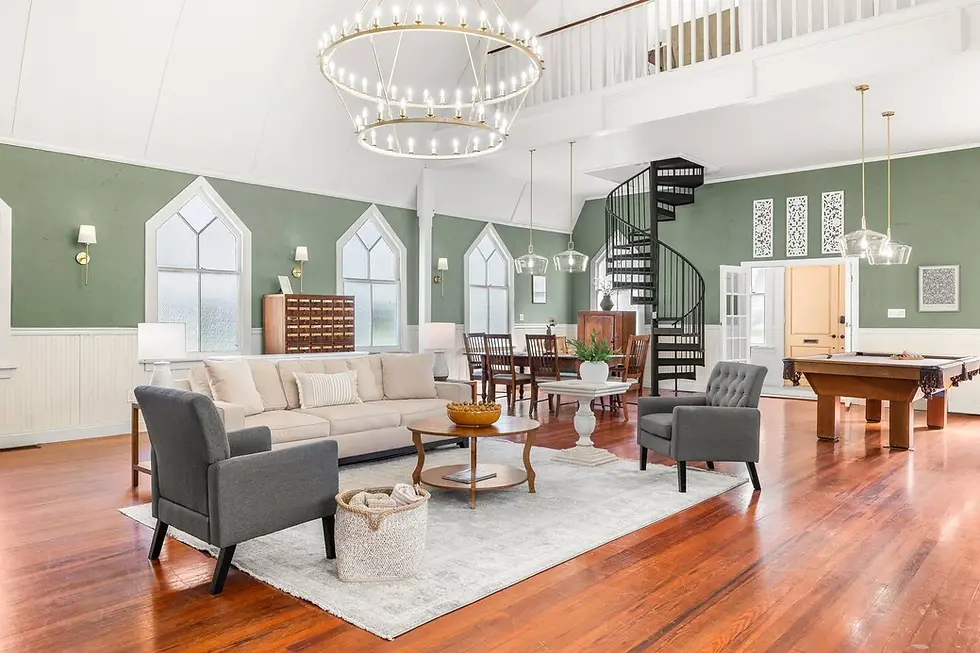
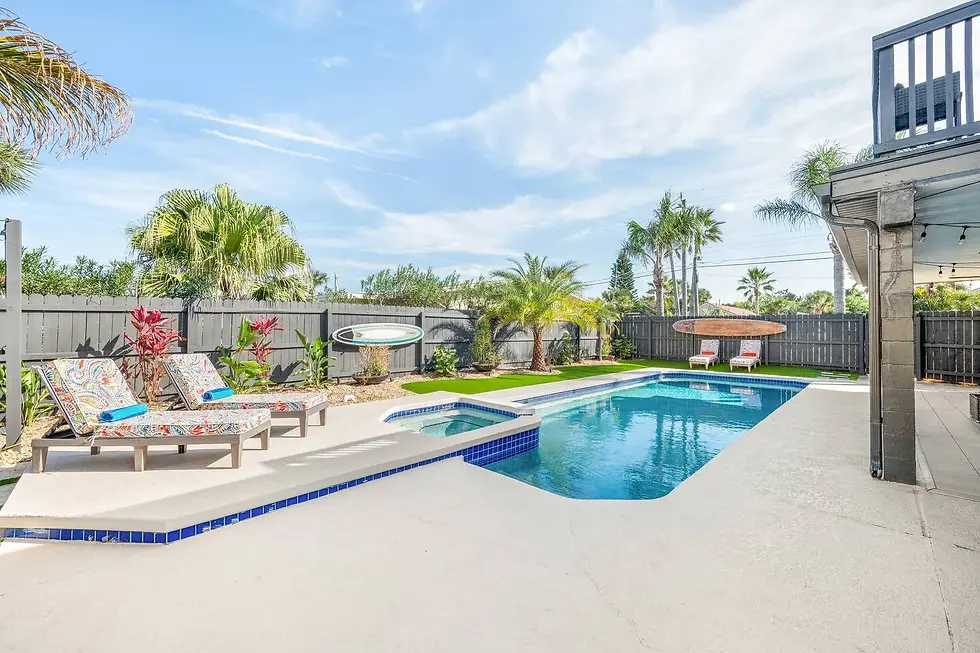
For properties in St. Augustine's coastal and historic market, the cover photo should show your listing's single most differentiating amenity, framed in natural daylight. For beach houses and canal-front properties, that means an outdoor entertaining space: a pool deck, a tiki bar, or a hot tub at golden hour. For Historic District properties like Victorian Villa, a well-lit exterior shot showcasing the architectural character of the restored home outperforms a living room interior.
Structure your first five photos in this sequence:
Cover photo: Your signature outdoor amenity or most visually distinctive feature.
Main living area: Open-concept, well-lit, styled with natural light preferred.
Primary bedroom: Clean, hotel-quality bed staging with fresh linens visible.
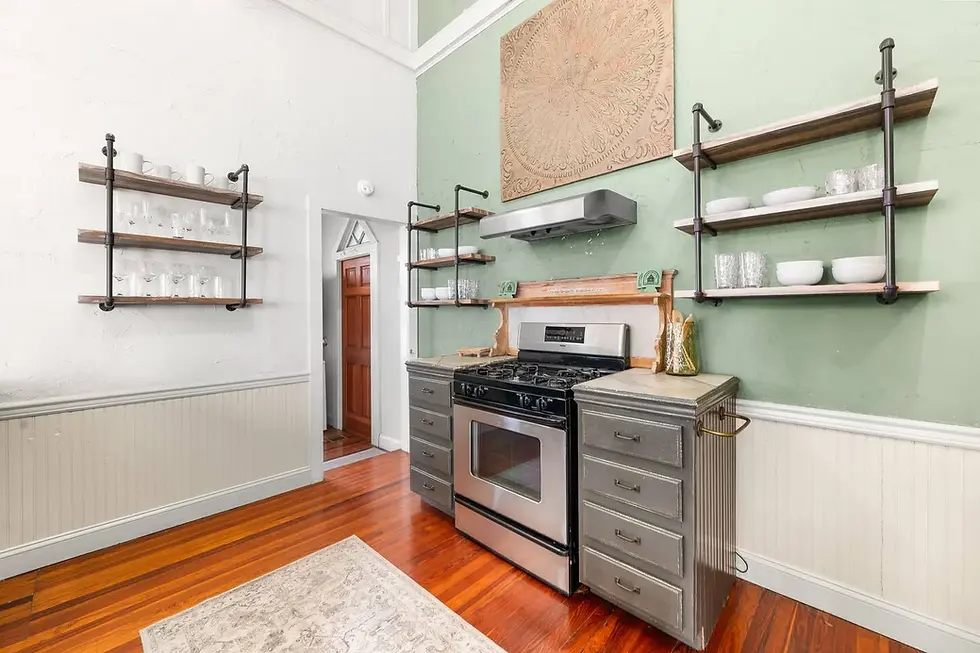
Kitchen: Fully visible countertops, no clutter, showcasing appliances and workspace.
Second signature amenity: Hot tub, game room, rooftop deck, or pool, whichever is your second-strongest differentiator.
Every additional photo after the first five should cover every room, every outdoor space, and every amenity. A guest who reaches photo 15 is actively considering your property. Leaving gaps in the photo library at that point, an unseen bathroom or an unnamed outdoor space, creates uncertainty. Uncertainty produces hesitation. Hesitation kills conversions.
How Does Instant Book Affect Airbnb Search Ranking?
Instant Book is one of the clearest, most documented ranking factors in Airbnb's algorithm. According to Airbnb's own platform documentation, enabling Instant Book increases bookings by approximately 20%. Instant Book listings appear higher in search results because they offer guests frictionless, immediate confirmation, which is a preference Airbnb actively incentivizes through its ranking system.
Hosts who disable Instant Book require potential guests to send a request and wait for approval. Every hour of wait time is an hour a guest might find and book a competing property. Airbnb's algorithm interprets high acceptance rates and fast response times as quality signals. Instant Book eliminates the acceptance rate variable entirely and automatically satisfies the response time requirement.
To maintain Instant Book, Airbnb requires a 90% response rate to qualify for Superhost status, which itself carries additional ranking benefits. The practical approach is to use Airbnb's built-in Saved Messages feature to create pre-written responses for common inquiry types. This reduces response time without requiring constant monitoring and protects your response rate metric even during busy periods.
One common concern hosts raise is losing control over who books their property. Airbnb addresses this through Instant Book screening settings, which let you require verified government ID, positive prior reviews, and agreement to additional house rules before a booking confirms automatically. You can enable Instant Book while still applying meaningful guest screening criteria.
Why Is My Airbnb Not Higher in the Search Results?
If your Airbnb listing is not ranking where you expect it to, the most common causes are: a low booking rate relative to listing views, a response rate below 90%, a review score deficit in one or more of Airbnb's six sub-categories, pricing that sits consistently above local comps, or a minimum stay setting that excludes your listing from the majority of search queries.
Your booking rate is calculated as the number of completed bookings divided by the number of times your listing appeared in search results and received a view. For example, five bookings from 100 views produces a 5% booking rate. Airbnb uses this metric as a quality signal. A low booking rate tells the algorithm that guests are seeing your listing, considering it, and choosing something else. That pattern actively suppresses ranking.
Diagnose the problem by checking these specific areas:
Review sub-category scores: A 4.5 overall rating built from a 3.8 in Cleanliness and 4.9 everywhere else will suppress ranking more than a uniform 4.6. Airbnb weights sub-category scores individually. Identify which sub-category is pulling your average down and address the root cause operationally.
Pricing competitiveness: Pull up ten comparable properties in your area and date range. If your rate is 15% or more above the median on most dates, the algorithm may deprioritize your listing in value-filtered searches.
Minimum stay policy: A 7-night minimum removes your listing from every search query shorter than seven nights. In St. Augustine, where 28.5% of listings require a 2-night minimum and 34.2% require 3 nights, according to AirDNA, a 7-night minimum eliminates the majority of your potential search appearances.
Calendar freshness: Hosts without Instant Book enabled can recover some ranking ground by manually updating their calendar regularly. This signals active engagement to Airbnb's system. It is a weaker signal than Instant Book, but it is not zero.
From managing properties across St. Augustine, the pattern we see most often is a host who launched a strong listing, earned their first 10 reviews, and then stopped optimizing. Competitors refreshed their photos. New listings entered the market with better amenity profiles. The original listing did not change, but its relative position dropped. Optimization is not a launch activity. It is an ongoing competitive response.
What Is the 80/20 Rule for Airbnb Listing Optimization?
The 80/20 rule for Airbnb refers to the principle that roughly 80% of your listing's ranking and revenue performance comes from 20% of the optimization factors you can control. Specifically, the five highest-impact factors are: Instant Book activation, review score maintenance across all six sub-categories, competitive dynamic pricing, professional cover photo selection, and listing completeness. These five areas produce the majority of measurable ranking improvement for most hosts.
This framing is useful because Airbnb's algorithm has over 100 ranking factors, and optimizing all of them simultaneously is neither practical nor necessary. The 80/20 approach focuses your time on the levers with the most measurable impact before working down the list of marginal improvements.
In practice, apply the 80/20 rule in this order:
Enable Instant Book with appropriate guest screening settings.
Audit your review sub-category scores and identify the lowest-scoring category. Implement one operational change to address it before your next guest checks in.
Connect a dynamic pricing tool or conduct a weekly manual comp check to keep your rates within a competitive range of similar listings.
Replace your cover photo if it shows an interior room. Outdoor amenity photos consistently produce higher click-through rates in coastal markets.
Complete every unfilled field in your listing dashboard, including amenity checkboxes, photo captions, and the neighborhood guide section.
Once those five areas are solid, the remaining 20% of performance gains come from refinements: A/B testing your listing title, experimenting with minimum stay settings across different date ranges, adding seasonal photos, and optimizing your listing for specific guest segments through targeted description language.
What Is the 75-55 Rule for Airbnb?
The 75-55 rule for Airbnb refers to a framework some hosts use to guide occupancy rate targets: aim for roughly 75% occupancy during peak season months and accept around 55% occupancy during shoulder and off-peak months as a healthy baseline. This is a practitioner heuristic rather than an official Airbnb policy. It exists because managing toward 100% occupancy year-round is a sign of underpricing, not strong performance.
The logic is straightforward. If your calendar fills completely months in advance at your current rates, you are priced too low. A small amount of strategic vacancy means you had room to capture higher rates and chose not to. Conversely, an annual occupancy rate consistently below 50% suggests a listing, pricing, or ranking problem that needs active intervention.
According to AirDNA market data, the St. Augustine STR market sits at a 56% annual average occupancy rate, up 4% year-over-year. That number is a market-wide average across all 6,940 available listings, including poorly optimized and intermittently available properties. Well-managed, fully optimized listings in St. Augustine's top-performing neighborhoods consistently outperform that average. The 75-55 seasonal framework gives you a realistic performance target that accounts for St. Augustine's natural seasonal demand patterns, including peak periods around summer beach season, the Nights of Lights winter event series, and spring break.
If your occupancy rate tracks significantly below the St. Augustine market average during peak months, the root cause is almost always one of three things: ranking suppression from the factors covered above, a pricing mismatch with the market, or a listing that fails to communicate its value clearly enough to convert views into bookings.
How Does Amenity Selection Influence Airbnb Search Ranking?
Amenity selection directly influences how many filtered search results your listing appears in. When a guest filters their Airbnb search for a pool, a hot tub, pet-friendly accommodations, or free parking, only listings with those amenities flagged in their dashboard qualify for those filtered results. Each amenity you accurately add to your listing is a new category of filtered search queries your property becomes eligible for. This is one of the most direct and underused visibility multipliers available to hosts.
Amenity completeness also affects Airbnb's internal listing quality score. Specifically, Airbnb weights certain amenities more heavily because guests search for them with higher frequency. Based on the St. Augustine market data from AirDNA, internet access (99% of listings), air conditioning (97%), and parking (93%) are essentially universal. Listing them is necessary but not differentiating.
The amenities with the highest search-filter differentiation value in St. Augustine's coastal market include:
Amenity | Why It Matters for Ranking | Market Differentiation |
Private pool or hot tub | High-frequency guest filter; rare enough to differentiate | High |
Pet-friendly designation | Dedicated filter used by a large guest segment | High |
Beach gear or kayaks provided | Differentiates activity-focused listings in coastal searches | Medium-High |
Dedicated workspace | Targets remote-work-enabled guests, a growing search segment | Medium |
Game room or arcade | Group and family searches; differentiates from standard listings | Medium |
EV charger | Emerging filter as EV ownership grows; few listings offer it | High (growing) |
The In The Sun VR approach to amenity curation treats each addition as both a guest experience decision and a search visibility decision. When we evaluate a new amenity investment for a managed property, we consider not only how guests will use it during their stay, but how it expands the listing's eligible search filter categories and how prominently it should appear in the listing's photo sequence and title.
How Should You Handle Reviews to Improve Your Airbnb Ranking?
Review management is one of the most sustained and operationally demanding ranking factors in Airbnb's algorithm. Review quantity, recency, and scores across all six sub-categories (Accuracy, Cleanliness, Check-in, Communication, Location, and Value) each contribute independently to your listing's ranking. A listing with 50 reviews averaging 4.6 stars typically outranks a listing with 10 reviews averaging 4.9 stars, because review volume signals consistent performance to the algorithm.
The most practical way to increase review quantity is to send a brief, genuine thank-you message to guests within 24 hours of checkout. This prompts the review process naturally without pressure and reinforces a positive final impression. Airbnb allows hosts and guests to leave reviews for up to 14 days after checkout, and most guests complete their review within the first 48 hours if prompted.
Protecting your sub-category scores requires operational standards that go beyond a clean property. Consider each category:
Accuracy: Every amenity listed must be present and functional. A hot tub listed as available must be working. An amenity that is broken or out of service during a stay generates an Accuracy hit regardless of every other positive aspect of the stay.
Cleanliness: The leading cause of sub-five scores. A single cleaning miss, visible dust, an unfound hair, a sticky kitchen surface, drops a guest's overall star rating by a full point in roughly half of cases. Standardized cleaning checklists and post-turnover photo verification are the only reliable safeguards.
Check-in: Automated, detailed check-in instructions sent 24 hours before arrival reduce friction and protect this sub-category score. Include photos of the keypad, parking instructions, and WiFi credentials in a pre-arrival message rather than a generic welcome note.
Communication: Response time and message quality matter here. A response within one hour to every inquiry is the operational standard for protecting this sub-category. Use saved message templates for common questions to maintain speed without sacrificing quality.
Value: This is the only sub-category where price directly intersects with perception. A property priced correctly relative to its amenity offering earns strong Value scores. A property priced above its market position consistently earns lower Value scores, which suppresses ranking independent of the actual guest experience.
How Can New Listings Jumpstart Their Airbnb Search Ranking?
New Airbnb listings receive a temporary visibility boost from the platform when they first publish. Airbnb gives new listings elevated placement in search results for a limited period after launch, typically the first few weeks of availability, to gather initial booking data and reviews. This new listing boost is a finite window of accelerated visibility that most hosts waste by launching an incomplete or under-optimized listing. Getting your listing fully optimized before you publish, rather than after, is one of the highest-leverage actions available to new hosts.
To capitalize on the new listing boost, complete all of these before clicking publish:
Upload a minimum of 25 photos, with captions on every image, in the sequence described above.
Enable Instant Book from day one.
Set your opening price 10-15% below your target market rate. This increases early booking probability, which generates your first reviews faster and protects your ranking momentum after the boost period ends.
Fill in every amenity checkbox your property legitimately qualifies for.
Complete your host bio and verify your identity through Airbnb's official verification system.
Set a minimum stay of 2-3 nights rather than 7 nights. Lower minimums maximize the number of search results your new listing appears in during the critical early weeks when review count is zero.
Write your title with your strongest amenity and location in the first 30 characters.
The goal of the launch period is not maximum revenue per booking. It is maximum booking velocity to accumulate your first 10 reviews as quickly as possible. Reviews are the single most durable ranking signal in Airbnb's algorithm. A listing with zero reviews that charges market rate will almost always lose to a 10-review listing at the same price. The launch discount is an investment in the review count that will sustain your ranking for years.
This is exactly the kind of launch strategy In The Sun VR builds for newly onboarded properties. A well-executed launch, with an optimized listing published at the right introductory price point, typically achieves a stable review baseline within the first 60 to 90 days. Properties that launch without this strategy often spend six months or more trying to recover ground that was never captured in the first place. For more detailed guidance on getting started, our guide to short-term rental management in St. Augustine covers the broader operational framework.
How Does Pricing Strategy Affect Where Your Listing Ranks on Airbnb?
Pricing strategy influences Airbnb ranking through two mechanisms: direct algorithmic weighting and indirect booking rate effects. Airbnb evaluates your nightly rate against comparable listings in your market when generating search results for value-filtered queries. Listings priced significantly above the local median for comparable properties are deprioritized in those results. Additionally, a rate set too high reduces your booking rate, which is itself a negative ranking signal regardless of your price level.
Dynamic pricing, meaning rates that adjust automatically based on demand, seasonality, local events, and competitor availability, outperforms flat-rate pricing in both revenue and occupancy for most St. Augustine properties. The St. Augustine STR market shows a RevPAR increase of 6% year-over-year, outpacing the ADR growth of 3%, according to AirDNA. This pattern indicates that occupancy is improving faster than rates are rising, which suggests that properties using demand-responsive pricing are capturing more bookings at appropriate rates rather than raising prices uniformly.
Practically, dynamic pricing in St. Augustine means pricing aggressively during the Nights of Lights season (typically November through January), spring break (March through mid-April), and peak summer beach season (June through August). Shoulder season months require a different strategy: competitive rates with longer booking windows to secure occupancy that offsets the lower nightly rate. Setting a blanket rate across all seasons is the single most common revenue mistake we see among St. Augustine self-managing hosts. For a deeper look at how seasonal demand patterns should shape your pricing calendar, the guide to maximizing vacation rental income by season in St. Augustine is worth reading alongside this optimization framework.
Frequently Asked Questions About Airbnb Listing Optimization
How long does it take to see results after optimizing an Airbnb listing?
Most hosts see measurable ranking movement within 2 to 4 weeks of implementing core optimizations, particularly enabling Instant Book, updating photos, and adjusting pricing. Review-driven ranking improvements take longer because accumulating reviews requires completed stays. New listings benefit from Airbnb's new listing boost immediately upon publishing, which makes pre-launch optimization critical. Established listings that add Instant Book or significantly improve their cover photo typically see click-through rate improvement within the first week.
Does lowering my nightly rate help my Airbnb listing rank higher?
A lower rate improves ranking in value-filtered searches and increases booking rate by making your listing more competitive. However, pricing too low year-round signals undervaluation to guests and erodes revenue unnecessarily. The goal is competitive pricing relative to comparable listings, not the lowest price in the market. A 5 to 10% reduction below the median during a slow booking period is more effective than a permanent discount. Use dynamic pricing tools or a weekly manual comp check to keep rates calibrated.
How many photos does an Airbnb listing need to rank well?
Airbnb recommends at least 20 photos, but listings with 25 or more photos consistently outperform those with fewer images in click-through rate and booking conversion. Every photo should include a caption for listing completeness scoring. The cover photo and first five images carry disproportionate weight because they determine whether a guest clicks on your listing in the first place. Shoot all interior photos in natural daylight when possible and never include blurry, dark, or vertically cropped images.
Does Airbnb Superhost status improve search ranking?
Yes. Airbnb confirms that Superhost status is a positive ranking signal. Superhost requires maintaining a 4.8 overall rating, a 90% response rate, fewer than 1% cancellation rate, and at least 10 completed stays per year. The ranking benefit of Superhost is most visible in highly competitive markets where many listings cluster at similar price points and amenity levels. In St. Augustine's growing market, Superhost status is an increasingly important differentiator as supply expands.
Should I use a 2-night or 3-night minimum stay to rank higher on Airbnb?
Lower minimum stay settings expand the number of search result pages your listing appears on. According to AirDNA, 28.5% of St. Augustine listings use a 2-night minimum and 34.2% use a 3-night minimum. A 2-night minimum maximizes visibility but increases turnover frequency and associated cleaning costs. A 3-night minimum is a practical balance for most St. Augustine properties. Hosts who want to protect weekends from single-night bookings while maintaining weekday visibility can set different minimums by day of week in Airbnb's advanced pricing settings.
What is the most common reason an Airbnb listing stops ranking well after initial success?
The most common cause of ranking decline after an initially strong period is listing stagnation while competitors improve. A listing that earned its first 20 reviews and then stopped receiving photo updates, pricing adjustments, or description refinements gradually loses ground to new listings that launch with stronger optimization. Additionally, a single poor review in Airbnb's Cleanliness sub-category, or a response rate that drops below 90%, can trigger algorithmic suppression that takes weeks to recover from. Treat your listing as a living asset, not a published document.
Does the Airbnb algorithm treat listings differently based on the type of property or location?
Airbnb's personalization layer means that the same listing may rank differently for different guest searches even on the same date. A pet-friendly property ranks higher for guests who have previously booked pet-friendly rentals. A 6-bedroom property ranks higher for searches specifying large guest counts. Location ranking is also relative: a Historic District property ranks higher than a beach property for guests whose prior searches focused on walkable urban neighborhoods, and vice versa. This is why writing your listing title and description for a specific guest profile, rather than a generic traveler, produces better algorithmic alignment and higher conversion rates from the views you do receive.
How does a property management company like In The Sun VR handle ongoing listing optimization?
In The Sun VR treats listing optimization as a continuous process across the managed portfolio. This includes updating cover photos seasonally, refreshing listing descriptions when Airbnb releases new field options, monitoring booking rates and click-through rates to identify when a listing needs intervention, and adjusting minimum stay settings based on forward booking pace. Newly onboarded properties receive a full listing build before launch, covering photo sequencing, title structure, amenity completeness, and pricing calibration against current market comps in St. Augustine. Property owners interested in having this handled professionally can learn more at inthesunvr.com.
What Are the Next Steps to Optimize Your Airbnb Listing Today?
Knowing how to optimize your Airbnb listing to rank higher in search results means little without a practical sequence to execute. Start with the changes that carry the most weight: enable Instant Book, complete every field in your listing dashboard, replace any interior cover photo with your best outdoor amenity shot, and conduct a pricing comparison against your ten closest competitors. Those four actions alone address the primary factors suppressing most underperforming listings.
From there, audit your review sub-category scores and identify the single lowest-rated category. One operational change, a new cleaning checklist, more detailed check-in instructions, a faster response template, targeted at that specific category produces more ranking improvement than a dozen cosmetic listing tweaks. Reviews build compound momentum. Each new 5-star review improves your ranking, which generates more views, which produces more bookings, which generates more reviews.
In 2026, with active St. Augustine STR inventory growing 8% year-over-year according to AirDNA, a listing that stands still effectively moves backward. The properties earning top-page visibility in St. Augustine's coastal market share one trait: they are managed as living assets, updated continuously, priced dynamically, and built from the ground up to match the specific guest profile searching for exactly what they offer. For a broader look at what full-service management looks like in practice, the 2026 guide to vacation rental management companies in St. Augustine provides useful context on what to look for in a management partner.
If you want a professional assessment of what is holding your listing back, In The Sun VR offers listing optimization as a core managed service for St. Augustine property owners, covering every factor from photo strategy and title structure to amenity completeness and pricing calibration. The difference between a listing that earns its full revenue potential and one that plateaus is rarely the property itself. It is the ongoing attention behind it.

If you are ready to stop guessing at Airbnb's algorithm and start building a listing that consistently ranks on page one, In The Sun VR handles listing optimization, dynamic pricing, and full-service management for St. Augustine short-term rental owners. Our portfolio spans Vilano Beach, the Historic District, Crescent Beach, and St. Augustine Beach, and every managed property is built to rank, not just to appear. Start the conversation at inthesunvr.com.


Comments