

Interior Design Changes That Boost Vacation Rental Bookings and Revenue

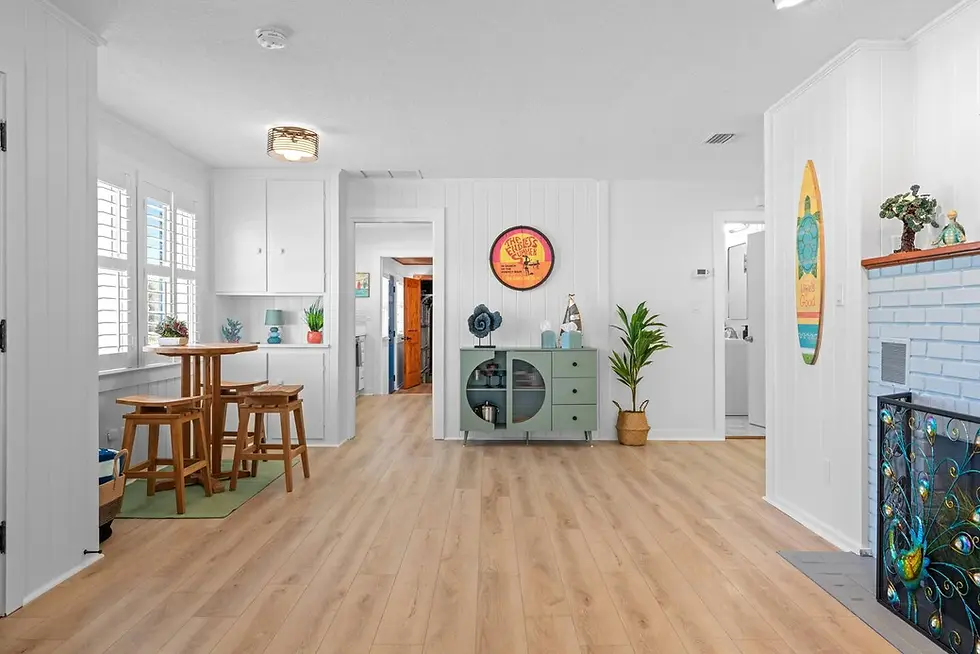
The interior design changes that make the biggest difference in vacation rental bookings and revenue are, in order of impact: professional-quality lighting, a distinct color identity, sleep-first bedroom investment, biophilic elements, and a purposeful outdoor amenity anchor. Properties that address all five consistently earn 20-40% more per night than comparably located but unstaged listings, according to Airbnb's aggregated platform data cited by AvantStay in February 2026.
Professionally styled vacation rental listings earn 20-40% more per night than unstyled equivalents, based on Airbnb's own aggregated platform data.
Properties with biophilic design elements, including natural materials, plants, and indoor-outdoor flow, generate up to 40% higher revenue compared to conventional rentals, per Breezeway's vacation rental interior design research.
Sleep quality is the single most-mentioned factor in Airbnb reviews; a poor mattress is the one flaw guests will not forgive regardless of how good everything else looks, per Mamma Mode's 2026 analysis.
Local design elements in a listing's top 5 photos produce 22% higher click-through rates and measurably better booking conversion, per Mamma Mode's 2026 Airbnb design trends report.
Well-designed workspaces command 15-25% higher nightly rates and drive midweek occupancy, per the Sukkha Interior Design 2026 Airbnb ROI Guide.
St. Augustine's STR market scored 89 out of 100 on AirDNA's Market Score, with RevPAR growing 6% year-over-year in 2026, making design investment especially well-timed in this competitive market.
Why Do Interior Design Changes Matter So Much for STR Revenue?
Interior design changes matter for short-term rental revenue because guests make booking decisions primarily from photos, and photos are a direct representation of design quality. Before a guest reads a description, checks amenities, or compares prices, they scroll through listing images. The visual impression formed in those first seconds determines whether they click through or keep scrolling. According to Airbnb's aggregated data, professionally styled listings earn 20-40% more per night than comparable but unstyled properties.
But the revenue impact runs deeper than first impressions. Design choices directly shape the review language guests leave after their stay. Blackout curtains generate five-star sleep comments. A well-stocked kitchen earns "felt like home" mentions. A thoughtfully placed outdoor fire pit shows up in reviews as the highlight of the trip. And those specific, positive review phrases feed back into Airbnb's search algorithm, pushing the listing higher in results and compounding the booking advantage over time.
At In The Sun VR, we manage a portfolio of St. Augustine short-term rentals across Vilano Beach, the Historic District, and Crescent Beach, and we see this pattern consistently. The properties that earn the highest nightly rates and the most repeat bookings are rarely the ones with the most square footage. They are the ones where every design decision, from the mattress grade to the porch furniture arrangement, was made with the guest experience in mind.
St. Augustine's STR market is competitive. As of 2026, AirDNA rates it 89 out of 100 on their Market Score, with 6,865 total available listings and active listings growing 8% year-over-year. At an average daily rate of $285.80 and RevPAR growing 6% year-over-year, the gap between a well-designed property and a generic one translates directly to thousands of dollars in annual revenue. For context on how St. Augustine compares to other Florida STR markets, the 2026 guide to vacation rental management companies in St. Augustine provides useful market positioning context.

What Is the 3-5-7 Rule in Interior Design?
The 3-5-7 rule in interior design is a proportion guideline used to create visual balance in a room by grouping decorative objects in odd numbers: specifically, arrangements of 3 items, 5 items, or 7 items. The principle is that odd-numbered groupings feel more natural and dynamic to the eye than even-numbered pairs, which can read as static or symmetrical in a way that feels staged rather than lived-in. For vacation rentals, applying this rule to shelf styling, coffee table arrangements, and outdoor furniture groupings can elevate listing photos from functional to aspirational without significant cost.
Specifically, the rule works on three levels in an STR context. First, it applies to object groupings: a vignette on a side table might include a candle, a small plant, and a locally sourced ceramic piece. Three items, three heights, three textures. Second, it applies to color: most professional designers use three colors per room, five tonal variations across the space, and seven accent touches that tie the scheme together. Third, it applies to furniture scale: anchor a seating area with one large piece, two medium pieces, and three smaller accent elements.
The practical takeaway for property owners is that this rule prevents the over-decorated look that reads cheaply in photos and the under-decorated look that feels cold and impersonal. Both extremes hurt click-through rates. A room that follows the 3-5-7 proportion principle photographs with visual weight distributed evenly, which holds attention in Airbnb and Vrbo search scrolls long enough to earn the click.
What Is the 80/20 Rule for Airbnb Design Investment?
The 80/20 rule for Airbnb design investment refers to the principle that 80% of your booking revenue improvement will come from 20% of your design decisions. Applied to short-term rental properties, this means a small number of high-impact changes, specifically the bedroom experience, the hero photo moment, and the primary outdoor amenity, drive the vast majority of revenue gains. Spreading an equal budget across every room in the property rarely outperforms concentrating investment on the elements guests notice, photograph, and mention in reviews.
The Sukkha Interior Design case study from Asheville makes this concrete. Two comparable rental properties received the same $15,000 renovation budget. One spent heavily on a marble backsplash and premium kitchen fixtures. The other invested in better lighting throughout, functional furniture with visual interest, and a backyard fire pit. The second property booked at consistently higher rates with near-perfect occupancy. The first was a beautiful kitchen that guests used briefly each morning and rarely mentioned in reviews.
For St. Augustine vacation rental owners, the 80/20 design priorities are: the primary bedroom (mattress quality, blackout curtains, bedside lighting), the outdoor entertaining space (fire pit, hot tub, or pool with intentional seating), and the listing's hero photo composition. These three elements generate the majority of review praise, drive repeat bookings, and justify above-market nightly rates. A Vilano Beach property with a mediocre kitchen but an exceptional backyard fire pit setup will outperform a pristine kitchen with a bare porch every time in St. Augustine's coastal guest market.
How Do Color Choices Affect Vacation Rental Bookings?
Color choices affect vacation rental bookings by directly influencing click-through rates in listing search results and the emotional response guests have to photos. Neutral-only palettes, particularly all-white or beige interiors, have become so common on booking platforms that they fail to create the visual memory that drives a click. In contrast, a property with a confident color identity, whether a coastal sage green, a warm terracotta, or a deep navy accent wall, stands out in scroll-heavy browsing behavior and is more likely to be bookmarked and returned to.
Zillow's 2023 paint color analysis, which surveyed more than 4,700 respondents, found that buyers pay $612 less on average for homes with white kitchens, while darker, more distinctive tones commanded measurable price premiums. The Zillow 2023 Paint Color Study reinforces what STR designers have observed anecdotally: distinctive color reads as value, while white reads as default.
Georgia Cabins for YOU, a design-forward property management company, identifies blue as the single most effective color choice for vacation rental spaces, citing its near-universal positive psychological response and calming associations that guests seek in holiday accommodations. For coastal markets like St. Augustine, blue coordinates naturally with beach and water imagery, creating design cohesion that extends from the physical property into the listing photos.
Earthy terracotta palettes combining rust, clay, and ochre tones are projected to maintain design longevity for at least three years, making them a sound investment choice for owners who want to avoid repeated repainting cycles. The practical rule: choose one dominant color that photographs well in natural light, build a three-color scheme around it using the 3-5-7 proportion principle, and apply your boldest choice in the space most prominently featured in your listing's first five photos.

What Lighting Changes Deliver the Fastest Return on Investment?
Lighting changes deliver the fastest return on investment in vacation rental design because they simultaneously improve the in-person guest experience and dramatically upgrade listing photos without requiring structural renovation. Layered lighting, combining ambient ceiling fixtures, task lighting at functional surfaces, and accent lighting to highlight architectural features or art, transforms a flat, builder-grade interior into a space that photographs with depth and warmth. Professional photographers consistently identify lighting as the single biggest determinant of photo quality beyond composition.
The highest-ROI lighting investments, in order of impact, are: first, replacing overhead fluorescent or cool-white bulbs with warm-white LED bulbs in the 2700K-3000K range throughout the entire property; second, adding a statement pendant or chandelier in the primary living space to create a visual anchor for photos; third, installing dimmable switches on at least the bedroom and living room circuits to give guests atmospheric control; and fourth, adding outdoor string lighting over any deck, patio, or yard space to create evening photos that look genuinely inviting.
Statement pendant lights over a kitchen island or dining table cost $200-$800 and deliver faster ROI than almost any other single design purchase. Compared to quality curved furniture in the $1,500-$5,000 range, a well-chosen statement light fixture creates equivalent visual impact at a fraction of the cost. For outdoor spaces, string lighting across a covered patio generates evening photography that consistently outperforms any other outdoor shot in earning saves and booking inquiries on Airbnb.
At In The Sun VR, our interior design and staging work routinely starts with a lighting audit before any furniture or color decisions. The reason is simple: even correctly chosen furniture in a well-colored room will photograph poorly under the wrong light. Getting the light right first means every subsequent design dollar works harder.
Which Interior Design Changes Make the Biggest Difference in Vacation Rental Bookings and Revenue, Ranked by Priority?
The interior design changes that make the biggest difference in vacation rental bookings and revenue, ranked by return on investment and booking impact, are: bedroom sleep quality, outdoor amenity anchors, lighting upgrades, a distinct color identity, local design elements, and biophilic touches. This priority order is not arbitrary. It reflects where guests spend the most time, what they mention most in reviews, and what drives the listing photos that earn clicks on Airbnb and Vrbo.
Priority 1: The Bedroom Experience
Sleep quality is the single most-mentioned factor in Airbnb reviews, per Mamma Mode's 2026 Airbnb Design Trends Analysis. Guests will forgive a small kitchen or a dated bathroom. They will not forgive a bad mattress, thin pillows, or light gaps in the curtains at 6am. A hotel-grade mattress ($800-$1,500 for a queen), blackout curtains ($80-$150 per window), and quality cotton bedding ($200-$400 per bed) are non-negotiable investments. This combination generates the specific review language, "best sleep I've had on vacation," that compounds into search ranking improvement over multiple booking cycles.
Priority 2: One Signature Outdoor Amenity
In St. Augustine's coastal market, outdoor amenities serve as the primary booking differentiator for properties that are otherwise comparable on price, bedroom count, and location. A private hot tub, a fire pit with intentional seating, or a pool with lounge chairs creates the hero image that earns the initial click and the memorable experience that earns the five-star review. You do not need all three. One genuinely excellent outdoor feature, well-photographed, outperforms three mediocre ones. Properties in the In The Sun VR portfolio with a strong outdoor anchor consistently command above-market ADR relative to bedroom count.
Priority 3: Lighting Layering
As discussed above, warm-white LED replacements, a statement fixture in the primary living space, and string lighting over any outdoor entertaining area deliver outsized photographic improvement at relatively low cost. Budget $500-$1,500 for a comprehensive lighting upgrade across a three-bedroom property.
Priority 4: Color Identity
Choose one accent color that differentiates your property from the neutral-beige majority on Airbnb. Apply it consistently in throw pillows, artwork, and one painted accent wall. Budget $200-$600 for paint and soft goods.
Priority 5: Local Design Elements
According to Mamma Mode's 2026 performance analysis, featuring local elements in the top five listing photos generates 22% higher click-through rates compared to generic decor. For St. Augustine properties, this means locally sourced pottery, coastal-specific artwork referencing Vilano Beach or the Castillo de San Marcos, or regional materials like driftwood accents. These elements signal authenticity and create the emotional connection that guests seek in a vacation experience versus a hotel stay.
Priority 6: Biophilic Elements
Properties with biophilic design features, including live plants, natural wood surfaces, woven textures, and indoor-outdoor visual flow, generate up to 40% higher revenue compared to conventional rentals, per Breezeway's vacation rental interior design research. Large-leaf plants like pothos or birds of paradise cost $30-$80, photograph beautifully, and require minimal maintenance between guest stays. Layering natural textures (jute rugs, linen curtains, rattan accents) adds warmth to photos without requiring new furniture.
Design Change | Estimated Cost | Primary Revenue Driver | Where It Shows Up |
Hotel-grade mattress + blackout curtains | $900-$1,650 per bedroom | 5-star review language, repeat bookings | Guest reviews, repeat booking rate |
Signature outdoor amenity (fire pit, hot tub) | $500-$8,000+ | Hero photo click-through, ADR premium | Listing photos, nightly rate |
Lighting upgrade (warm LED + statement fixture) | $500-$1,500 per property | Photo quality, guest atmosphere experience | Listing photos, in-stay reviews |
Color identity (accent wall + soft goods) | $200-$600 | Search scroll differentiation, bookmarks | Click-through rate, saves |
Local art and regional design elements | $200-$800 | 22% higher photo click-through rate | Listing photo CTR, guest connection |
Biophilic touches (plants, natural textures) | $300-$1,500 | Up to 40% higher revenue vs. conventional | Photo warmth, in-stay guest mood |
Workspace design (desk, lighting, ergonomics) | $500-$2,000 | 15-25% higher nightly rates, midweek occupancy | Nightly rate, weekday booking rate |
Professional photography | $300-$800 | 20-30% higher booking rate | Listing click-through, booking conversion |
How to Maximize Vacation Rental Income Through Design Without Overspending
Maximizing vacation rental income through design means spending strategically on the changes that appear in listing photos and show up in review language, not on renovations that guests experience briefly and never mention. The most common overspending mistake is investing heavily in surfaces and appliances that guests interact with for minutes per day (premium dishwashers, marble backsplashes, high-end range hoods) while underinvesting in the elements that shape their emotional experience of the stay.
The Renovation Sequence That Delivers Fastest ROI
Start with sleep, then light, then outdoor, then photo-ready details. This sequence ensures that every investment builds on a foundation that already converts. A beautifully lit room with a mediocre mattress still earns a poor review. A property with an exceptional outdoor space but flat, poorly lit photos never earns the initial click. The sequence matters because each layer amplifies the layers beneath it.
For properties with a limited budget, the $500-$2,000 range of textural layering upgrades delivers fast, visible results. Swapping builder-grade cabinet pulls for brushed brass hardware, adding a bouclé accent chair to the primary seating area, and layering terracotta throw pillows with linen curtains can be completed over a single weekend. These changes photograph as a cohesive design identity without requiring new furniture or structural changes.
The Sleeping Capacity ROI Calculation
One specific investment that owners frequently overlook is sleeping capacity expansion. A $1,500 sleeper sofa that increases a property's guest capacity from four to six people, at $50 or more per additional guest per night, pays for itself within a single busy booking weekend. For St. Augustine properties targeting family and group travel, accommodating two additional guests consistently enables a nightly rate increase that far exceeds the asset's carrying cost. The guide to vacation rentals in St. Augustine covers how guest capacity affects competitive positioning in this market.
What NOT to Spend On
Skip ultra-premium appliances. Guests interact with a coffee maker and microwave far more than a $3,000 range they may never use. Skip highly personal or collector-specific decor that resonates with you but alienates the broad guest audience. Skip over-renovation for the market: if comparable Crescent Beach properties earn $250-$300 per night, investing $40,000 in a kitchen renovation that would justify $350 per night in a luxury market will not generate proportional returns in your specific competitive set.
DIY vs. Hiring a Design Professional
The honest answer to the DIY versus professional design question depends on your budget tier and renovation scope. For changes under $3,000 covering soft goods, lighting bulbs, and accessory styling, confident DIY execution often produces results equivalent to a paid consultation. For renovations involving furniture selection, color strategy, spatial planning, or property repositioning for a higher rate tier, a professional with specific STR experience will consistently outperform self-execution. Generic home stagers are not calibrated for booking platform performance. Seek designers who reference occupancy data and photo conversion rates in their process, not just aesthetic sensibility.
Georgia Cabins for YOU's Dream Design Team, as a point of reference, prices professional STR consultation starting at $150 per bedroom for a consultation-only engagement, $500 per bedroom for a freshen-up service, and $1,500 for a partial upgrade scope. A total makeover engagement typically starts at $4,000. These benchmarks help frame the cost-benefit decision when comparing professional fees against projected ADR increases.

What Is the 75-55 Rule for Airbnb and How Does Design Affect It?
The 75-55 rule for Airbnb is an informal hosting guideline suggesting that properties targeting Superhost status should aim for at least a 75% response rate to new messages within an hour and maintain no more than a 55% cancellation rate year-over-year, though Airbnb's current published Superhost requirements focus on a 4.8-star overall rating, a 90% response rate, and low cancellation rates. The exact thresholds are platform-defined and subject to change, but the principle underlying the rule is sound: Superhost status unlocks better Airbnb search placement, a badge that improves listing click-through rates, and access to priority support.
The connection to interior design is direct. Reaching and maintaining Superhost status requires a 4.8-star overall review score. That threshold is genuinely difficult to sustain if any core element of the guest experience underperforms. A property with beautiful design but a poor mattress or insufficient lighting will consistently receive 4-4.5 star ratings that prevent Superhost qualification. In contrast, a property where design choices directly address the most common guest complaints, specifically sleep quality, cleanliness perception, and atmosphere, generates the consistent 5-star reviews that make the 4.8 threshold achievable.
Design also affects the speed at which a new listing achieves competitive search placement on Airbnb. The platform's algorithm rewards click-through rate, booking conversion, and review scores. A listing with professional-quality photos, a distinctive visual identity, and an immediately apparent hero amenity earns higher click-through rates from the first day it is live. Higher click-through rates signal demand to Airbnb's algorithm, which improves search placement, which generates more bookings, which accumulates reviews faster. This compounding effect means that design quality is not just a revenue driver; it is an algorithm advantage that builds on itself over time.
How Does Design Interact With the Airbnb Search Algorithm?
Interior design directly influences Airbnb's search algorithm through its effect on click-through rate, booking conversion, and review score velocity. Airbnb ranks listings based on several signals, including how often guests click on a listing in search results, how often those clicks convert to bookings, and the overall review score the property maintains. All three of these signals are directly influenced by design quality in ways that most property owners do not fully account for when evaluating renovation ROI.
Professional real estate photography, which typically costs $300-$800, can increase booking rates by 20-30% and often returns its investment within the first month of improved bookings. But the photography investment is only as valuable as the design it is photographing. A professional photographer with mediocre subject matter produces professional-quality photos of a mediocre space. The algorithm advantage comes from combining design quality with photography quality, creating listings that earn high click-through rates and convert those clicks into bookings at above-average rates.
The review score dimension is equally important and less discussed. Each five-star review that specifically mentions a design element, "the fire pit was the highlight of our trip," "the most comfortable bed we've slept in," "the coastal decor made us feel like we were really on vacation," generates the high-quality review text that Airbnb surfaces to future searchers in the listing's review summary. This creates a self-reinforcing cycle: better design generates better reviews, which generate better search placement, which generates more bookings, which generate more reviews. For an in-depth look at how listing quality affects STR income potential in the St. Augustine market, see this guide to maximizing vacation rental income timing in St. Augustine.
What Seasonal and Location-Specific Design Decisions Should St. Augustine Owners Prioritize?
Seasonal and location-specific design decisions for St. Augustine vacation rental owners should reflect the city's dual identity as both a beach destination and a year-round cultural tourism market. Unlike mountain cabin markets where a fireplace and wood-heavy interiors define the design language, St. Augustine properties need to serve beach guests in summer, history and culture travelers in fall and winter, and the Nights of Lights crowd from mid-November through January. A design scheme that reads as exclusively summery will underperform during St. Augustine's substantial shoulder-season demand windows.
The practical implication is that outdoor amenity investments should serve multiple seasons. A fire pit with intentional seating serves October through March, when evenings are cool and Nights of Lights draws significant visitor traffic. A pool or hot tub serves the May through September beach season. Properties with both amenities, like several in the In The Sun VR portfolio, maintain strong occupancy across all of St. Augustine's distinct demand peaks because the outdoor design works regardless of the season in which a guest arrives.
For the Historic District properties within walking distance of St. George Street, design language that nods to St. Augustine's Spanish colonial history through materials (wrought iron accents, terracotta tile touches, whitewashed wood) creates authentic place-specific character that neither a generic coastal rental nor a mountain-cabin-inspired space can replicate. The Restored Historic Church property in the In The Sun VR portfolio demonstrates this principle at its most extreme: the cathedral ceilings, arched windows, and sage green walls with white wainscoting create a design identity so specific to the property's character that it commands a premium based on architecture alone, not square footage or amenity volume.
For Vilano Beach and St. Augustine Beach properties targeting family and group travel, prioritize outdoor recreation infrastructure over interior luxury finishes. Families with children care more about a fully fenced yard, easy outdoor shower access, and durable furniture that withstands wet swimsuits than they do about a bespoke tile backsplash. Durability is itself a design strategy in this market: luxury vinyl plank flooring, performance fabric upholstery, quartz countertops, and washable rugs are the materials that maintain a five-star appearance across hundreds of guest turnover cycles without requiring constant replacement. For more on the St. Augustine STR landscape and what drives competitive positioning, the guide to short-term rental management in St. Augustine covers the market dynamics in detail.
Frequently Asked Questions
What interior design changes make the biggest difference in vacation rental bookings and revenue for a limited budget?
With a limited budget, prioritize in this order: a hotel-quality mattress and blackout curtains for each bedroom, warm-white LED bulb replacements throughout the property, one statement light fixture in the primary living space, and soft goods (throw pillows, a textured throw, an accent rug) in a cohesive color scheme. These changes collectively cost $1,500-$3,000 for a three-bedroom property and address the design elements most frequently mentioned in Airbnb reviews and most visible in listing photos. Skip luxury appliance upgrades until these fundamentals are in place.
How much can I realistically increase my nightly rate after an interior design update?
The revenue increase from a design update varies by property, market, and the quality of the changes made. Airbnb's aggregated platform data shows that professionally styled listings earn 20-40% more per night than unstyled equivalents. The Sukkha Interior Design 2026 Airbnb ROI Guide cites 15-25% higher nightly rates specifically for properties with dedicated workspace design. In competitive coastal markets like St. Augustine, where the average daily rate is $285.80 as of 2026, a 20% ADR improvement represents approximately $57 additional revenue per night booked, compounding significantly across a year of occupancy.
Do I need to hire a professional interior designer for my Airbnb property?
Not for every scope of work. For changes involving soft goods, lighting, and accessory styling under $3,000, many property owners execute effective design updates independently using the prioritization framework above. Professional design help is worth the investment when you are repositioning a property to a higher rate tier, working with an architecturally distinctive space, or planning a renovation above $5,000 where misspending is costly. The key criterion is whether the designer has specific short-term rental experience and evaluates decisions based on booking conversion and review impact, not purely aesthetic sensibility.
What design elements do St. Augustine vacation rental guests mention most in reviews?
Across the St. Augustine short-term rental market, guests most frequently mention sleep quality (mattress comfort, pillow quality, blackout capability), outdoor entertaining spaces (fire pits, hot tubs, pool areas), cleanliness and how the property feels cared-for, and unique or locally authentic design details that made the property feel specific to St. Augustine rather than interchangeable with any beach rental. Properties that score consistently high on these dimensions earn the five-star review language that Airbnb surfaces to future guests and the search algorithm rewards with improved placement.
How does biophilic design increase vacation rental revenue?
Biophilic design refers to incorporating natural elements into interior spaces: live plants, natural wood surfaces, woven textures, stone accents, and design that creates visual connection to outdoor environments. According to Breezeway's vacation rental interior design research, properties with biophilic elements generate up to 40% higher revenue than conventional rentals. The mechanism is both psychological and photographic: guests feel more relaxed and experience a stronger sense of being "away" in spaces with natural elements, which drives positive reviews, while the visual warmth of natural textures significantly improves how listing photos read on screen.
Should I add a workspace to my St. Augustine vacation rental?
Yes, and in 2026 this is no longer optional for properties targeting higher-than-average nightly rates. Properties with well-designed workspaces command 15-25% higher nightly rates and materially higher midweek occupancy than comparable properties without them, per the Sukkha Interior Design 2026 Airbnb ROI Guide. St. Augustine attracts a significant share of bleisure travelers (business plus leisure) and remote workers who extend stays when a property offers a genuinely functional work setup: a dedicated desk with ergonomic chair, 1 Gbps WiFi, good task lighting, and accessible power outlets. A $500-$1,500 workspace investment typically pays for itself within one additional weeknight booking per month.
How do listing photos connect design investment to actual booking revenue?
Listing photos are the mechanism through which every design investment is monetized on Airbnb and Vrbo. A property can have exceptional design quality that no one sees if the photos are flat, poorly lit, or fail to capture the space's best features. Professional real estate photography (typically $300-$800) increases booking rates by 20-30% and often returns its cost within the first month of improved bookings. The photo that earns the highest click-through rate is almost always the outdoor entertaining space, not the kitchen or living room. This means the sequence of photo optimization matters as much as the photos themselves: put your strongest outdoor amenity image first.
What is the design investment ROI for a fire pit in a St. Augustine vacation rental?
A fire pit with intentional seating (quality Adirondack chairs or a weather-resistant sectional, a defined gravel or paver base, and consistent wood supply for guests) typically costs $500-$2,500 installed. In St. Augustine's market, where the Nights of Lights season from mid-November through January drives significant visitor demand during cooler evenings, a fire pit creates a year-round outdoor amenity that earns consistent review mentions and functions as a compelling listing photo. At the St. Augustine average daily rate of $285.80, even one additional booking per month attributable to the fire pit as a conversion driver pays for the investment within a single season.
What Should St. Augustine Property Owners Do Next?
The difference between a St. Augustine vacation rental that earns its full revenue potential and one that plateaus at average performance rarely comes down to location or property size. It comes down to design decisions: which elements were invested in, which were skipped, and whether those choices were made with the guest experience and listing photo impact in mind or based on personal preference and habit.
Start with the bedroom. Then the outdoor space. Then light the entire property correctly and photograph it professionally. These three investments, executed well, will produce measurable booking improvements within the first one or two booking cycles. Add local design character, biophilic warmth, and a workspace for remote guests in subsequent phases. The compounding effect of improved photos, higher review scores, and improved Airbnb search placement builds revenue over time in a way that a single large renovation expenditure on the wrong elements cannot replicate.
St. Augustine's STR market scored 89 out of 100 on AirDNA's Market Score in 2026, and RevPAR grew 6% year-over-year. The market rewards well-designed, well-managed properties. The design work you do now positions your property to capture that growth rather than watch it accrue to better-designed competitors. For owners wondering whether property is performing at its actual potential, this guide to whether property management is worth it for St. Augustine owners provides an honest framework for that evaluation.

A well-designed property earns more, books faster, and reviews better. If your St. Augustine rental needs a design refresh that is built around booking performance rather than personal taste, In The Sun VR's interior design and staging service transforms properties into market-leading listings. Every design decision we make is evaluated against what earns review mentions, drives click-through rates, and justifies above-market nightly rates in St. Augustine's specific competitive landscape. Start the conversation about what your property is capable of at inthesunvr.com.


Comments