

Should I Self-Manage My Vacation Rental or Hire a Property Management Company?

Updated: Sep 29
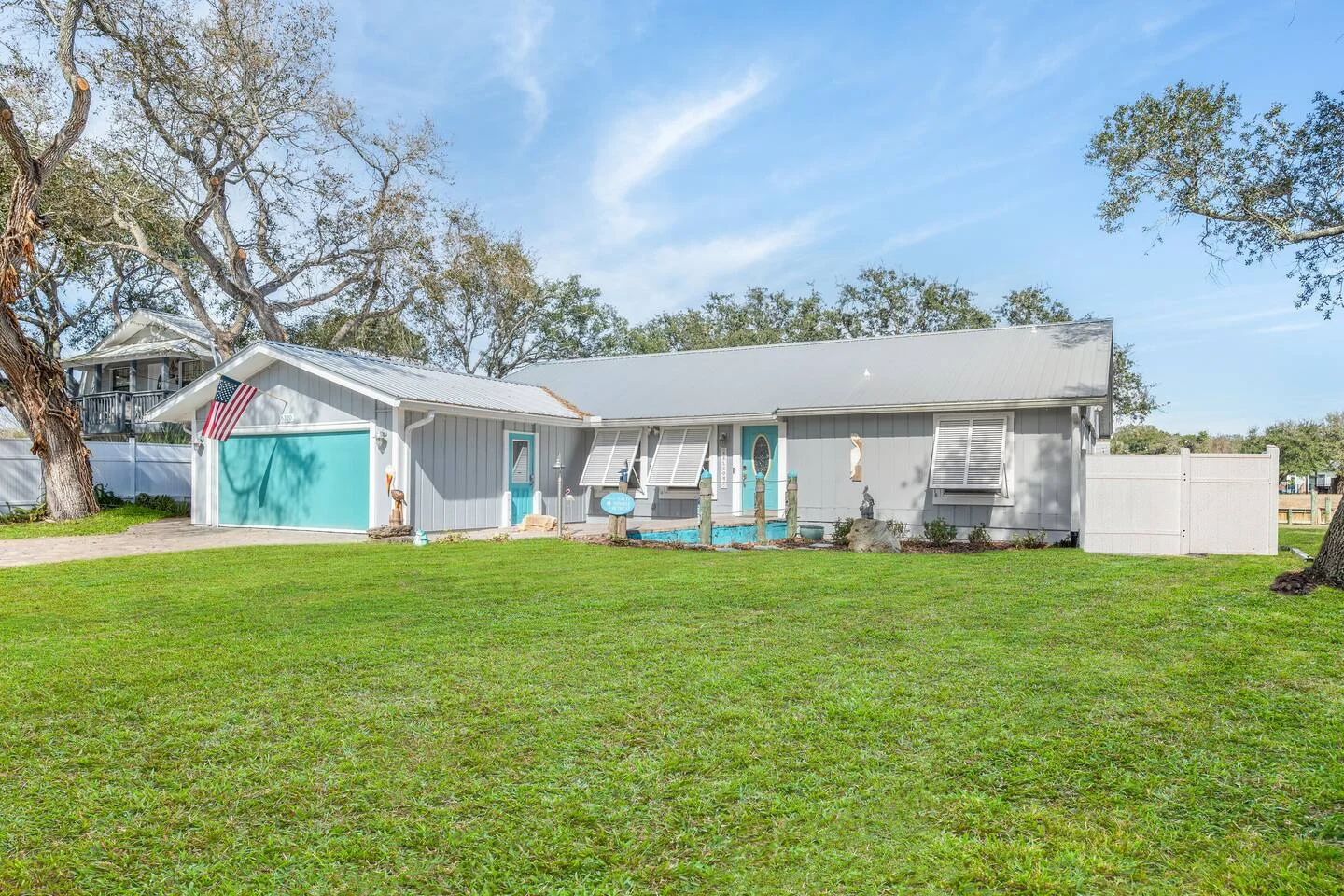
Whether to self-manage your vacation rental or hire a property management company comes down to three things: how much time you have, how close you live to the property, and what your revenue goals actually are. Self-management keeps more gross revenue in your pocket but costs real hours every week. Professional management charges 20-30% of gross rental revenue and handles everything from guest communication to cleaning coordination, freeing you entirely from day-to-day operations.
Property management companies in St. Augustine typically charge 20-30% of gross booking revenue for full-service management.
St. Augustine STRs average $35,500 in annual revenue with a 56% occupancy rate and a $285.80 average daily rate, according to AirDNA market data.
Self-management requires 10-20 hours per week for a single property when actively booked, including guest communication, cleaning oversight, and pricing adjustments.
A hybrid co-hosting model exists between full self-management and full professional management, covering only the tasks that are burning you out.
The decision scales: self-management becomes increasingly difficult to sustain beyond two properties without tools like PriceLabs or a channel manager.
St. Augustine earned a Market Score of 89 (rated "Great") on AirDNA's evaluation index, making professional management fee ROI easier to justify here than in weaker markets.
What Is the Real Time Cost of Self-Managing a Vacation Rental?
Self-managing a vacation rental refers to the practice of handling all operational responsibilities directly as the property owner, including listing management, guest communication, pricing, cleaning coordination, and maintenance oversight. For a single, consistently booked property, this typically requires 10-20 hours per week. That figure surprises most owners who expect a few hours of casual inbox management.
The time breaks down unevenly. Guest inquiries often arrive within minutes of a listing appearing in search results, and Airbnb's response-time algorithm rewards fast replies with better visibility. A delayed response does not just lose a booking. It can push your listing down in search rankings for days. Add cleaning coordination after every checkout, restocking supply runs, maintenance calls, and the periodic deep-reset visits every well-run rental requires, and the hours compound quickly.
One experienced self-managing Superhost who operates four condos near Rosemary Beach, Florida, has documented spending approximately 1-2 hours daily managing a fully-booked portfolio while netting over $200,000 annually. That efficiency is real, but it came after years of systems-building, and it requires living within 90 minutes of the properties with visits every 4-6 weeks to physically reset and inspect each unit.
The 24/7 availability requirement is the part most owners underestimate. Maintenance emergencies, lockouts, noise complaints, and mid-stay guest issues do not observe business hours. If you are unwilling or unable to respond at 11pm on a Saturday, self-management will cost you reviews. And in St. Augustine's competitive STR market, where active listings grew 8% over the past year according to AirDNA, review scores directly affect your booking rate.
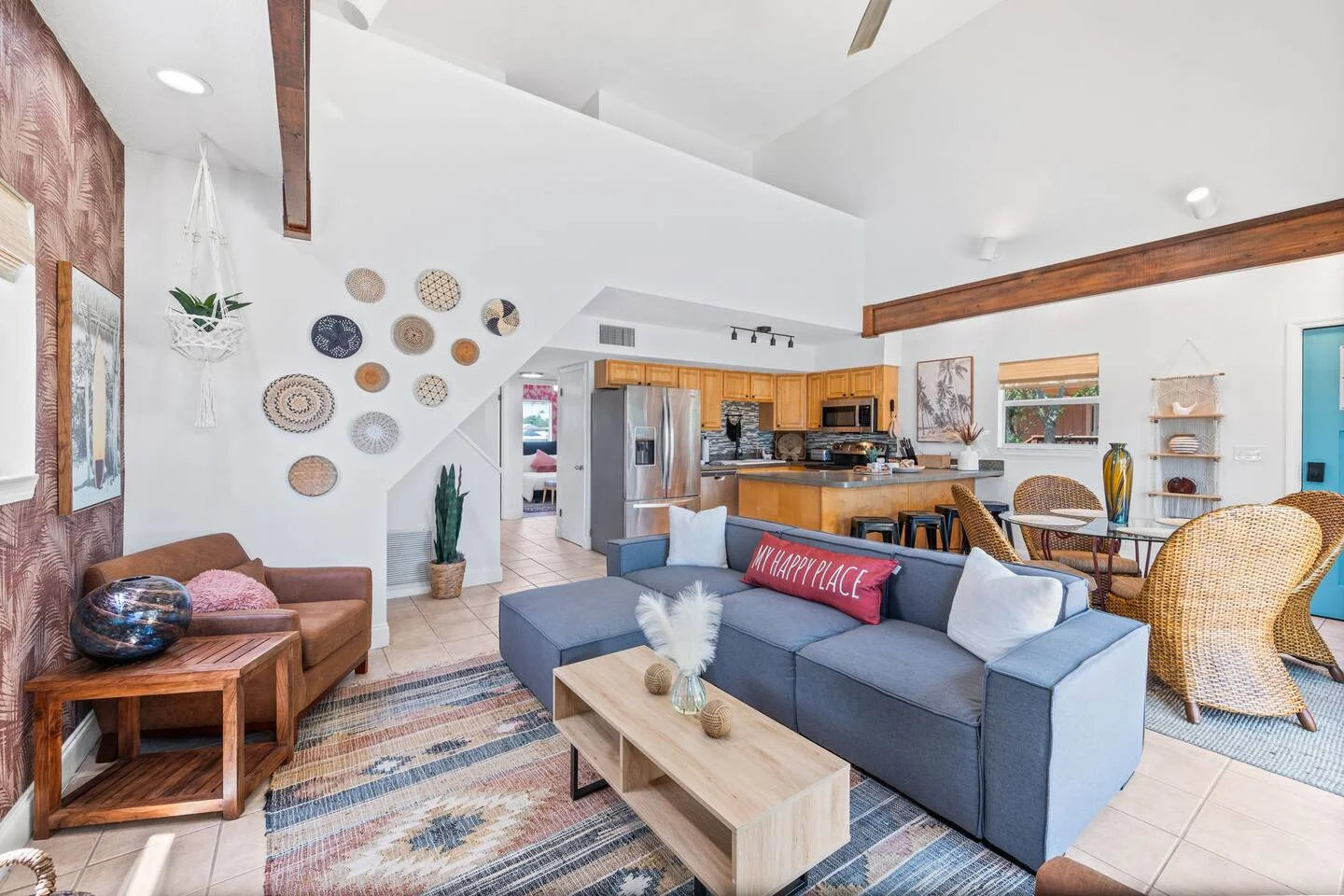
What Does a Property Management Company Actually Do for Your Rental?
A vacation rental property management company is a service provider that assumes operational control of a short-term rental on behalf of the owner, typically in exchange for a percentage of gross booking revenue. Full-service management covers listing creation and optimization, dynamic pricing, guest communication across all platforms, cleaning and turnover coordination, maintenance response, and owner financial reporting. The scope varies by company, so understanding exactly what is and is not included before signing a contract is critical.
The practical value is clearest for owners who live far from their property or who own multiple units. Every operational decision, from whether a guest's early check-in request is feasible to whether a leaking faucet warrants an emergency call, gets handled without requiring owner involvement. For an out-of-state owner managing a St. Augustine rental from Atlanta or Chicago, that coverage is not a luxury. It is operationally necessary.
At In The Sun VR, full-service management means every layer of the guest experience is handled under one roof, from the first booking inquiry through the post-checkout review request. The team manages properties across Vilano Beach, Crescent Beach, the Historic District, and St. Augustine Beach, each with distinct guest profiles and seasonal demand patterns that require market-specific pricing decisions, not generic templates.
Specifically, professional managers who use dynamic pricing tools rather than fixed seasonal rates typically capture demand spikes more precisely. One common criticism of large national management platforms is that they apply fixed seasonal pricing, causing high-demand dates to book too cheaply and shoulder-season dates to sit vacant. Local managers with active portfolio data can adjust more nimbly. In St. Augustine, where RevPAR grew 6% year-over-year according to AirDNA, the gap between well-priced and poorly-priced properties is widening.
How Much Do Property Management Fees Cost in St. Augustine?
Property management fees for vacation rentals in St. Augustine typically range from 20% to 30% of gross booking revenue for full-service management. Some companies charge at the lower end of that range for co-hosting arrangements where the owner retains more responsibility. Others charge toward the upper end for comprehensive services that include listing photography, interior design consultation, regulatory compliance, and dedicated maintenance teams.
On a St. Augustine property earning the market average of $35,500 in annual revenue (per AirDNA), a 25% management fee equals roughly $8,875 per year. The question is not whether $8,875 is expensive in isolation. The question is whether the management company can grow your revenue enough, and protect your property well enough, to make that fee net-positive.
Consider what you get in exchange. Airbnb charges guests approximately 15% as a guest service fee and takes approximately 3% from the host payout for card processing. Those platform costs apply whether you self-manage or use a manager. Management fees come on top of that, but they also replace your time cost, your pricing tools, your cleaning coordination, and your 24/7 on-call obligation.
Fee structures vary. Some companies charge a flat monthly fee plus a smaller percentage. Others charge a higher base percentage and include professional photography, staging, and listing optimization at no additional cost. Always ask for a full breakdown before comparing quotes. A company charging 22% that provides dynamic pricing software, listing optimization, and regulatory compliance oversight may deliver more net value than one charging 18% with none of those services included.
For a deeper look at how St. Augustine management companies compare on services and pricing, the 2026 guide to the best vacation rental management companies in St. Augustine breaks down what different providers actually include in their fee structures.
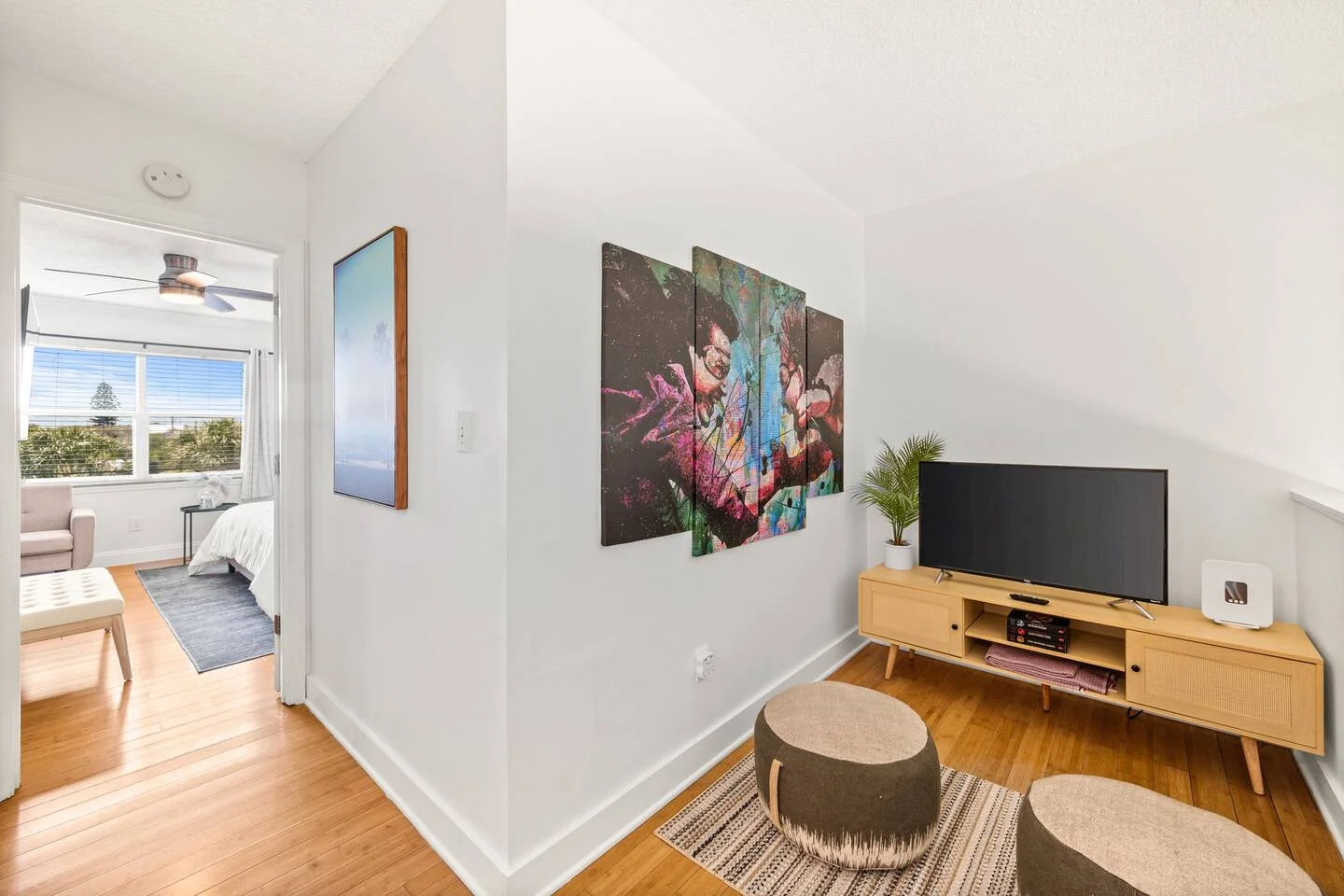
Should You Self-Manage or Hire a Manager? A Decision Framework
Deciding whether to self-manage your vacation rental or hire a property management company is a decision that depends on your time availability, geographic proximity to the property, technical willingness, and revenue goals. There is no universal right answer, but there are clear patterns that predict which option will serve you better.
Use this framework to assess your situation honestly.
Factor | Self-Management Works If... | Hire a Manager If... |
Proximity to property | You live within 60-90 minutes and can visit monthly | You live more than 2 hours away or travel frequently |
Time availability | You can commit 10-20 hours per week per property | You have fewer than 5 hours weekly for rental operations |
Pricing comfort | You will use a dynamic pricing tool like PriceLabs and adjust rates regularly | You prefer set-and-forget pricing with professional oversight |
Number of properties | You own one property and have built operational systems | You own two or more properties and cannot scale your time |
Review track record | You consistently earn 4.7 stars or above | Your reviews have slipped below 4.6 or you struggle with consistency |
Revenue motivation | Maximizing gross income matters more than convenience | Net income stability and peace of mind outweigh fee savings |
Emergency response | You can respond to maintenance and guest issues within 1 hour at any time | You cannot reliably respond evenings, weekends, or during travel |
Owners who score mostly in the left column are strong candidates for self-management, provided they invest in the right tools. Owners who score mostly on the right are leaving money and peace of mind on the table by trying to go it alone.
One critical insight from managing properties across St. Augustine: the owners who struggle most are not the ones who are lazy or inattentive. They are the ones who are genuinely capable but stretched too thin. Burnout, not incompetence, is what drives most owners to eventually seek professional management.
What Are the Pros and Cons of Self-Managing Your Vacation Rental?
Self-managing a vacation rental means retaining full control over every operational decision, keeping 100% of gross revenue minus platform fees, and building direct relationships with guests. The trade-off is time, availability, and the operational burden that comes with running a hospitality business independently.
Advantages of Self-Management
Revenue retention: You keep the 20-30% that would go to a management company. On a property earning $35,500 annually, that is a meaningful difference in take-home income.
Full pricing control: You can use tools like PriceLabs to set dynamic rates that respond to St. Augustine's seasonal demand spikes, from Nights of Lights in winter to spring break to summer beach season, rather than relying on a manager's template.
Guest relationship ownership: Guests who connect personally with owners often leave stronger reviews and return as direct bookings, reducing platform commission costs over time.
Immediate property knowledge: You notice wear, damage, and maintenance needs faster than a third party who visits less frequently.
Real Costs of Self-Management
Time is not free: Managing guest communications alone on a fully-booked property takes hours each week. Multiply that across cleaning coordination, maintenance calls, and pricing adjustments, and self-management is effectively a part-time job.
24/7 on-call obligation: Guest emergencies arrive at all hours. If you cannot respond reliably at 10pm on a holiday weekend, your response rate and review scores will suffer.
Cleaning dependency: Your reviews live and die by your cleaning team's consistency. Finding reliable cleaners, managing no-shows, and maintaining hotel-level standards across every turnover is harder than it sounds, especially from a distance.
Pricing discipline: Many self-managing owners set competitive initial rates but fail to adjust dynamically, leaving peak-demand revenue uncaptured. Using a fixed pricing approach in a market with strong seasonal swings like St. Augustine means undercharging on your best weekends.
What Are the Pros and Cons of Hiring a Vacation Rental Property Manager?
Hiring a vacation rental property management company means transferring operational control to a professional team in exchange for a percentage of your gross revenue. The primary benefits are time recovery, professional-grade guest service, and access to expertise in pricing, marketing, and compliance that most individual owners cannot replicate independently.
Advantages of Professional Management
Complete operational handoff: Every guest inquiry, maintenance request, cleaning coordination, and review response is handled without your involvement. For out-of-state owners, this is not just convenient. It is essential.
Pricing expertise: A good management company uses real-time market data to adjust nightly rates continuously. In St. Augustine's market, where demand fluctuates significantly across neighborhoods and seasons, this precision matters.
Professional cleaning standards: Management companies with established cleaning protocols and quality control systems deliver more consistent results than a single freelance cleaner who may or may not show up after a checkout on a busy summer weekend.
Regulatory oversight: Florida's short-term rental licensing requirements through the Department of Business and Professional Regulation, plus St. Johns County local ordinances, change regularly. A professional manager tracks these requirements so you do not face fines or shutdowns.
Scalability: If you add a second or third property, a management company scales with you without requiring you to scale your own time commitment proportionally.
Real Costs of Professional Management
Fee impact on net revenue: A 25% management fee on $35,500 in annual gross revenue is approximately $8,875 per year. That is the floor cost of professional management, before evaluating whether the manager actually grows your revenue.
Variable service quality: Not all management companies deliver the same level of attention. Many owners who have been burned by a previous manager describe feeling like a number on a spreadsheet, not a priority client. Vetting matters enormously.
Reduced direct control: Decisions about pricing adjustments, guest approval, property changes, and maintenance spending are made by someone else. Some owners find this liberating. Others find it uncomfortable. Know which you are before signing.
Is There a Middle Ground Between Self-Management and Full Management?
A hybrid co-hosting arrangement is a middle-ground option between full self-management and full professional management, where a property owner retains ownership of specific operational decisions while delegating the most time-intensive or expertise-dependent tasks to a professional co-host. For owners who want professional support without surrendering full control, co-hosting is often the right starting point.
Co-hosting structures vary. Some owners delegate only guest communication and cleaning coordination, handling pricing themselves. Others delegate pricing and listing optimization while managing guest relationships personally. The split is negotiable, and the fee structure reflects the scope of services provided.
In The Sun VR's co-hosting model is specifically designed for owners in this position. You stay involved in the decisions that matter most to you while the operational tasks that are eating your evenings and weekends get handled professionally. It is a practical answer for burned-out self-managers who are not ready to hand over full control but know something has to change.
Beyond co-hosting, several tools reduce the operational burden of self-management without involving a management company at all. Channel managers like Guesty or Hostaway sync calendars and messages across Airbnb, Vrbo, and direct booking platforms automatically. Dynamic pricing tools like PriceLabs automate nightly rate adjustments based on real-time market data. A virtual assistant trained on your property's operations can handle routine guest communication during business hours. These tools do not eliminate self-management complexity, but they compress the time it requires significantly.
For a detailed comparison of co-hosting versus full management structures, the complete guide to short-term rental management in St. Augustine covers both models in depth, including what questions to ask before choosing either path.
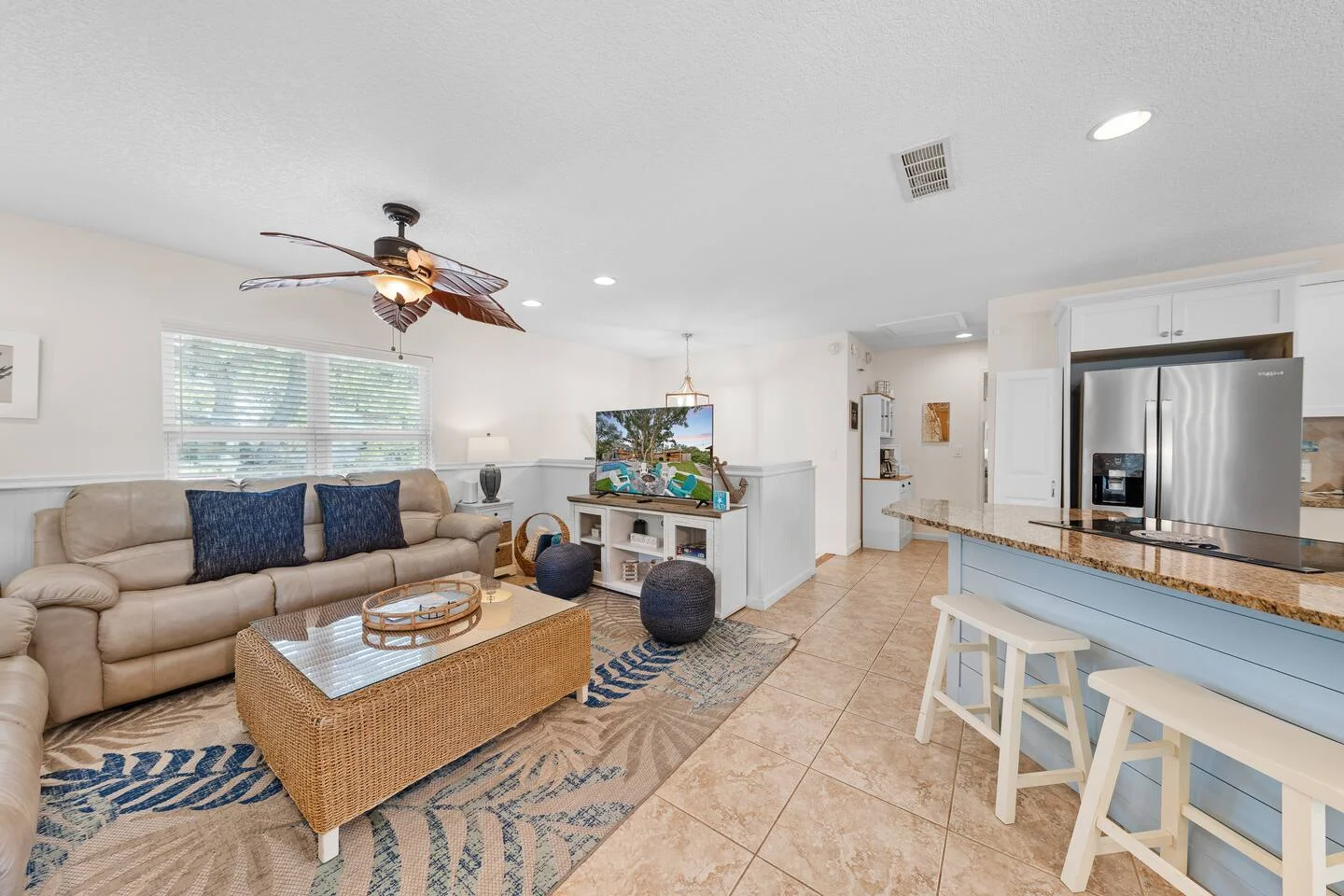
How Do You Vet and Select a Property Management Company?
Selecting a vacation rental property management company requires evaluating specific contractual terms, operational capabilities, and local market knowledge before committing to any agreement. Most owners who end up dissatisfied with their manager skipped this step entirely, signing with the first company that quoted them a competitive fee.
Ask every prospective manager these questions before signing anything.
Questions to Ask Before You Sign
What is your average managed property occupancy rate in St. Augustine? Compare their answer against the market benchmark of 56% (per AirDNA). A well-managed property in a strong neighborhood should exceed the market average, not just match it.
How do you handle pricing? Do you use dynamic pricing software or fixed seasonal rates? Fixed seasonal pricing costs owners money during peak demand periods. Require a specific answer about which tools they use and how frequently rates are adjusted.
What does your cleaning and turnover process include? Ask whether they use property-specific checklists, photo verification, and quality audits. Ask what happens if a cleaner no-shows before a checkout.
What is the contract term and what are the cancellation terms? Avoid multi-year exclusivity contracts with steep cancellation penalties. Responsible management companies offer 30-90 day termination clauses, confident in their performance.
How do you communicate with owners? Ask for a sample monthly owner report. If they cannot provide one or it looks like a basic spreadsheet, their financial transparency is inadequate.
Do you have a dedicated local maintenance team or do you outsource to third-party vendors? Companies with owned or dedicated maintenance resources respond faster and often at lower cost than those who call a random contractor for every issue.
Red Flags to Watch For
Vague answers about pricing methodology or technology tools
Long-term exclusivity contracts with expensive exit clauses
Reluctance to provide owner references or managed property review samples
No specific response time guarantee for guest emergencies
Fee structures with multiple add-on charges that inflate the effective rate beyond the quoted percentage
Notably, the St. Augustine market includes several active management operators, including national platforms like Vacasa and regional operators like Casago. Evaluating the differences between a national platform's scale and a boutique local operator's hands-on approach is worth your time before choosing, as the management experience differs substantially.
What Are the Tax and Legal Implications of Each Approach?
The tax and legal implications of self-managing versus hiring a property management company affect how you report income, what expenses you can deduct, and how you satisfy Florida's short-term rental compliance requirements. This is one area where most self-managing owners are operating with significant blind spots.
First, the basics. Florida requires short-term rental operators to hold a valid license through the Florida Department of Business and Professional Regulation. St. Johns County has additional local ordinance requirements that govern how STRs operate within specific zones. Both self-managing owners and professionally managed property owners are responsible for compliance. The difference is that a management company typically monitors and manages these requirements on your behalf, while self-managing owners must track them independently.
On the tax side, self-managing owners can deduct legitimate business expenses including cleaning fees, supplies, platform fees, maintenance costs, insurance, and a portion of mortgage interest and depreciation under IRS Schedule E. When you hire a management company, their fees are also deductible as a business expense. The deduction structure itself does not fundamentally change between the two approaches, but the record-keeping complexity does. A management company provides organized monthly and annual owner statements. Self-managing owners must build their own accounting systems or work with a CPA familiar with short-term rental tax treatment.
One area worth specific attention in 2026: Florida's transient rental tax (collected at the state level by the Florida Department of Revenue) and any applicable county tourist development taxes apply to all short-term rentals regardless of who manages the property. If you self-manage and list directly on Airbnb, Airbnb collects and remits most of these taxes automatically. If you accept direct bookings outside a major platform, that remittance obligation falls entirely on you. For a detailed breakdown of what deductions apply to your St. Augustine property, the guide to short-term rental tax deductions in St. Augustine covers the specifics Florida owners need to know.
When Does Hiring a Property Manager Become Financially Justified?
The financial justification for hiring a property management company increases as the number of properties you own grows, as the distance between your residence and the rental increases, and as the market's competitive intensity rises. For most single-property owners in a strong market like St. Augustine, the break-even question is closer than it appears once you honestly account for your own time.
St. Augustine's STR market scored 89 out of 100 on AirDNA's Market Score evaluation, rated "Great," with sub-scores of 87 for Investability and 84 for Rental Demand. That strength means a well-managed property here has genuine upside. A management company that grows your gross revenue by 15-20% through better pricing and listing optimization can more than cover its own fee, making the management cost revenue-neutral or positive.
The scaling question is where self-management often breaks down structurally. Managing one property efficiently with strong systems and good tools is achievable for a dedicated owner. Managing two or three properties simultaneously requires either significantly more of your time or the delegation of specific functions. Most owners who try to scale self-management beyond two properties without additional help see their review scores slip, their occupancy rates flatten, and their personal stress levels rise sharply. At that point, professional management or a structured co-hosting arrangement is not just convenient. It is financially protective.
Our team at In The Sun VR regularly advises owners who are weighing this question. The pattern we see most consistently is that owners who switch from self-management to professional management after their second property acquisition recover the management fee cost within two to three booking seasons through improved occupancy and higher average daily rates, not because self-management was bad but because scaling it independently left pricing and operational gaps that professional management closes.
Frequently Asked Questions
Vacation rental management fees in St. Augustine typically range from 20% to 30% of gross booking revenue for full-service management. On a property earning the St. Augustine market average of $35,500 annually (per AirDNA), that equates to approximately $7,100 to $10,650 per year. Co-hosting arrangements, where the owner retains more operational responsibility, typically fall at the lower end of that range or use custom fee structures based on the specific services provided.
What is the difference between co-hosting and full-service property management?
Co-hosting refers to a partial management arrangement where a professional handles specific operational tasks, such as guest communication, pricing, or cleaning coordination, while the owner retains control over other decisions. Full-service property management means the management company assumes complete operational responsibility for the property. Full-service management is better for absentee or out-of-state owners. Co-hosting suits owners who want professional support without surrendering full control of their rental strategy.
What is the average occupancy rate for a St. Augustine vacation rental in 2026?
According to AirDNA market data, the St. Augustine short-term rental occupancy rate is 56%, up 4-5% year-over-year. Properties that use dynamic pricing, maintain strong review scores above 4.7 stars, and optimize their Airbnb listings for search visibility typically outperform this benchmark. Properties with premium amenities, such as private pools, hot tubs, or direct beach access, command both higher occupancy and higher average daily rates than the market average.
Do I need a license to operate a short-term rental in St. Augustine?
Yes. Florida requires short-term rental operators to hold a valid vacation rental license through the Florida Department of Business and Professional Regulation (DBPR). St. Johns County has additional local ordinances that govern short-term rental operations within specific zones. Licensing requirements and local rules can change, so owners who self-manage are responsible for monitoring compliance independently. Professional management companies typically track and manage these requirements on behalf of their clients.
How do I know if a property management company is worth the fee?
A property management company is worth its fee when it demonstrably grows your gross revenue, maintains your property's review score above the market average, and saves you more in time and operational complexity than the fee costs. Ask any prospective manager for their average managed property occupancy rate, their pricing methodology, and a sample owner financial report before signing. Red flags include fixed seasonal pricing rather than dynamic rate management, vague responses about cleaning quality control, and multi-year contracts with difficult exit terms.
Is self-managing an Airbnb realistic if I live out of state?
Self-managing an Airbnb from out of state is technically possible but operationally difficult for most owners. You need a reliable local cleaning team, a trusted handyman for maintenance emergencies, and the willingness to respond to guest issues at any hour from a distance. Owners who successfully self-manage from out of state typically live within 90 minutes of the property and visit at least monthly to inspect and reset the unit. For owners who live multiple hours away or travel frequently, professional management or co-hosting is a more sustainable long-term approach.
What tools do self-managing vacation rental owners use most often?
Self-managing vacation rental owners most commonly use dynamic pricing tools like PriceLabs for automated nightly rate adjustments, channel managers like Guesty or Hostaway for multi-platform calendar synchronization, and Airbnb's native messaging tools for guest communication. PriceLabs, specifically, is widely recommended because it connects to real-time market data and adjusts your rates based on local demand signals, removing the need for daily manual pricing decisions. These tools reduce the time cost of self-management significantly but require initial setup and ongoing oversight.
At what point should I stop self-managing and hire a property manager?
The clearest signals that it is time to hire a property manager include: your review scores have dropped below 4.6 stars, you are missing guest messages regularly, you own more than two properties and cannot maintain consistent standards across all of them, or your personal burnout is affecting the quality of the guest experience. In strong STR markets like St. Augustine, where the AirDNA Market Score is 89 and competition for bookings is growing, operational gaps directly translate to lost revenue. The cost of a quality management fee is typically lower than the cost of sustained underperformance.
Making the Right Decision for Your St. Augustine Rental in 2026
The question of whether to self-manage your vacation rental or hire a property management company does not have a single right answer. It has a right answer for your specific situation, based on your time, your proximity, your portfolio size, and your honest assessment of whether your current approach is actually delivering what your property is capable of earning.
St. Augustine is one of the strongest STR markets in Florida in 2026, ranked the top small town to visit in Florida and scoring 89 on AirDNA's market evaluation. That strength means both approaches can work. Self-management with disciplined pricing and reliable cleaning delivers strong returns for owners who invest the time. Professional management with the right partner delivers competitive returns without the operational burden, and it scales in ways that self-management simply cannot.
The worst outcome is a middle path where you self-manage without the right tools and systems, spending real time every week without capturing the full revenue your property could generate. If you are going to self-manage, commit to it fully with dynamic pricing software, a dependable local cleaning team, and a clear protocol for emergency response. If you are going to hire a manager, vet them thoroughly, understand what the fee actually covers, and set clear performance expectations from the start.
And if you are somewhere in between, burned out from managing everything yourself but not ready to hand over full control, the co-hosting model exists precisely for you.

If you own a St. Augustine rental and are unsure whether your property is performing at its real potential, In The Sun VR offers a straightforward property assessment for owners considering their management options. The team manages 13 properties across Vilano Beach, Crescent Beach, St. Augustine Beach, and the Historic District, with a direct view of what separates top-performing rentals from the ones that plateau. There is no pressure and no pitch, just an honest look at what your property is capable of.
Visit In The Sun VR to start the conversation about what professional management could mean for your property's performance.


Comments